Archive of Human Genius
The world’s largest database of social change milestones, from the first fire to today’s good news.
A Timeline of Human History
We are building the world’s largest database of social change milestones, from the first fire to today’s good news. Change is not only possible, it has happened consistently throughout human history.
Filter by era, country, topic, actor, source, and more.
Years All 14th Century C.E. 16th Century B.C.E. 1800-09 C.E. 1860s C.E. 1870s C.E. 1880s C.E. 1960s C.E. 1970s C.E. 2001 C.E. 2003 C.E. 2004 C.E. 2006 C.E. 2017 C.E. 2018 C.E. 2019 C.E. 2020 C.E. 2021 C.E. 2022 C.E. 2023 C.E. 2024 C.E. 2025 C.E. 2026 C.E. 2030's C.E. 2040s C.E. 2050s C.E. 2060s C.E. 2090s C.E. Before 10th Millennia B.C.E.
Topic All #Resist Abortion rights & access Activism & Protests Agriculture Air pollution Animal husbandry & domestication Animal rights & well-being Architecture & design Artificial intelligence Arts, music, literature & entertainment Astronomy & space exploration Athletics & sport Black Lives Matter Blockchain & cryptocurrency Capital punishment Caste abolition Child well-being Circular economy & zero waste Cities Civilization Clean & renewable energy Climate crisis Clothing Colonialism Communication & language Conscious management Consumer rights & well-being Corporate responsibility COVID-19 Crime Culture Death & Grief Debt Decolonization Democracy & voting Disabilities & special needs Discovery & exploration Drinking water; sanitation & hygiene Drugs & Entheogens Economic inequality Education Elections Electrification Environment Ethical sourcing Ethics Evolution Finance Flora & fauna Food & diet Free speech & censorship Fresh water conservation Gay rights Gender Genocide Government Green bonds Gun safety Hate speech Healthcare Houselessness Human rights Immigration Independence Indigenous rights & well-being Infrastructure International cooperation Internet rights Journalism Justice system Kingdoms & empire Law LGBTQ+ rights & well-being Life expectancy & mortality Literature Local resilience Marine conservation Medicine Men's health & well-being Mental health & addiction Migration & settlement Military Mindfulness & self-care Minimum wage Mythology & folklore Nations Natural gas & divestment News & media No coal No fracking Nuclear disarmament Numbers & math Ocean health Oil Oil, natural gas & divestment Parenting Paris Agreement Peace Philanthropy Philosophy Physics Plastic pollution Police reform Pollution Poverty alleviation Prison justice Privacy & security Public health & disease Public safety Racial justice Refugees Religion Reparations Reproductive rights Revolution Rights of nature Same-sex marriage Seniors' rights & well-being Sexual assault & domestic violence Shamanism & rituals Social media Sustainability Sustainable Development Goals Technology & innovation Tourism Trade Transgender rights & well-being Transportation Trees & reforestation Universal basic income Water pollution Wildlife & land conservation Women's rights & well-being Workers' rights & well-being Youth & student movements
Country All Afghanistan Albania Algeria Andorra Angola Antigua and Barbuda Argentina Armenia Australia Austria Azerbaijan Bangladesh Barbados Belgium Belize Benin Bermuda Bhutan Bolivia Bosnia-Herzegovina Botswana Brazil Brunei Bulgaria Burkina Faso Burundi Cambodia Cameroon Canada Cape Verde Chad Cherokee Nation Chile China Colombia Congo Cook Islands Costa Rica Croatia Cuba Cyprus Czech Republic Democratic Republic of Congo Denmark Djibouti Dominica Dominican Republic Ecuador Egypt El Salvador England Equatorial Guinea Eritrea Estonia Ethiopia European Union Faroe Islands Federated States of Micronesia Fiji Finland France French Polynesia Gabon Georgia Germany Ghana Greece Greenland Grenada Guadaloupe Guatemala Guyana Honduras Hong Kong Hungary Iceland India Indonesia Iran Iraq Ireland Israel Italy Jamaica Japan Jordan Kazakhstan Kenya Kiribati Kosovo Kuwait Laos Latvia Lebanon Lesotho Liberia Libya Lithuania Luxembourg Madagascar Malawi Malaysia Maldives Mali Malta Marshall Islands Martinique Mauritania Mauritius Mexico Micronesia Moldova Monaco Mongolia Montenegro Montserrat Morocco Mozambique Myanmar Namibia Nauru Nepal New Caledonia New Zealand / Aotearoa Nicaragua Niger Nigeria Niue North Korea North Macedonia Northern Ireland Norway Oman Pakistan Palau Palestine Panama Papua New Guinea Paraguay Peru Poland Portugal Qatar Romania Russia Rwanda Samoa San Marino Sao Tome and Principe Saudi Arabia Scotland Senegal Serbia Seychelles Sierra Leone Singapore Slovakia Slovenia Solomon Islands Somalia South Africa South America South Korea South Sudan Soviet Union Spain Sri Lanka St. Kitts & Nevis St. Lucia St. Vincent and the Grenadines Sudan Suriname Sweden Switzerland Syria Taiwan Tanzania Thailand The Bahamas The Gambia The Netherlands The Philippines Timor Leste Togo Tokelau Tonga Trinidad & Tobago Tristan da Cunha Tunisia Turkey Turkmenistan Tuvalu Uganda Ukraine United Arab Emirates United Kingdom United States Uruguay Uzbekistan Vanuatu Vatican City Venezuela Vietnam Wales Yemen Zambia Zimbabwe
Actor All Activists Artists & philosophers Athletes Business Cities Citizens Civil society Consumers Courts Early humans Engineers Finance Humanity Humankind Indigenous groups International organizations Inventors Kingdoms & empires Media & Journalists Military Nations Non-humans Regions Religious groups Science & academia Scientists & mathematicians Settlers & explorers States & provinces Utilities Workers World leaders
2025 C.E.
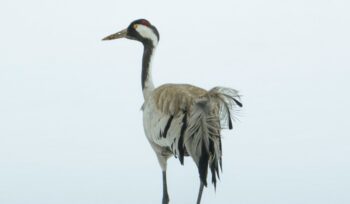
January 9 Siberian crane numbers in the eastern flyway have nearly doubled over the past decade, climbing to an estimated 7,000 birds today. That's a remarkable turnaround for a Critically Endangered species whose other migratory populations have already vanished. The recovery comes from patient, cross-border work between conservationists in Russia and China to protect the wetland stopovers these cranes rely on, including Lake Poyang, which hosts nearly the entire wintering population. Local partnerships, school programs, and...
2025 C.E.
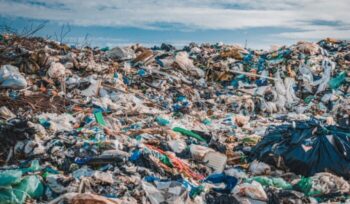
January 7 Thailand's plastic waste ban took effect in January 2025, closing the door on a trade that brought more than 1.1 million tonnes of foreign plastic scrap into the country between 2018 and 2021. Much of that waste was never recycled — factories often burned it instead, sending toxic fumes into nearby communities and contributing to risks of stroke, heart attack, and dementia. The ban is the hard-won result of years of organizing by Thai...
2025 C.E.
January 7 Offshore wind is coming to New York City for the first time, with Empire Wind 1 set to power roughly half a million residents by 2027. Developed by Equinor and backed by a $3 billion financing package, the 810 MW project will be the first to plug directly into the city's grid — covering about 6% of NYC's electricity needs. Construction will run through a redeveloped South Brooklyn Marine Terminal, creating more than 1,000...
2025 C.E.
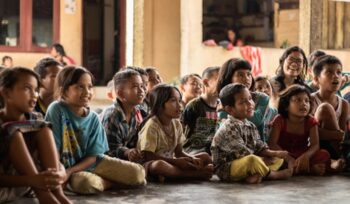
January 5 Indonesia's free meal program kicked off in January 2025 by serving rice, vegetables, tempeh, chicken, and oranges to 740 students at a single primary school outside Jakarta — the opening day of an effort that aims to feed nearly 90 million people by 2029. The program targets a stunting crisis affecting more than one in five Indonesian children under five, extending meals to pregnant women because healthy development begins in the womb. Nearly 2,000...
2025 C.E.
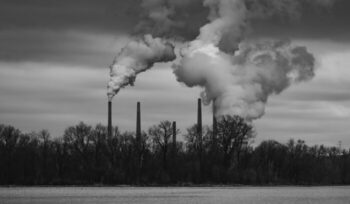
January 2 China's sulphur dioxide emissions fell by 70 percent between 2006 and 2017, even as the country's economy roughly tripled in size over the same stretch. That kind of decoupling — slashing a major industrial pollutant while growing fast — is something climate scientists have long argued was possible but rarely seen at this scale. The shift came from real policy muscle: stricter enforcement, legal accountability for local officials, and a massive pivot to clean...
2025 C.E.
January 2 Offshore drilling is now off the table across 625 million acres of U.S. coastal waters, thanks to a sweeping executive action from President Biden. The protections cover the entire East Coast, the eastern Gulf of Mexico, the Pacific shores of Washington, Oregon, and California, and parts of Alaska's Northern Bering Sea. What makes this move different is its staying power: Biden invoked a 1953 law that legal experts say can't easily be undone without...
2025 C.E.
January 1 Zimbabwe has abolished the death penalty, and around 60 people who were awaiting execution will now have their cases returned to judges for resentencing. President Emmerson Mnangagwa — himself once sentenced to death during the country's independence struggle — signed the law immediately after parliament's vote, ending a practice introduced under British colonial rule. Zimbabwe becomes the 114th country worldwide and the 25th in Africa to fully end capital punishment, joining a steady generational...
2024 C.E.
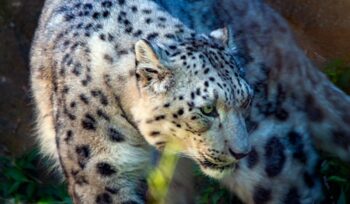
December 30 Snow leopards in Kazakhstan have rebounded to between 152 and 189 individuals — population levels not seen since the 1980s, and a 26% jump since 2019. Much of the credit goes to expanded protected areas like Ile-Alatau, Altyn-Emel, and Katon-Karagai, where a female with two cubs was recently spotted in territory once considered too marginal for the species. Rangers now use camera traps, drones, and thermal imaging across 14 natural areas, while a compensation...
2024 C.E.
December 21 A cancer drug called dostarlimab just earned the FDA's Breakthrough Therapy Designation after eliminating rectal tumors in all 42 patients who completed a Memorial Sloan Kettering trial — with some participants now cancer-free for up to four years. The drug works by helping the immune system recognize and attack tumors carrying a specific genetic signature, sparing patients the surgery, radiation, and chemotherapy that often leave lasting damage to fertility, bowel function, and quality of...
2024 C.E.
December 20 The Inter-American Court of Human Rights just set a new floor for reproductive rights across Latin America, ruling that El Salvador violated a young woman's fundamental rights by denying her a life-saving abortion in 2013. Beatriz was 22, gravely ill with lupus and kidney damage, and carrying a fetus that could not survive outside the womb — yet the country's total ban forced her into an emergency C-section instead of care. The court has...
Load More