Archive of Human Genius
The world’s largest database of social change milestones, from the first fire to today’s good news.
A Timeline of Human History
We are building the world’s largest database of social change milestones, from the first fire to today’s good news. Change is not only possible, it has happened consistently throughout human history.
Filter by era, country, topic, actor, source, and more.
Years All 14th Century C.E. 16th Century B.C.E. 1800-09 C.E. 1860s C.E. 1870s C.E. 1880s C.E. 1960s C.E. 1970s C.E. 2001 C.E. 2003 C.E. 2004 C.E. 2006 C.E. 2017 C.E. 2018 C.E. 2019 C.E. 2020 C.E. 2021 C.E. 2022 C.E. 2023 C.E. 2024 C.E. 2025 C.E. 2026 C.E. 2030's C.E. 2040s C.E. 2050s C.E. 2060s C.E. 2090s C.E. Before 10th Millennia B.C.E.
Topic All #Resist Abortion rights & access Activism & Protests Agriculture Air pollution Animal husbandry & domestication Animal rights & well-being Architecture & design Artificial intelligence Arts, music, literature & entertainment Astronomy & space exploration Athletics & sport Black Lives Matter Blockchain & cryptocurrency Capital punishment Caste abolition Child well-being Circular economy & zero waste Cities Civilization Clean & renewable energy Climate crisis Clothing Colonialism Communication & language Conscious management Consumer rights & well-being Corporate responsibility COVID-19 Crime Culture Death & Grief Debt Decolonization Democracy & voting Disabilities & special needs Discovery & exploration Drinking water; sanitation & hygiene Drugs & Entheogens Economic inequality Education Elections Electrification Environment Ethical sourcing Ethics Evolution Finance Flora & fauna Food & diet Free speech & censorship Fresh water conservation Gay rights Gender Genocide Government Green bonds Gun safety Hate speech Healthcare Houselessness Human rights Immigration Independence Indigenous rights & well-being Infrastructure International cooperation Internet rights Journalism Justice system Kingdoms & empire Law LGBTQ+ rights & well-being Life expectancy & mortality Literature Local resilience Marine conservation Medicine Men's health & well-being Mental health & addiction Migration & settlement Military Mindfulness & self-care Minimum wage Mythology & folklore Nations Natural gas & divestment News & media No coal No fracking Nuclear disarmament Numbers & math Ocean health Oil Oil, natural gas & divestment Parenting Paris Agreement Peace Philanthropy Philosophy Physics Plastic pollution Police reform Pollution Poverty alleviation Prison justice Privacy & security Public health & disease Public safety Racial justice Refugees Religion Reparations Reproductive rights Revolution Rights of nature Same-sex marriage Seniors' rights & well-being Sexual assault & domestic violence Shamanism & rituals Social media Sustainability Sustainable Development Goals Technology & innovation Tourism Trade Transgender rights & well-being Transportation Trees & reforestation Universal basic income Water pollution Wildlife & land conservation Women's rights & well-being Workers' rights & well-being Youth & student movements
Country All Afghanistan Albania Algeria Andorra Angola Antigua and Barbuda Argentina Armenia Australia Austria Azerbaijan Bangladesh Barbados Belgium Belize Benin Bermuda Bhutan Bolivia Bosnia-Herzegovina Botswana Brazil Brunei Bulgaria Burkina Faso Burundi Cambodia Cameroon Canada Cape Verde Chad Cherokee Nation Chile China Colombia Congo Cook Islands Costa Rica Croatia Cuba Cyprus Czech Republic Democratic Republic of Congo Denmark Djibouti Dominica Dominican Republic Ecuador Egypt El Salvador England Equatorial Guinea Eritrea Estonia Ethiopia European Union Faroe Islands Federated States of Micronesia Fiji Finland France French Polynesia Gabon Georgia Germany Ghana Greece Greenland Grenada Guadaloupe Guatemala Guyana Honduras Hong Kong Hungary Iceland India Indonesia Iran Iraq Ireland Israel Italy Jamaica Japan Jordan Kazakhstan Kenya Kiribati Kosovo Kuwait Laos Latvia Lebanon Lesotho Liberia Libya Lithuania Luxembourg Madagascar Malawi Malaysia Maldives Mali Malta Marshall Islands Martinique Mauritania Mauritius Mexico Micronesia Moldova Monaco Mongolia Montenegro Montserrat Morocco Mozambique Myanmar Namibia Nauru Nepal New Caledonia New Zealand / Aotearoa Nicaragua Niger Nigeria Niue North Korea North Macedonia Northern Ireland Norway Oman Pakistan Palau Palestine Panama Papua New Guinea Paraguay Peru Poland Portugal Qatar Romania Russia Rwanda Samoa San Marino Sao Tome and Principe Saudi Arabia Scotland Senegal Serbia Seychelles Sierra Leone Singapore Slovakia Slovenia Solomon Islands Somalia South Africa South America South Korea South Sudan Soviet Union Spain Sri Lanka St. Kitts & Nevis St. Lucia St. Vincent and the Grenadines Sudan Suriname Sweden Switzerland Syria Taiwan Tanzania Thailand The Bahamas The Gambia The Netherlands The Philippines Timor Leste Togo Tokelau Tonga Trinidad & Tobago Tristan da Cunha Tunisia Turkey Turkmenistan Tuvalu Uganda Ukraine United Arab Emirates United Kingdom United States Uruguay Uzbekistan Vanuatu Vatican City Venezuela Vietnam Wales Yemen Zambia Zimbabwe
Actor All Activists Artists & philosophers Athletes Business Cities Citizens Civil society Consumers Courts Early humans Engineers Finance Humanity Humankind Indigenous groups International organizations Inventors Kingdoms & empires Media & Journalists Military Nations Non-humans Regions Religious groups Science & academia Scientists & mathematicians Settlers & explorers States & provinces Utilities Workers World leaders
2025 C.E.
July 30 Australian student debt relief arrived automatically this week for more than 3 million borrowers, as the federal government erased 20% of outstanding balances — wiping nearly A6 billion without requiring a single application. The Australian Taxation Office applied reductions directly to accounts, making this the largest single student debt reduction in Australian history. The policy also raises the repayment income threshold from A4,435 to A7,000, giving lower-earning graduates immediate breathing room. What makes this...
2025 C.E.
July 30 Saint Lucia decriminalization marks a landmark victory for human rights in the Eastern Caribbean, as the island's High Court struck down colonial-era laws that imposed up to 10 years in prison for consensual same-sex conduct. The court ruled the statutes violated Saint Lucia's own constitutional protections for privacy, equality, and human dignity. Significantly, these laws were never locally crafted — they were British colonial impositions from the 19th century. The ruling joins a growing...
2025 C.E.
July 27 Cuba's transgender gender marker reform marks a significant step forward for trans rights in Latin America. In 2025, Cuba's National Assembly passed legislation allowing transgender Cubans to update gender markers on official identity documents through simple administrative declaration, requiring no surgery or judicial approval. The reform matters because mismatched IDs create cascading barriers to employment, housing, and healthcare for trans people. Notably, the change decouples legal recognition from medical access at a time when...
2025 C.E.
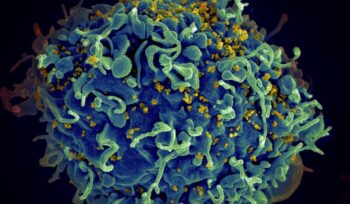
July 26 Lenacapavir HIV prevention has reached a landmark moment: the FDA has approved the twice-yearly injectable drug — brand name Yeztugo — as the first long-acting PrEP option in history. Clinical trials showed it stopped transmission in more than 99.9% of participants, outperforming daily oral PrEP across tens of thousands of people. The breakthrough matters because adherence to daily medication has always been the weak point in HIV prevention, particularly in high-burden communities facing stigma...
2025 C.E.
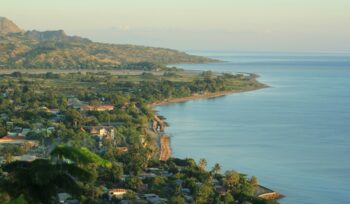
July 24 Timor-Leste has achieved malaria-free certification from the World Health Organization, eliminating a disease that once struck more than 223,000 people in a single year. The designation marks the culmination of a national malaria program launched in 2003, just one year after the country gained independence from decades of occupation and conflict. Reaching zero indigenous cases required free diagnosis and treatment, widespread bed net distribution, community health workers, and a real-time surveillance system built to...
2025 C.E.
July 23 The International Court of Justice issued a landmark climate ruling in July 2025, declaring that all countries have binding legal obligations under international law to cut greenhouse gas emissions and prevent climate harm. The World Court formally linked climate damage to violations of the rights to life and health, marking the first time an international judicial body has made that connection explicit. Countries that breach these obligations may face requirements to halt polluting activities,...
2025 C.E.
July 22 Amur leopard recovery has reached a milestone that conservation scientists once considered nearly impossible. Wild populations of the world's rarest big cat have grown from roughly 25 individuals in the late 1990s to an estimated 130 in Russia's Far East today, a fivefold increase driven by targeted habitat protection, anti-poaching patrols, and coordinated diplomacy between Russia and China. The 2012 creation of Land of the Leopard National Park — deliberately mapped around every known...
2025 C.E.
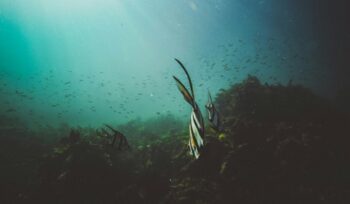
July 22 Portugal's new marine protected area around the Gorringe Ridge marks a major ocean conservation milestone, pushing the country's protected marine territory from 19% to 27% of its vast Atlantic waters. Announced at a United Nations Oceans Conference, the designation covers a biologically rich underwater mountain range sheltering migratory whales, sharks, tuna, and ancient cold-water coral ecosystems. The move places Portugal ahead of nearly every other European nation in meeting the global 30x30 ocean protection...
2025 C.E.
July 22 Renewable energy costs have fallen so sharply that 91 percent of new renewable power projects built in 2024 were cheaper than any new fossil fuel alternative, according to a July 2025 International Renewable Energy Agency report. Onshore wind now delivers electricity at just limitedshell.034 per kilowatt-hour, more than half the price of the lowest-cost fossil fuel option. A record 582 gigawatts of new renewable capacity came online globally, avoiding roughly 7 billion in fossil...
2025 C.E.
July 21 Canada land conservation is receiving a historic .3 billion federal investment over five years, targeting protection of at least 17% of the country's land and freshwater with a longer-term goal of 30% by 2030. The funding is already expanding national and provincial parks across the country, including Indigenous co-managed wilderness areas in Alberta. This matters because Canada holds 20% of Earth's wild forests and nearly a third of its land-stored carbon, making its conservation...
Load More