Europe

This archive covers progress stories from across Europe, spanning the U.K., Scandinavia, the E.U. and beyond. Readers will find reporting on health, climate policy, social welfare, science and more — drawn from nearly 1,200 articles tracking real gains made by communities, governments and researchers throughout the region.

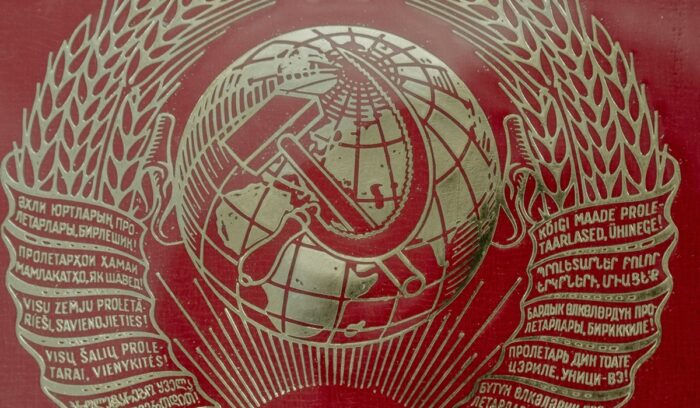
Red and gold Soviet Union logo, for article on Soviet abortion legalization

Soviet Russia becomes the first modern state to legalize abortion

Soviet Russia legalized abortion in October 1920, becoming the first modern government to permit the procedure without restriction, and often for free. The decree aimed to move women away from underground providers and into hospitals — by 1925, roughly three-quarters of abortions in Moscow were performed in medical facilities. It was an early, imperfect test of treating reproductive health as medicine rather than crime.
Prague, for article on Czechoslovakia independence

Czechoslovakia declares independence from Austria-Hungary

Czechoslovakia independence arrived on October 28, 1918, as the crumbling Austro-Hungarian Empire gave way to a new democratic state in the heart of Europe. Philosopher-statesman Tomáš Masaryk, who had spent the war years lobbying Allied governments abroad, became its first president weeks later. The country would remain Central Europe’s lone democracy by the mid-1930s — an imperfect but real experiment in self-determination.

image for article on Easter Proclamation

Irish rebels proclaim the Irish Republic during the Easter Rising

The Easter Proclamation was read aloud on a Dublin street corner on 24 April 1916, when poet and schoolteacher Patrick Pearse stepped outside the General Post Office and declared Ireland a republic. Printed overnight at Liberty Hall, its seven signatories were executed within weeks — yet its words outlived them, shaping Irish independence for decades to come.

Roald Amundsen at the South Pole, for article on Amundsen South Pole expedition

Roald Amundsen leads the first expedition to reach the South Pole

Amundsen’s South Pole expedition reached the bottom of the world on 14 December 1911, when five Norwegians planted their flag after a 1,400-mile trek by ski and dog sled. Their success leaned heavily on Inuit cold-weather knowledge Amundsen had studied for years. All five made it home alive — a rare outcome in the heroic age of polar exploration.

Finland's Eduskunta in 1907, for article on Finnish women parliamentarians

Finland elects 19 women to parliament in a world first

In the spring of 1907, nineteen women walked into Finland’s Eduskunta as elected members — the first female parliamentarians anywhere in recorded history. They were teachers, journalists, and labor organizers, filling roughly 10 percent of the 200 seats. A quiet proof of concept that democracy could include everyone, built on decades of patient groundwork.