
Plant and animal domestication underway on the Iberian peninsula
By the Iron Age, starting in the 7th century B.C.E., the Iberian Peninsula consisted of complex agrarian and urban civilizations, either Pre-Celtic or Celtic.

By the Iron Age, starting in the 7th century B.C.E., the Iberian Peninsula consisted of complex agrarian and urban civilizations, either Pre-Celtic or Celtic.

The oldest known fishing net is the net of Antrea, found with other fishing equipment in the Karelian town of Antrea, Finland, in 1913. The net was made from willow, and dates back to 8300 B.C.E.

About 10,000 B.C.E., following the retreat of the great inland ice sheets, the earliest inhabitants migrated north into the territory which is now Norway
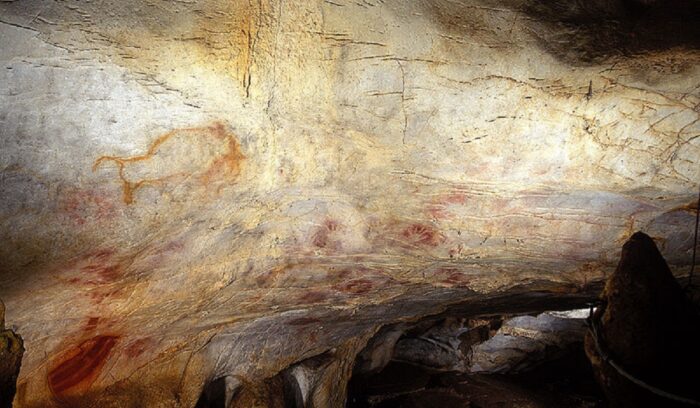
A calcite crust over a red disk at El Castillo cave in Spain confirmed what no prior method could prove: the painting beneath it is at least 40,800 years old. The 2012 C.E. uranium-thorium study transformed how scientists understand the origins of symbolic thought — and raised the possibility that Neanderthals, not just modern humans, were among the world’s first artists.
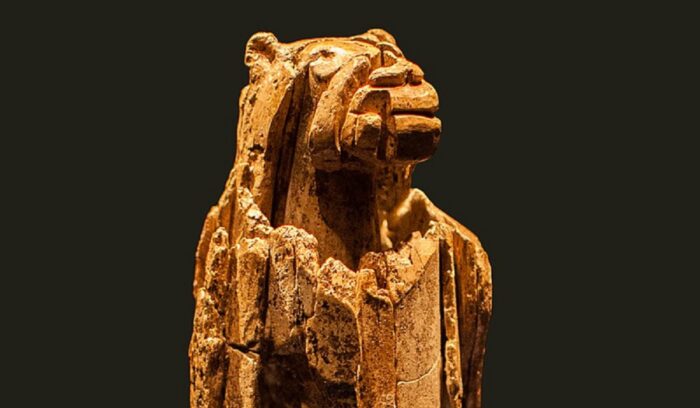
Around 40,000 years ago, an unknown artist in what is now southern Germany carved a human figure with a lion’s head from mammoth ivory — the oldest confirmed statue ever found. The lion-man figurine offers striking evidence that symbolic thinking, myth-making, and imagination were fully alive in our earliest ancestors.

A 6.2-millimeter fragment of twisted conifer bark, recovered from a French rock shelter, is the oldest known piece of string ever found — and it was made by Neanderthals. The discovery reveals sophisticated planning, seasonal knowledge, and mathematical thinking. It changes what we know about the minds that shared this planet with us.
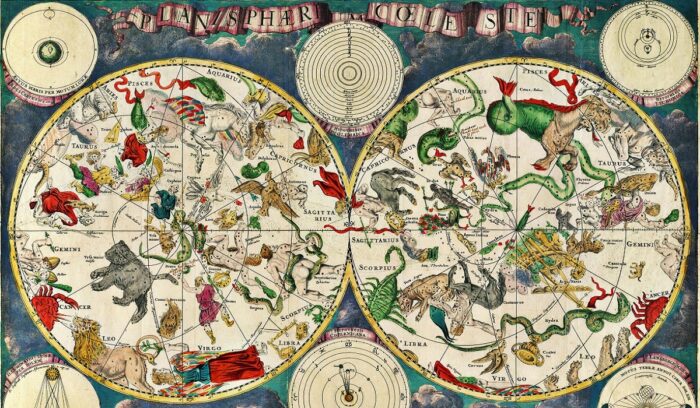
Around 35,000 B.C.E., someone in what is now Germany carved the night sky into a fragment of mammoth ivory the size of a matchbook. Identified by researcher Michael Rappenglueck using computer modeling, the object encodes the constellation Orion and possibly a pregnancy calendar — the oldest known star chart on Earth.

Around 40,000 B.C.E., someone in southern Africa carved notches into a baboon bone — creating what may be the world’s oldest known numeral system. These tally marks, found across multiple African sites, trace the origins of mathematics, symbolic thought, and data preservation to deep prehistory.

Around 200,000 B.C.E., Neanderthals at a site in what is now central Italy heated birch bark to produce tar — and used it to bind stone tools to wooden handles. The evidence challenges long-held assumptions about Neanderthal intelligence and marks one of the earliest known acts of deliberate chemical transformation in human history.