Europe

This archive covers progress stories from across Europe, spanning the U.K., Scandinavia, the E.U. and beyond. Readers will find reporting on health, climate policy, social welfare, science and more — drawn from nearly 1,200 articles tracking real gains made by communities, governments and researchers throughout the region.

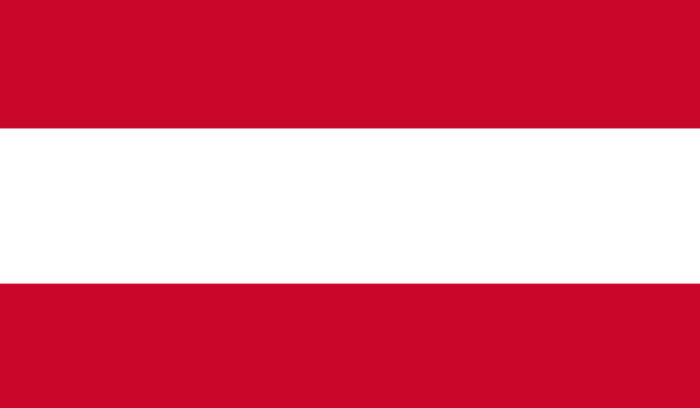
Flag of Austria, for article on Austrian State Treaty

Austrian State Treaty reestablishes Austria as a sovereign state

The Austrian State Treaty was signed on May 15, 1955, at Vienna’s Schloss Belvedere, ending a decade of four-power occupation and restoring Austria as a unified, democratic state. Months later, Parliament made neutrality permanent by constitutional law — a quiet compromise that let a small country slip free of the Cold War’s hardening lines.

image for article on India Pakistan independence

India and Pakistan win independence after 200 years of British rule

India and Pakistan won independence at midnight on August 15, 1947, ending a century and a half of British colonial rule. Decades of organized resistance, shaped by Gandhi’s campaigns of nonviolent civil disobedience, had made the moment possible. The joy was real, and so was the wound: partition displaced an estimated 10 to 20 million people.

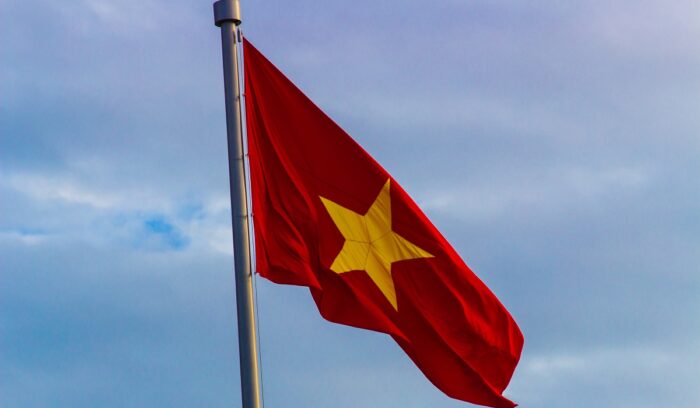
Vietnam's flag, for article on vietnamese independence declaration

Vietnam declares independence as World War II ends in Asia

Vietnam’s independence was declared on September 2, 1945, when Ho Chi Minh stood in Hanoi’s Ba Dinh Square before a crowd of hundreds of thousands. He opened with words borrowed from the American Declaration of Independence — a pointed move from a leader who knew his audience. The moment launched a decades-long struggle that reshaped Southeast Asia.

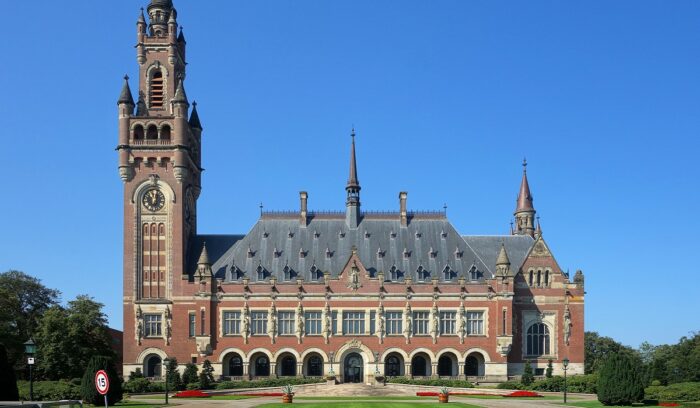
International Court of Justice, for article on international court of justice

The United Nations establishes the International Court of Justice

The International Court of Justice was born in June 1945, when the UN Charter created the first permanent global tribunal for disputes between nations. It held its first session the following April at the Peace Palace in The Hague, with fifteen judges drawn from the world’s major legal traditions. A quiet but radical idea: countries could bring their grievances to judges instead of armies.

image for article on penicillin clinical trials

Howard Florey’s team gives penicillin its first human trial at Oxford

Penicillin’s first human trial took place at Oxford in February 1941, when Howard Florey’s team treated a dying police constable named Albert Alexander. He improved dramatically for five days before the scarce drug ran out, and he later died. The experiment still opened the door to antibiotic medicine, which Florey estimated would go on to save tens of millions of lives.

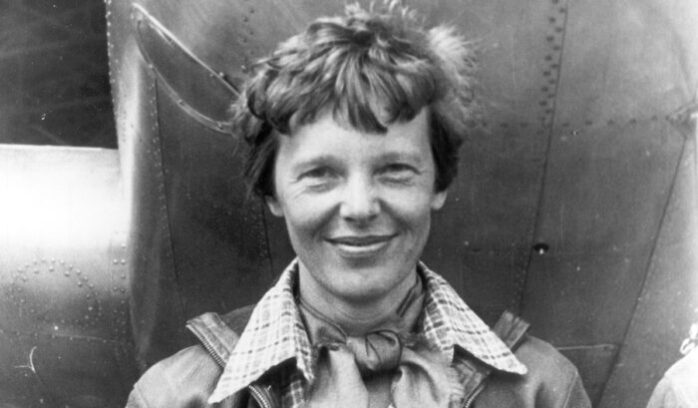
Amelia Earhart, for article on solo transatlantic flight

Amelia Earhart becomes first woman to fly the Atlantic solo

Amelia Earhart lifted off from Harbour Grace, Newfoundland on May 20, 1932, and pointed her red Lockheed Vega east across the Atlantic. Fifteen hours later, battered by ice, flames from a cracked manifold, and a broken altimeter, she landed in an Irish pasture — the first woman to fly the ocean solo, and only the second pilot ever.

Ulysses, a modernist novel by James Joyce

Sylvia Beach publishes James Joyce’s Ulysses in Paris, reshaping modern literature

Ulysses arrived in Paris on February 2, 1922, James Joyce’s fortieth birthday, printed through Sylvia Beach’s Left Bank bookshop Shakespeare and Company after no commercial publisher would touch it. The novel followed three Dubliners through a single ordinary day and turned it into an epic. A century on, writers are still walking through the door it opened.