Europe

This archive covers progress stories from across Europe, spanning the U.K., Scandinavia, the E.U. and beyond. Readers will find reporting on health, climate policy, social welfare, science and more — drawn from nearly 1,200 articles tracking real gains made by communities, governments and researchers throughout the region.

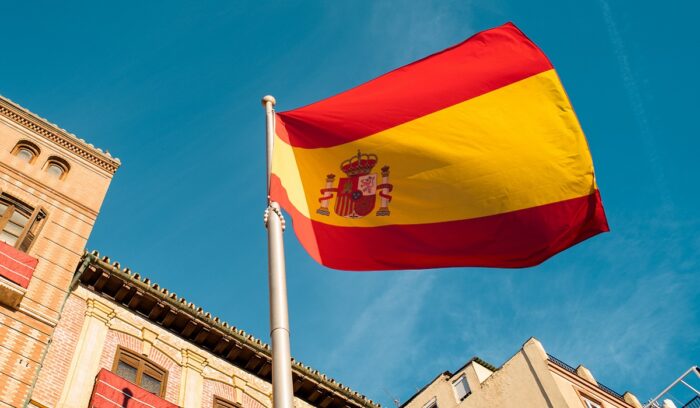
Spanish flag, for article on Spanish transition to democracy

Spain’s transition to democracy begins after Franco’s death

Spain’s transition to democracy began on November 22, 1975, just two days after dictator Francisco Franco’s death ended nearly four decades of authoritarian rule. Guided by King Juan Carlos I and pressure from civil society, Spaniards voted in their first free election in over 40 years by 1977, ratifying a new constitution the following year.

CITES logo, for article on CITES treaty

CITES enters into force, shielding over 40,900 species from trade

CITES, the first global treaty governing the wildlife trade, became binding law on July 1, 1975, after 80 countries had gathered in Washington two years earlier to finalize the text. It now covers more than 40,900 species across 185 parties — a quiet paperwork revolution that showed nations could agree to police what crosses their borders for nature’s sake.

Flag of Sweden, for article on Sweden crowned republic

Sweden replaces its constitution and becomes a crowned republic

Sweden’s crowned republic quietly took shape on January 1, 1975, when a new Instrument of Government stripped the king of all political authority while keeping the throne itself. The change formalized a democratic reality Swedes had already lived for decades, finally letting the constitutional text match how power actually worked.

Hand holding on to chain link fence, for article on Norwegian prison reform

Norway’s prison reform movement launches, aiming to replace punishment with rehabilitation

Norwegian prison reform began in 1968, when a group of activists, lawyers, and formerly incarcerated people founded KROM to challenge a system where recidivism hovered around 60 to 70 percent. Early wins came slowly — forced labor ended in 1970, juvenile centers closed in 1975 — but the reframing they started reshaped how a country could think about justice.