Europe

This archive covers progress stories from across Europe, spanning the U.K., Scandinavia, the E.U. and beyond. Readers will find reporting on health, climate policy, social welfare, science and more — drawn from nearly 1,200 articles tracking real gains made by communities, governments and researchers throughout the region.

Ukraine flag, for article on Ukrainian independence

Ukraine declares independence as the Soviet Union dissolves

Ukrainian independence arrived on August 24, 1991, when parliament in Kyiv voted to leave the Soviet Union just one day after a failed coup weakened Moscow. Months later, more than 90 percent of voters confirmed the choice, with majorities in every region. It was a quiet ending to an empire, and a long-awaited return for a nation with ancient roots.
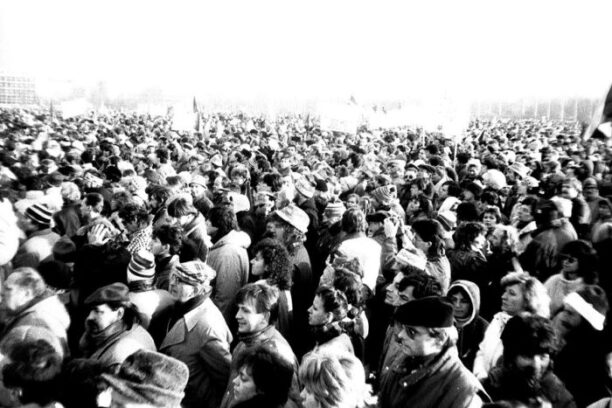
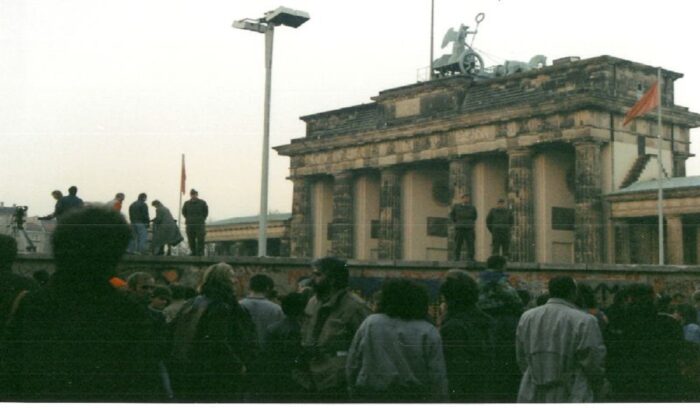
Fall of the Berlin Wall 1989, for article on Berlin Wall fall

East Germans breach the Berlin Wall after decades of division

The Berlin Wall began to open on November 9, 1989, when a muddled government announcement sent East Germans streaming toward checkpoints guards no longer tried to hold. What followed was stranger and more human than any single night: teachers, border officers, and ordinary citizens quietly negotiating a new reality, day by day, for weeks.

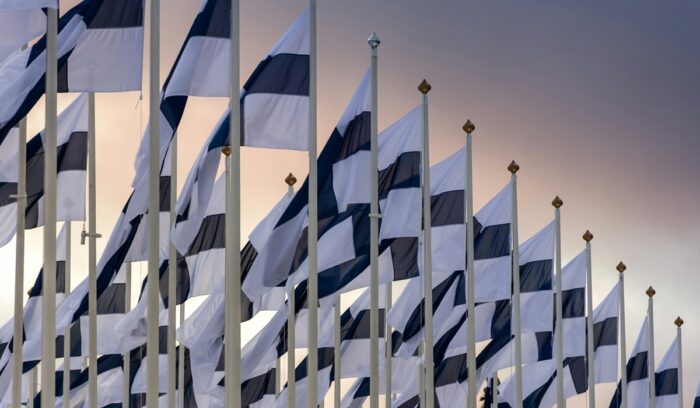
Flag of Poland, for article on Polish democratic transition

Poland’s democratic transition ends four decades of communist rule

Poland’s democratic transition reached a quiet turning point on September 12, 1989, when parliament approved Tadeusz Mazowiecki as the first non-communist prime minister in over 40 years. Months earlier, Solidarity had swept the partially free June elections, winning every contested Sejm seat. It became an early model of negotiated change in the Soviet bloc.

Danish flag, for article on same-sex legal recognition

Denmark becomes first country to legally recognize same-sex partnerships

In 1989, Denmark became the first country to give same-sex couples a legal framework for their relationships. The Registered Partnership Act passed 71 votes to 47, granting inheritance, hospital visitation, and next-of-kin rights long denied. Within a decade, Norway, Sweden, and Iceland followed, and the quiet Danish vote became a template the world slowly built upon.

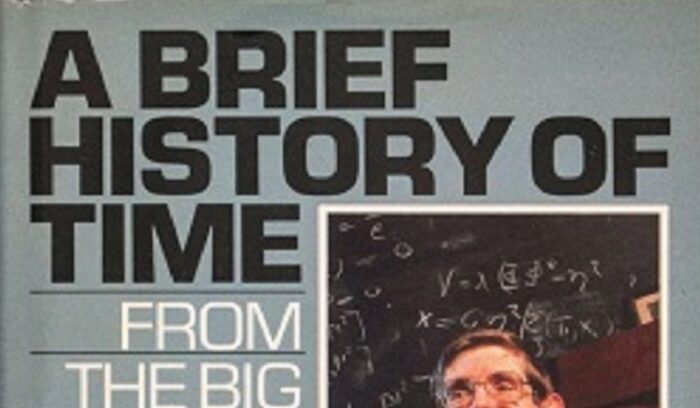
Cover of Stephen Hawking's A Brief History Of Time, for article on a brief history of time

Stephen Hawking brings the cosmos to 25 million readers worldwide

A Brief History of Time arrived in airport bookshops in spring 1988, written by a physicist who could no longer hold a pen. Stephen Hawking stripped his cosmology down to a single equation, E=mc², and went on to sell more than 25 million copies in 40 languages. It showed that ordinary readers were ready to think seriously about the universe.

image for article on MP3 audio compression

Fraunhofer IIS in Germany launches research that will create MP3

MP3 audio compression was born in 1987 at Germany’s Fraunhofer Institute, where Karlheinz Brandenburg and a small team set out to shrink music without wrecking it. Two days before their first codec was due in 1991, a compiler bug nearly killed the project. They found it in time — and quietly reshaped how the world listens.

Cars crossing an international border checkpoint for an article about Vienna Convention on Road Traffic

86 countries now follow one road safety treaty — and it’s been working since 1968 C.E.

The Vienna Convention on Road Traffic, signed in November 1968, established shared rules of the road across dozens of nations — standardizing driver licensing, vehicle registration, and cross-border recognition in a single international framework. Today, 86 countries operate under its provisions, quietly reducing accidents and bureaucratic friction for millions of travelers. What makes it remarkable is both its durability and its adaptability: a Cold War-era treaty is now being amended to address self-driving vehicles. It remains one of the most consequential — and least celebrated — achievements in international cooperation.

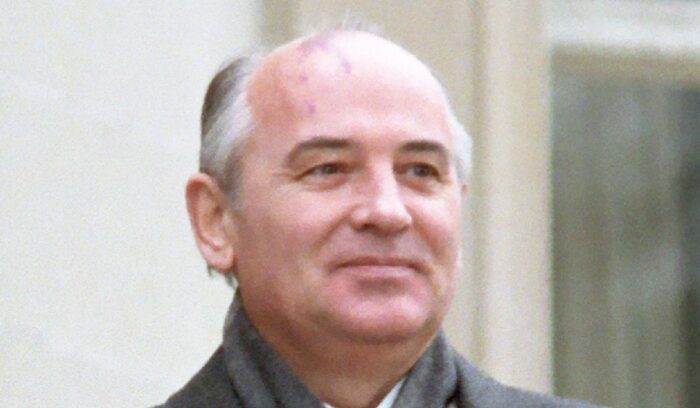
Mikhail Gorbachev, for article on glasnost and perestroika

Gorbachev’s glasnost and perestroika reforms help end the Cold War

Perestroika began in the spring of 1985, when new Soviet leader Mikhail Gorbachev admitted publicly what no Communist Party chief had before: the Soviet economy wasn’t working. What followed was extraordinary — competitive elections, a freer press, and the 1987 INF Treaty with Reagan, the first ever to eliminate an entire class of nuclear weapons.