
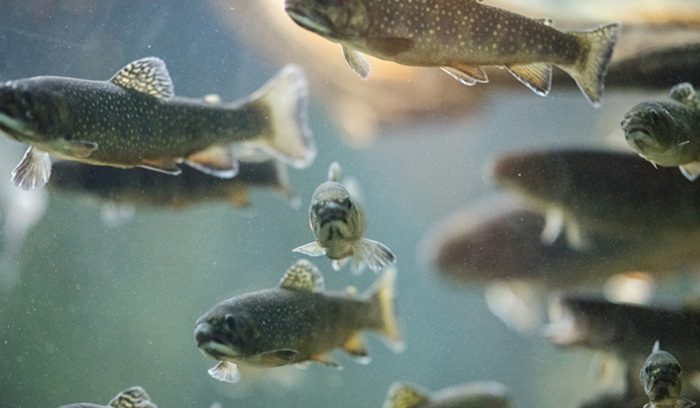
One of the most closely watched fishery recoveries in American history is complete. After more than two decades of strict catch limits, habitat protections, and intensive scientific monitoring, the U.S. West Coast groundfish fishery has been declared fully rebuilt — and it happened roughly 60 years ahead of the legally mandated deadline. The turnaround is being called one of the most successful fishery management stories in the world.
At a glance
- West Coast groundfish recovery: Federal managers confirmed that the last remaining overfished groundfish species in the region have been rebuilt to sustainable population levels, completing a recovery process that began in the early 2000s.
- Catch limits: The National Oceanic and Atmospheric Administration (NOAA) worked with the Pacific Fishery Management Council to set science-based annual catch limits that allowed populations to recover while keeping the fishery economically viable.
- Timeline: Under the Magnuson-Stevens Fishery Conservation and Management Act, managers had until roughly 2084 to rebuild certain species — making the early completion a landmark achievement for U.S. fisheries law.
How a fishery comes back from the edge
In the late 1990s and early 2000s, several species of rockfish and other groundfish off the Pacific Coast were in serious trouble. Decades of commercial fishing pressure, combined with slow-reproducing species that can live for more than 100 years, had driven populations to historic lows.
The response was sweeping. Federal regulators established protected habitat areas, cut allowable catch to biologically conservative levels, and invested in long-term stock assessments. Fishing communities bore real economic pain during this period — reduced quotas meant reduced income, and some operations shut down entirely.
But the science worked. Species that were once listed as overfished, including several rockfish populations, have rebounded to levels that can support sustainable harvests. The recovery wasn’t uniform across all species or all years, but the overall trajectory held.
The science behind the success
A key factor in the recovery was the Pacific Fishery Management Council’s commitment to adaptive management — adjusting catch limits each year based on the best available stock assessment data rather than locking in fixed quotas.
NOAA Fisheries also deployed a comprehensive trawl survey program along the West Coast, generating population estimates that allowed managers to track recovery progress with unusual precision. This kind of regular, independent scientific monitoring is rare in global fisheries management and gave the process credibility with both regulators and fishing communities.
The Magnuson-Stevens Act, the primary federal law governing U.S. fisheries, deserves credit too. Its mandatory rebuilding provisions gave managers legal backing to hold the line on catch limits even during politically difficult periods.
What this means for fishing communities and the ocean
The recovery opens the door to increased catch allocations for some species, offering economic relief to fishing communities from California to Washington that weathered years of restrictions. Rebuilt populations also mean healthier marine ecosystems — groundfish play key roles as both predators and prey in the Pacific food web.
Tribal nations along the Pacific Coast, including those with treaty fishing rights, stand to benefit directly. Several tribes have long advocated for sustainable management of these species and have participated in co-management frameworks with federal and state agencies.
Still, challenges remain. Climate change is shifting ocean temperatures and prey availability in ways that could stress recovered populations. Some species are more vulnerable to warming seas than others, and managers will need to account for these pressures in future stock assessments. The rebuilding is a victory, but sustaining it will require the same discipline that achieved it.
A model for the world
Global fisheries are in a troubled state. The Food and Agriculture Organization of the United Nations estimates that roughly one-third of the world’s marine fish stocks are harvested at biologically unsustainable levels. Against that backdrop, the West Coast groundfish story offers a concrete proof of concept: with enforceable science-based limits and long-term political will, even badly depleted fisheries can come back.
It took 25 years of persistence from scientists, regulators, fishing communities, and environmental advocates. It required accepting short-term economic hardship for long-term gain. And it worked — decades ahead of schedule.
Read more
For more on this story, see: Good News for Humankind
For more from Good News for Humankind, see:
- Ghana establishes major marine protected area at Cape Three Points
- Alzheimer’s risk cut in half by drug in landmark prevention trial
- The Good News for Humankind archive on marine conservation
About this article
- 🤖 This article is AI-generated, based on a framework created by Peter Schulte.
- 🌍 It aims to be inspirational but clear-eyed, accurate, and evidence-based, and grounded in care for the Earth, peace and belonging for all, and human evolution.
- 💬 Leave your notes and suggestions in the comments below — I will do my best to review and implement where appropriate.
- ✉️ One verified piece of good news, one insight from Antihero Project, every weekday morning. Subscribe free.