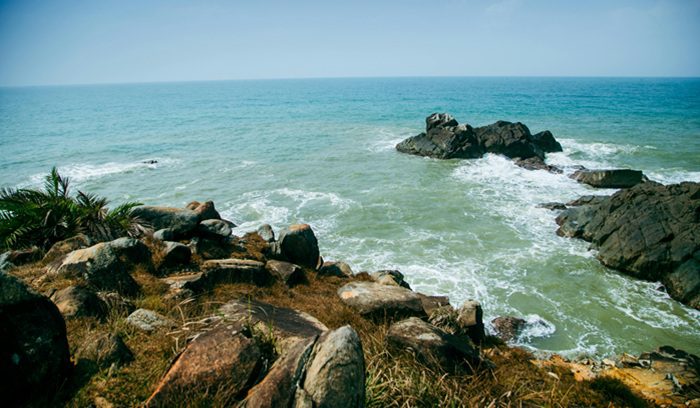
For the first time in its history, Ghana has designated a marine protected area along its coastline — a move aimed at reversing decades of overfishing that have pushed the country’s fish populations to critical lows. The Ghana marine protected area, centered near Cape Three Points in the Western Region, marks a turning point for a nation where millions of people depend on the sea for both food and their livelihoods.
At a glance
- Ghana marine protected area: Ghana has formally declared its first-ever marine protected area, establishing a zone where fishing activity will be restricted or banned to allow fish populations to recover.
- Overfishing crisis: Fish stocks along Ghana’s coast have declined sharply over recent decades, threatening food security for coastal communities and the incomes of small-scale fishers who make up the vast majority of the fishing sector.
- Cape Three Points: The protected zone is located near Cape Three Points, a ecologically significant stretch of the Gulf of Guinea coastline recognized for its biodiversity and importance as a marine habitat.
Why Ghana’s waters needed protecting
Ghana’s fishing industry is one of the most important in West Africa. Small-scale or artisanal fishers — the overwhelming majority of the country’s fishing workforce — land most of the domestic catch, and fish is the primary source of protein for a large share of the population.
But those stocks have been under enormous pressure. Industrial trawling, including illegal fishing by foreign vessels, has stripped the Gulf of Guinea of fish at rates the ocean cannot sustain. Some estimates suggest Ghana’s coastal fish populations have dropped by more than 80% from historic levels. The result is a quiet crisis: fishers going further out to sea for smaller and smaller catches, coastal families eating less fish, and fishing communities losing economic ground.
Marine protected areas, when well-enforced, give fish populations space to recover. They act as replenishment zones, allowing species to breed and juveniles to grow before moving into surrounding waters where they can be legally caught. The science behind them is well-established — the International Union for Conservation of Nature and researchers worldwide have documented how effective MPAs can lift catches in adjacent fishing zones over time.
What the declaration means in practice
Designating a marine protected area is a legal and political act, but its impact depends on what happens next. Enforcement at sea is expensive and technically demanding, and Ghana’s fisheries authorities have historically been stretched thin. Ensuring that the protections hold — especially against industrial vessels — will require sustained investment and political will.
Fishing communities near the protected zone will also need to be part of the solution. Across Africa and beyond, the most successful marine protected areas have been co-managed with local fishers rather than imposed on them. WorldFish, which works across West Africa, and regional bodies like the Fishery Committee for the Eastern Central Atlantic have emphasized community involvement as essential to MPA success. Ghana’s implementation process will need to follow that principle carefully, particularly given that artisanal fishers could face short-term income disruptions from access restrictions.
For more context on Ghana’s evolving approach to marine conservation, the Cape Three Points marine protected area story offers additional background on this coastal milestone.
A signal for the Gulf of Guinea
Ghana’s declaration carries significance beyond its own borders. The Gulf of Guinea is shared by more than a dozen nations, and fish stocks don’t respect national boundaries. A successful MPA in Ghanaian waters could generate regional momentum — and diplomatic cover — for neighboring countries to establish their own protections.
NOAA’s ocean science division notes that networked marine protected areas — where multiple nations coordinate protected zones — produce far greater ecological benefits than isolated ones. Ghana’s move is a first step toward that kind of regional architecture.
It also arrives as African nations are under growing pressure to meet the global “30×30” biodiversity target — the commitment to protect 30% of land and oceans by 2030 C.E. agreed at the Kunming-Montreal Global Biodiversity Framework. Ghana’s MPA declaration is a meaningful contribution to that goal, even as the 2030 C.E. deadline draws closer and the gap between ambition and action remains wide for most coastal nations.
The unresolved question is enforcement. Protected areas on paper and protected areas in practice are two very different things, and the history of African fisheries is littered with regulations that went unenforced. Whether Ghana can build the monitoring capacity and community trust to make this protection real will determine whether the fish — and the fishing communities that depend on them — actually recover.
Read more
For more on this story, see: Mongabay
For more from Good News for Humankind, see:
- Ghana’s Cape Three Points marine protected area
- Alzheimer’s risk cut in half by drug in landmark prevention trial
- The Good News for Humankind archive on environment
About this article
- 🤖 This article is AI-generated, based on a framework created by Peter Schulte.
- 🌍 It aims to be inspirational but clear-eyed, accurate, and evidence-based, and grounded in care for the Earth, peace and belonging for all, and human evolution.
- 💬 Leave your notes and suggestions in the comments below — I will do my best to review and implement where appropriate.
- ✉️ One verified piece of good news, one insight from Antihero Project, every weekday morning. Subscribe free.