Marine conservation

Oceans cover more than 70% of Earth’s surface and support the food, climate, and biodiversity systems that billions of people depend on. This archive tracks real progress in marine conservation — from expanding protected areas and restoring coral reefs to reducing plastic pollution and rebuilding fish populations. Each story focuses on what’s working and who is making it happen.

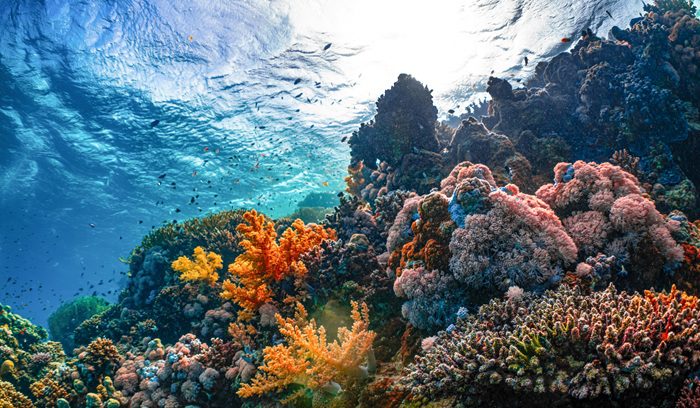
Coral underwater, for article on marine protected area

Papua New Guinea announces one of the world’s largest no-take marine reserves

Papua New Guinea just pledged to protect roughly 200,000 square kilometers of Pacific Ocean — an expanse nearly the size of the United Kingdom.
The proposed Western Manus Marine Protected Area sits inside the Coral Triangle, often called the Amazon of the seas, and a 2024 National Geographic Pristine Seas expedition there documented deep-sea species never before recorded in PNG waters — including the elusive yokozuna slickhead. Researchers also noticed fewer large predators than expected, a quiet signal that even these remote waters need a break from fishing pressure.
If Papua New Guinea follows through with real enforcement, this single reserve would mark a meaningful step toward the global goal of protecting 30% of the ocean by 2030 — and a hopeful model for ocean stewardship everywhere.

Fish in shallow water, for article on tidal gate removal

Removing tidal gates brings salt water and fish back to Queensland wetlands

Tidal gate removal along Queensland’s Mackay coast is bringing estuaries back to life, with juvenile barramundi already returning to channels their ancestors used for thousands of years. After a 45-foot opening was cut through a long-standing embankment, saltwater rushed back onto Yuwi native title lands — a moment elders described as deeply spiritual. The returning tides have also killed off roughly 80% of an invasive grass near Cape Palmerston National Park, letting native mangroves recover. Dozens of gates have come down so far, with hundreds more in the Mackay area alone awaiting attention. It’s a hopeful reminder that some of the most powerful climate and biodiversity wins come from simply letting nature back in.

Seastar underwater, for article on South Arran marine protected area

Seabed life triples in Scottish marine zone a decade after trawling ban

Scotland’s South Arran Marine Protected Area is teeming with life again, ten years after bottom trawling was restricted across much of the zone. Scientists pulled up just 100 liters of sediment and counted more than 1,500 organisms representing over 150 species — spoon worms, tower snails, and tiny “gardeners of the seabed” that quietly cycle nutrients and lock carbon into the ocean floor. Researchers found three times more organisms and twice the species diversity compared to nearby unprotected waters, all without any active restoration. The lesson is beautifully simple: lift the nets, wait, and life returns. For Europe’s battered seafloors — and for marine recovery efforts worldwide — South Arran is a quiet, powerful proof of concept.

Parrot in Colombia, for article on Colombia marine protection

Colombia has now protected 47% of marine areas and 26% of land and inland waters

Colombia has already protected 47.4% of its marine and coastal areas, blowing past the global 30×30 goal that 196 nations pledged in 2022. On land, it has reached 26.3% and is aiming for 34% by 2030, with much of that progress shared with Indigenous communities, Afro-descendant territories, and private landowners. The country’s approach blends a Switzerland-sized ocean sanctuary off the Pacific coast with more than 1,400 small civil society reserves, including a recovering cloud forest where mountain springs have returned and neighbors are planting native corridors. As the world falls behind on biodiversity targets, Colombia offers something rare: a working, inclusive model that other countries can actually learn from.

Whale fin, for article on Antarctic whale recovery

Antarctic whale populations are officially rebounding

Antarctic whale recovery is producing scenes scientists hadn’t witnessed in over a century. Near the South Orkney Islands in early 2026, researchers aboard a Sea Shepherd vessel watched groups of more than 100 humpback whales feeding together, with blows stretching “from horizon to horizon.” Humpback numbers are now approaching what they were before industrial whaling began, a comeback traced directly to the global moratorium on commercial whaling. The next challenge is already here: industrial krill trawlers, some 100 times the size of a humpback, are working the same waters, and scientists are calling for a 30-kilometer no-fishing buffer to protect the food web. It’s a reminder that ecological recovery is possible — and that protecting it requires the same cooperation that made it happen.

Salmon in river, for article on coho salmon recovery

Coho salmon returns surge 10x on California’s Mendocino Coast over last decade

Coho salmon are back on California’s Mendocino Coast in numbers no one alive expected to see: more than 30,000 endangered adults returned to spawn this past season, roughly ten times the count from a decade ago. Biologists who once walked miles of empty stream are now finding fish tucked under their boots and spawning in channels barely a foot and a half wide. The turnaround follows decades of patient work — over 100 restoration projects, removed culverts, and rebuilt floodplains — meeting a rare stretch of favorable ocean conditions. It’s a reminder that endangered species can come back when communities commit to the long, unglamorous work of healing the places they depend on.

Sea turtle, for article on ocean protection milestone

More than 10% of the world’s oceans now officially protected

Ocean protection just crossed a historic line: as of April 2026, 10.01% of the world’s seas are officially designated as protected, up from 8.6% just two years ago. That leap represents roughly 5 million square kilometers of newly safeguarded waters — an expanse larger than the entire European Union. The milestone fulfills a promise the world first made back in 2010, and it arrived thanks to thousands of small wins: national designations, community-led projects, and Indigenous stewardship of some of the most intact marine ecosystems on Earth. With the UN High Seas Treaty now in force, nations finally have a legal pathway to protect international waters. The next push — tripling coverage by 2030 — is daunting, but the tools to get there finally exist.

Fishing boats on a West African coastline at sunrise for an article about Ghana marine protected area

Ghana declares its first marine protected area to rescue depleted fish stocks

Ghana’s marine protected area — the country’s first ever — marks a historic turning point for a nation gripped by a quiet fisheries crisis. Established near Cape Three Points in the Western Region, the protected zone restricts or bans fishing activity to allow severely depleted fish populations to recover. Ghana’s coastal stocks have fallen by an estimated 80 percent from historic levels, threatening food security and the livelihoods of millions of small-scale fishers. The declaration also carries regional significance, potentially inspiring neighboring Gulf of Guinea nations to establish coordinated protections of their own.

Aerial view of Canadian boreal forest and lake for an article about Canada 30x30 conservation

Canada commits .8 billion to protect 30% of its lands and waters by 2030

Canada 30×30 conservation commitment: Canada has pledged .8 billion to protect 30% of its lands and waters by 2030, one of the largest conservation investments in the country’s history. Prime Minister Mark Carney announced the plan under the global Kunming-Montréal biodiversity framework, with Indigenous-led conservation and Guardians programs at its center. The commitment matters globally because Canada’s boreal forests, Arctic tundra, and freshwater systems regulate climate far beyond its borders. Whether the pledge delivers lasting protection will depend on the strength of legal frameworks and the quality of Indigenous partnership.