
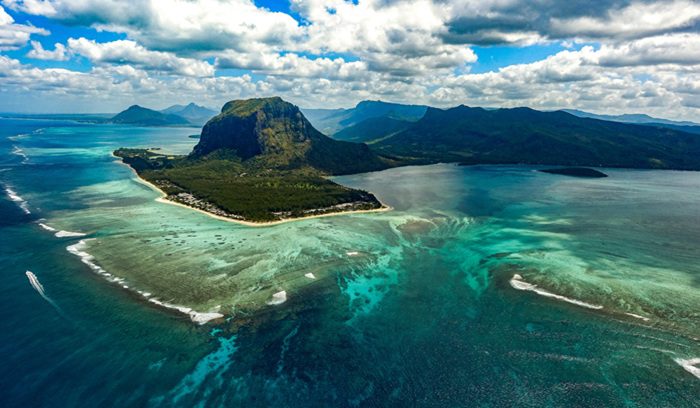
Off the coast of Mauritius, marine scientists have achieved something that seemed improbable just a decade ago: transplanted coral fragments surviving at a 98% rate, even as ocean temperatures climb. The project, led by researchers working with the Mauritius Oceanography Institute, uses a technique called coral gardening combined with deliberate heat-stress conditioning — essentially training coral to endure the warmer seas that climate change is already delivering.
At a glance
- Mauritius coral restoration: The program has transplanted thousands of heat-conditioned coral fragments onto degraded reef sections around the island, achieving survival rates of up to 98% — far above the global average of 60–70% for conventional transplant methods.
- Heat-stress conditioning: Coral fragments are exposed to gradually warming water in controlled nurseries before transplanting, selecting for individuals that can tolerate temperatures associated with bleaching events.
- Regional significance: The Indian Ocean has lost significant reef coverage in recent decades; Mauritius sits at the center of one of the world’s most biodiverse marine regions, and its methods are being watched by neighboring island nations.
Why coral conditioning changes the calculus
Traditional coral restoration plants fragments taken directly from healthy reef areas onto degraded ones. Results are mixed — transplants often survive initial planting only to bleach when the next warm season arrives.
The Mauritius approach borrows from a concept marine biologists call “assisted evolution.” By exposing nursery-grown coral to controlled heat stress, scientists identify and propagate individuals that carry natural resistance. It is selective breeding, applied to a reef.
The technique draws on research pioneered in Australia for the Great Barrier Reef and adapted for the specific coral species and temperature profiles of the Indian Ocean. The Australian Institute of Marine Science has documented how coral populations contain natural variation in heat tolerance — and that this variation can be amplified through selective propagation. Mauritius has taken that finding and put it to work at scale.
The reef crisis these results are answering
Mauritius has lost roughly 50% of its living coral cover since the 1970s, according to estimates from the International Union for Conservation of Nature. The causes are familiar: rising sea temperatures, bleaching events, coastal runoff, and historical dynamite fishing. The 2016 and 2020 mass bleaching events — both linked to elevated Indian Ocean temperatures — accelerated that decline dramatically.
Coral reefs support an estimated 25% of all marine species despite covering less than 1% of the ocean floor. For Mauritius specifically, reefs underpin the fishing economy and tourism sector that together employ a substantial share of the island’s workforce. This is not an abstract environmental story — it is an economic one.
The Coral Restoration Foundation estimates that healthy reefs provide over $375 billion annually in goods and services to human communities worldwide. When reefs die, coastal communities bear the consequences first.
Community involvement and regional lessons
What makes the Mauritius program notable beyond its survival statistics is its structure. Local fishers and dive operators have been trained as “reef gardeners,” maintaining nursery lines and monitoring transplant sites. This distributes both the labor and the ecological knowledge — and it gives coastal communities a direct stake in reef recovery.
Similar community-based models have shown durability in other parts of the world. The Coral Triangle Initiative, covering Southeast Asia and the Pacific, has documented that restoration programs with strong local participation outperform externally managed ones over time. Mauritius appears to be learning from that record.
The United Nations Environment Programme’s coral reef assessments have increasingly emphasized that no single technique will save the world’s reefs — what is needed is a portfolio of approaches, scaled up and shared across regions. Mauritius now has a documented method worth sharing.
What remains unresolved
A 98% survival rate in current conditions does not guarantee performance as ocean temperatures continue to rise beyond the thresholds these corals were conditioned to tolerate. Scientists acknowledge that heat-conditioning buys time — it does not substitute for the emissions reductions that would stabilize ocean temperatures in the first place. The scale of restoration also remains a fraction of what would be needed to reverse regional reef loss without parallel action on the drivers of that loss.
Read more
For more on this story, see: Mauritius pioneers heat-resistant coral with 98% survival rates
For more from Good News for Humankind, see:
- Global suicide rate has fallen by 40% since 1995
- Ghana establishes marine protected area at Cape Three Points
- The Good News for Humankind archive on marine conservation
About this article
- 🤖 This article is AI-generated, based on a framework created by Peter Schulte.
- 🌍 It aims to be inspirational but clear-eyed, accurate, and evidence-based, and grounded in care for the Earth, peace and belonging for all, and human evolution.
- 💬 Leave your notes and suggestions in the comments below — I will do my best to review and implement where appropriate.
- ✉️ One verified piece of good news, one insight from Antihero Project, every weekday morning. Subscribe free.