For the first time in history, the open ocean has legal protection. The UN high seas treaty — formally known as the Agreement on the Conservation and Sustainable Use of Marine Biological Diversity of Areas Beyond National Jurisdiction, or BBNJ Agreement — entered into force in 2024 C.E., extending international environmental law to the roughly 64% of the ocean that lies outside any country’s territorial waters.
At a glance
- UN high seas treaty: The BBNJ Agreement entered into force after the required 60 countries ratified it, crossing that threshold in 2024 C.E. and triggering the treaty’s legal activation.
- Marine protected areas: The treaty creates a formal mechanism to establish protected areas on the high seas — something international law had no tool to do before — potentially covering up to 30% of the ocean under the global 30×30 goal.
- Benefit sharing: A landmark provision requires that profits from marine genetic resources — compounds harvested from deep-sea organisms for pharmaceutical and industrial use — be shared with developing nations, correcting a long-standing imbalance.
Why the high seas have been ungoverned — until now
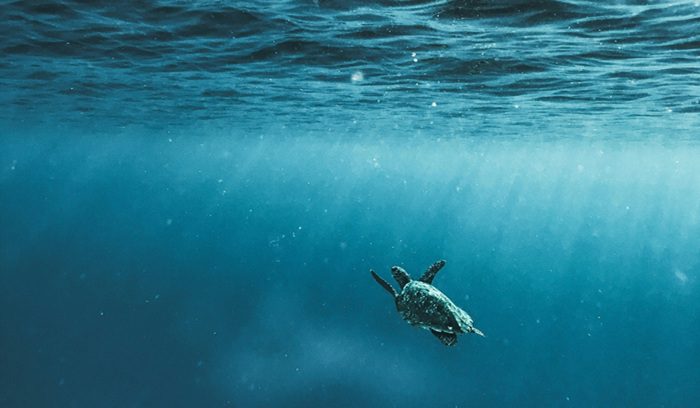
The high seas cover about 200 million square miles. They host extraordinary biodiversity — from hydrothermal vent ecosystems to migratory routes for whales, tuna, and sea turtles — and absorb roughly a quarter of the carbon dioxide humans emit each year.
Yet until the BBNJ Agreement, this vast space existed in a legal gray zone. The 1982 UN Convention on the Law of the Sea established basic rules for shipping and fishing, but it offered no mechanism to designate protected areas, conduct environmental impact assessments, or regulate who could profit from genetic material collected in international waters. Wealthy nations and corporations with the technology to reach the deep ocean had open access. Poorer nations, many of them highly dependent on healthy marine ecosystems, had little recourse.
Negotiations over the treaty spanned nearly two decades. The final text was adopted at the UN in June 2023 C.E., and by 2024 C.E. enough countries had ratified it to bring it into legal force.
What the treaty actually does
The agreement creates four major tools the international community has never had before.
First, it establishes a process for creating marine protected areas in international waters — including the ability to designate zones where fishing, mining, and other extractive activities can be restricted or banned. Second, it requires environmental impact assessments before major industrial activities on the high seas, a basic standard already common in national law but absent from open-ocean governance. Third, it creates a framework to share benefits from marine genetic resources, so that discoveries made in international waters can’t be exclusively captured by the organizations wealthy enough to harvest them. Fourth, it includes provisions to build scientific and monitoring capacity in developing nations — so the treaty doesn’t simply redistribute rules written by richer countries.
Island nations and coastal communities in the Global South were among the most vocal advocates for the treaty during negotiations. For many of them, the health of the high seas is not abstract — it is directly tied to fisheries, storm buffering, and livelihoods.
A milestone within a larger race
The BBNJ Agreement is widely seen as essential infrastructure for the Kunming-Montreal Global Biodiversity Framework, the 2022 C.E. agreement that committed nations to protecting 30% of land and ocean by 2030 C.E. Without a mechanism to protect international waters, the 30×30 ocean target was effectively unachievable — since most of the ocean lies beyond national jurisdiction.
Scientists have estimated that protecting large swaths of the high seas could help rebuild fish populations that migrate between national and international waters, sequester more carbon in the deep ocean, and preserve genetic diversity that may hold solutions to disease, materials science, and climate adaptation.
Still, the treaty faces real challenges. Ratification by major fishing and shipping powers — including some of the world’s largest economies — remains uneven. Enforcement on the open ocean is notoriously difficult, and the new Conference of the Parties will need to develop monitoring systems capable of tracking compliance across waters no single nation controls. The benefit-sharing provisions, while historic, still depend on countries building the legal infrastructure to implement them.
What’s clear is that the legal foundation now exists. The high seas are no longer a commons without rules. How effectively those rules are used will be determined in the years ahead — by governments, by scientists, and by the coalitions of small island nations that pushed hardest to get this treaty across the finish line.
Read more
For more on this story, see: Good News for Humankind — Historic UN High Seas Treaty
For more from Good News for Humankind, see:
- Ghana establishes a marine protected area at Cape Three Points
- Alzheimer’s risk cut in half by drug in landmark prevention trial
- The Good News for Humankind archive on marine conservation
About this article
- 🤖 This article is AI-generated, based on a framework created by Peter Schulte.
- 🌍 It aims to be inspirational but clear-eyed, accurate, and evidence-based, and grounded in care for the Earth, peace and belonging for all, and human evolution.
- 💬 Leave your notes and suggestions in the comments below — I will do my best to review and implement where appropriate.
- ✉️ One verified piece of good news, one insight from Antihero Project, every weekday morning. Subscribe free.