
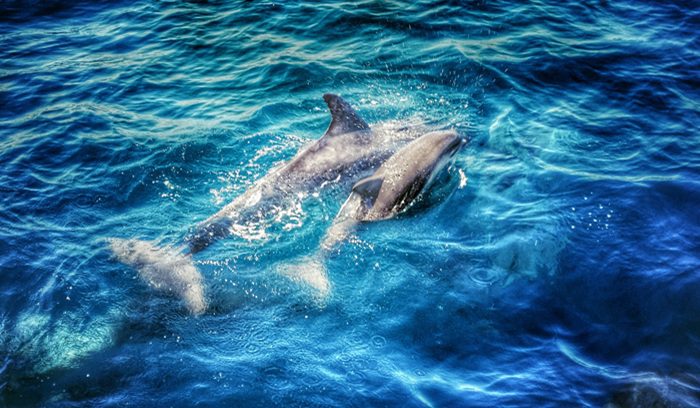
Brazil has established a sweeping new environmental protection zone along its Atlantic coast, placing more than 271,000 acres of ocean, estuary, and coastal habitat under federal protection. The area is home to the boto-cinza — the gray river dolphin — a species found nowhere else on Earth and classified as vulnerable to extinction. The designation marks one of the largest coastal conservation actions in Brazil in years.
At a glance
- Atlantic coast protection: The newly designated zone covers more than 271,000 acres of coastal and marine habitat along Brazil’s Atlantic seaboard, including estuaries, mangroves, and nearshore ocean waters.
- Boto-cinza dolphin: The gray river dolphin — Sotalia guianensis — is the primary species the protected area was designed to defend; it faces threats from gillnet fishing, boat strikes, and habitat loss.
- Atlantic Forest coast: The region is part of one of the world’s most biodiverse and most threatened biomes, the Atlantic Forest, which has lost roughly 85 percent of its original cover since European colonization.
Why this coastline matters
The Atlantic Forest biome once stretched across nearly 15 percent of Brazil’s territory. Today, less than 12 percent of the original forest remains, making what survives — including its coastal margins — extraordinarily valuable.
Estuaries and mangrove systems along this coast serve as nurseries for fish, feeding grounds for dolphins, and buffers against storm surge for coastal communities. Many of those communities are among Brazil’s most economically vulnerable, depending on small-scale fishing for their livelihoods. Protecting the marine ecosystem protects those livelihoods too.
The boto-cinza is a smaller cousin of the Amazon’s famous pink river dolphin. Unlike the Amazon species, the boto-cinza is a saltwater and estuarine animal, navigating the boundary between river, mangrove, and sea. It lives in tight social groups and feeds on fish in shallow, productive coastal waters — exactly the zones most exposed to gillnet bycatch and boat traffic.
A region under pressure
Coastal development, industrial fishing, and pollution have steadily degraded Brazil’s southeastern and northeastern shores over decades. The boto-cinza has been documented getting entangled in gillnets at alarming rates, and bycatch remains one of the leading causes of cetacean mortality globally.
Local Indigenous and traditional fishing communities — known as pescadores artesanais — have long reported declines in dolphin populations and fish stocks together. Their ecological knowledge has been part of the baseline evidence that researchers and advocates used to make the case for federal intervention.
Pollution from agricultural runoff and urban waste has also reduced water quality in estuaries, affecting prey availability for the dolphins and spawning success for the fish they depend on.
What the protection zone does
The new designation restricts destructive fishing practices, limits industrial development within the protected boundary, and establishes a framework for monitoring and enforcement. Conservation authorities will work alongside local fishing cooperatives to define sustainable catch rules for the area.
Brazil’s Atlantic Forest coast has been identified by global conservation scientists as one of the planet’s 36 biodiversity hotspots — areas with extraordinary concentrations of species found nowhere else and extraordinary levels of habitat loss. Marine protections that overlap with these zones are considered among the highest-impact conservation investments possible.
The boto-cinza is not the only beneficiary. Reef fish, sea turtles, manatees, and dozens of seabird species use the same protected waters. Research consistently shows that well-enforced marine protected areas increase fish biomass inside their boundaries within five to ten years — benefiting both wildlife and the fishing communities that depend on healthy oceans.
An imperfect but important step
Brazil has a strong record of designating protected areas and a difficult history of enforcing them. Underfunding of environmental agencies, political pressure from development interests, and the sheer scale of Brazil’s coastline make active management a serious challenge. Conservationists who welcomed the announcement also noted that enforcement resources must follow the designation to make the protection real for the dolphins.
Still, the formal legal status matters. It establishes a boundary that development cannot easily cross and gives environmental prosecutors and local advocates a tool they did not previously have.
For the boto-cinza — an animal that has swum Brazil’s coastal waters for millions of years — a line drawn on a federal map may be the most consequential thing to happen to its future in a generation.
Read more
For more on this story, see: Brazil creates critical coastal protection area to protect Atlantic biodiversity
For more from Good News for Humankind, see:
- Ghana establishes a new marine protected area at Cape Three Points
- Alzheimer’s risk cut in half by drug in landmark prevention trial
- The Good News for Humankind archive on marine conservation
About this article
- 🤖 This article is AI-generated, based on a framework created by Peter Schulte.
- 🌍 It aims to be inspirational but clear-eyed, accurate, and evidence-based, and grounded in care for the Earth, peace and belonging for all, and human evolution.
- 💬 Leave your notes and suggestions in the comments below — I will do my best to review and implement where appropriate.
- ✉️ One verified piece of good news, one insight from Antihero Project, every weekday morning. Subscribe free.