
Curated by Peter Schulte · Published 2026-06-17 · Last updated 2026-06-17
Clean energy has crossed from promise to dominance. In 2025, renewables represented 49% of all global power capacity, solar broke installation records for the third straight year, and clean sources generated more electricity worldwide than coal for the first time in recorded history.
The shift is accelerating across every sector. Australia hit 50% renewable electricity. Uruguay now runs its grid at 97–99% clean power. China installed a full terawatt of solar — alone.
Electric vehicles, heat pumps, and grid-scale batteries are extending the transition into transport and heating. Global EV sales topped 20 million units in 2025, and 91% of new renewable projects now undercut fossil fuels on pure cost.
This is no longer a story about policy subsidies. It is a story about economics, engineering momentum, and a global infrastructure buildout that is outpacing nearly every forecast made a decade ago.
Key takeaways
- Renewables hit 49% of global power capacity in 2025, with solar alone driving 83% of new electricity demand growth worldwide.
- 91% of new renewable energy projects built in 2024 were cheaper than any new fossil fuel alternative, per IRENA.
- China became the first country to install 1 terawatt of solar power and plans to double that to 3,600 GW of wind and solar by 2035.
- Global EV sales topped 20 million units in 2025, a 27% year-over-year rise, with consumer economics now driving adoption more than policy.
- Uruguay, the EU, Australia, and California have all crossed the 50%-plus renewable electricity threshold — proving large grids can run on clean power.
Recovery at a glance
| Subject | Recovery | Where |
|---|---|---|
| Global renewables | 49% of all world power capacity — first time ever | Worldwide |
| Solar installations (2024) | 597 GW added in a single year — largest annual addition of any source ever | Worldwide |
| China solar | First country to reach 1 terawatt of installed solar PV | China |
| Renewables vs. coal | Clean energy generated more electricity than coal for first time in history (H1 2025) | Worldwide |
| Uruguay | 97–99% of electricity from renewables, sustained for years | Uruguay |
| Australia | Crossed 50% renewable electricity for first time in 2024 | Australia |
| California | 67% of retail electricity from renewable/zero-carbon sources in 2023 | USA |
| EU | 50% renewable power share for first time in H1 2024 | European Union |
| Global EV sales | Surpassed 20 million units in 2025, up 27% year-over-year | Worldwide |
| IRENA cost report | 91% of new renewables cheaper than any new fossil fuel in 2024 | Worldwide |
| China EAST tokamak | Fusion plasma sustained for 1,066 seconds (17+ minutes) — world record | China |
| Abu Dhabi solar project | 1 GW round-the-clock solar with 19 GWh battery — world's largest | UAE |
| India Khavda Renewable Energy Park | World's largest clean energy plant under construction, 200+ sq miles | India |
| Switzerland redox flow battery | World's most powerful flow battery — powers 210,000 homes for a full day | Switzerland |
| France WEST tokamak | Fusion plasma held for 1,337 seconds (22+ minutes) — previous world record | France |
| Ethiopia | First country to ban import of all combustion-engine vehicles | Ethiopia |
On this page
- Why this matters
- What’s driving the comeback
- The long road to clean energy: pioneering milestones
- Solar power’s ascent: from rooftops to gigawatt parks
- Wind, storage, and grid innovation pushing clean energy further
- National and regional clean energy transformations
- Electric vehicles and clean transport going mainstream
- Policy, pledges, and the governance of the clean energy transition
- Fusion energy: the long game on clean power’s ultimate prize
- More wildlife comebacks
- The outlook
- Frequently asked questions
Why this matters
The clean energy transition has entered a self-reinforcing phase. Costs have fallen so far that 91% of new renewable projects now undercut fossil fuels without subsidies — meaning the economic argument has flipped entirely.
The scale is historic. The world installed 597 gigawatts of solar in 2024 alone, more than the entire U.S. power fleet adds in a typical decade. Renewables crossed 49% of global installed capacity in 2025, and clean sources overtook coal as the top global electricity source for the first time.
These are not incremental improvements. They represent a structural break from 150 years of fossil-fuel-dominated energy systems — and the momentum is compounding year on year.
By the numbers
- 597 GW of solar installed worldwide in 2024 — a 33% increase over 2023 and the largest single-year addition of any electricity source ever
- 91% of new renewable energy projects in 2024 were cheaper than any new fossil fuel alternative (IRENA, July 2025)
- Global EV sales hit 20 million units in 2025, a 27% year-over-year jump
- China plans 3,600 GW of wind and solar by 2035 — more than the entire current U.S. generating capacity
- Uruguay runs 97–99% of its grid on renewables, achieved in roughly 15 years from an oil-dependent starting point
- India added a record 24.5 GW of solar in 2024, more than double the prior year
- Heat pumps outsold gas furnaces in the U.S. for the second consecutive year, with over 4 million units sold in 2023
What’s driving the comeback
Cost collapse is the master driver. Solar and wind have followed learning curves that surprised even optimists, and IRENA’s 2025 data confirms the tipping point is behind us — renewables are now the cheapest new power source in 91% of cases globally.
Policy created the runway. Feed-in tariffs, renewable portfolio standards, and procurement mandates — from Florida’s solar tax exemption to France’s commercial rooftop law to the U.S. Inflation Reduction Act’s heat pump credits — gave investors the long-term certainty needed to scale manufacturing and cut costs.
National ambition is now accelerating deployment at unprecedented speed. China’s domestic solar manufacturing, seeded in Ningbo and Kaifeng in 1975 and turbocharged by state policy, underpins more than half of all global panel production today. India’s Gujarat and Khavda parks, Brazil’s wind-and-solar surge, and Ethiopia’s EV import ban show the transition has gone genuinely global, not just Western.
The long road to clean energy: pioneering milestones
Every terawatt of solar installed today traces back to a handful of 19th- and 20th-century experiments that proved the physics worked long before the economics did. These foundational moments — the first solar cell, the first wind-powered home, the first offshore turbines — established the technical lineage that modern clean energy scales from. What’s remarkable is how long the gap was between proof of concept and mass deployment, and how quickly that gap is now closing.

Charles Fritts and the birth of the solar cell (1883)
In 1883, New York inventor Charles Fritts coated a selenium wafer with gold and produced the world’s first solar cell, converting sunlight into electricity at 1–2% efficiency. Rudimentary as it was, the device established the principle underlying every solar panel installed today. The lineage from that workshop to modern gigawatt farms is direct.

Frank Shuman’s solar thermal plant proves industrial sun power (1913)
American inventor Frank Shuman built the world’s first solar thermal power station beside the Nile in Egypt in 1913, using parabolic mirrors to pump 6,000 gallons of water per minute onto cotton fields — no fuel required. The project demonstrated that solar energy could run industrial-scale machinery more than a century ago. Cheap oil eclipsed the idea for decades, but the engineering proof never disappeared.

Alessandro Volta’s voltaic pile launches the age of stored electricity (1800)
In 1800, Alessandro Volta stacked zinc and copper discs between brine-soaked cloth to produce the first steady electrical current — the world’s first battery. Within a year, scientists were using it to split water into hydrogen and oxygen. Every battery technology since, including today’s grid-scale storage systems, descends from that stack.
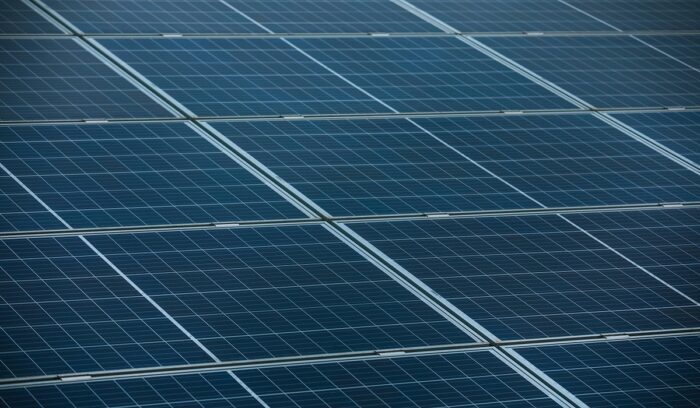
Bell Labs invents the silicon solar cell, making sunlight a true power source (1954)
On April 25, 1954, three Bell Labs researchers held a strip of silicon to the sun and watched it power a small radio transmitter, converting roughly 6% of sunlight into electricity. The demonstration quietly opened the door to practical photovoltaics and eventually to NASA satellite power. It remains the foundational event of the modern solar industry.

James Blyth powers the first home with wind electricity (1887)
In the summer of 1887, Scottish physics professor James Blyth raised a cloth-sailed wind turbine in his cottage garden in Marykirk and lit his home — the world’s first wind-powered residence. When he offered surplus electricity to the village for street lighting, neighbors declined, reportedly fearing it unnatural. The skepticism did not last.

ARCO Solar launches the first utility-scale solar farm in California (1982)
In 1982, ARCO Solar switched on a photovoltaic field near Hesperia, California — the first solar plant anywhere to cross one megawatt of capacity. The silicon cells traced their heritage to NASA satellite research, now wired into an everyday grid. A modest start, but the template for every utility-scale solar farm that followed.

Denmark plants the world’s first offshore wind farm at Vindeby (1991)
In 1991, Danish workers installed 11 small turbines in the shallow waters off Vindeby, each producing just 450 kilowatts — enough to power a few thousand homes and prove turbines could survive the sea. The Vindeby farm was the first offshore wind installation anywhere in the world. Every offshore wind project since, including the gigawatt-scale farms of today, descends from that quiet Danish experiment.

The world’s first wind farm spins up in New Hampshire (1980)
The world’s first wind farm — 20 small turbines on a New Hampshire hillside — fed electricity into the grid in late 1980, proving that multiple machines could work together as a power plant. The project was short-lived; blades broke and it was dismantled within a few years. But the proof of concept held, and the wind farm model spread globally.
China begins domestic solar cell manufacturing in Ningbo and Kaifeng (1975)
China quietly launched its solar manufacturing industry in 1975, with two factories — one in Ningbo, one in Kaifeng — producing photovoltaic cells for civilian use, drawing on technology from the country’s satellite program. Total installed capacity that year was just a fraction of a kilowatt by today’s standards. That domestic manufacturing base would eventually underpin China’s dominance of global solar supply chains.

Los Alamos Scylla I produces the first thermonuclear neutrons (1958)
In spring 1958, a device called Scylla I at Los Alamos briefly squeezed hydrogen plasma with a pulsed magnetic field, releasing a genuine burst of thermonuclear neutrons. Later that year, the U.S., Soviet, and British teams declassified their fusion findings at the Geneva conference, opening the field to international collaboration. It was the experiment that launched the long scientific pursuit of fusion energy.
Solar power’s ascent: from rooftops to gigawatt parks
Solar has gone from the most expensive electricity source to the cheapest in under two decades — a cost collapse without parallel in energy history. The stories in this section trace that arc from early national experiments and landmark installations to the record-shattering deployment numbers of 2024 and 2025. The common thread is scale: each milestone is bigger and cheaper than the last, and the pace of improvement keeps surprising forecasters.

China becomes the first country to install 1 terawatt of solar power (2025)
In 2025, China became the first nation in history to reach one terawatt of installed solar photovoltaic capacity — equivalent to 1.6 million utility-scale arrays running simultaneously. The achievement arrived ahead of schedule and now represents a dominant share of global solar infrastructure. China’s solar buildout, rooted in manufacturing investments dating to the 1970s, has reshaped the economics of the entire industry.

World installs a record 597 GW of solar in a single year (2024)
The world installed 597 gigawatts of new solar capacity in 2024 — a 33% increase over 2023 and the largest annual addition of any electricity source in recorded history, confirmed by SolarPower Europe. It was the first year solar claimed that distinction outright. The figure underscores how completely solar has moved from niche technology to the world’s primary engine of new power generation.

India adds a record 24.5 GW of solar in a single year (2024)
India’s solar sector hit a new annual high in 2024, adding 24.5 gigawatts of capacity — more than double the prior year. A major contributor was rooftop solar: 700,000 households installed panels in just 10 months, supported by a new government subsidy program. The milestone signals that India’s solar expansion is broadening from utility parks to distributed generation.

India’s Khavda park: the world’s largest clean energy plant under construction
Sprawling across more than 200 square miles of salt desert in Gujarat — roughly five times the footprint of Paris — the Khavda Renewable Energy Park is set to become the world’s largest renewable energy facility. Once complete, it is expected to power 16 million homes. The project illustrates how India is deploying clean energy at a geographic scale matched nowhere else.

India’s Gujarat Solar Park opens as one of the world’s largest (2012)
Charanka Solar Park in Gujarat launched in April 2012 as the world’s third-largest photovoltaic installation, built across 2,000 hectares under a shared model that let 36 private developers operate side by side. The park demonstrated that utility-scale solar was viable and replicable in emerging economies. It helped establish India as a serious solar power, years before its current record-breaking deployment pace.

China activates the world’s largest offshore floating solar installation (2024)
In November 2024, a fleet of 2,934 steel-truss platforms went live eight kilometers off China’s Shandong coast, generating enough electricity to power roughly 2.6 million urban residents. The Dongying farm is the first floating solar installation to reach gigawatt scale anywhere in the world. It demonstrates that solar can now be deployed on water as well as land, opening vast new surface areas for generation.

Abu Dhabi plans the world’s largest solar-plus-storage project (2025)
Abu Dhabi’s new solar plant will deliver up to 1 gigawatt of power around the clock — including after sundown — using a 19-gigawatt-hour battery system that stores daytime sunshine for overnight dispatch. No solar facility has operated at this scale with true baseload capability before. The project reframes solar from an intermittent source to a firm power supplier.
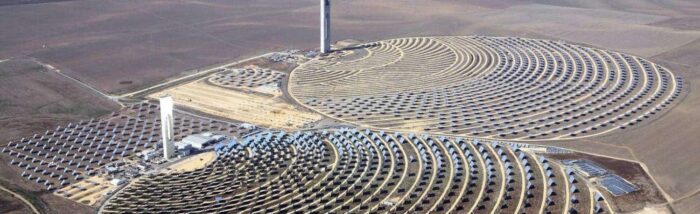
Dubai breaks ground on the world’s largest concentrated solar power plant (2016)
An 800-megawatt concentrated solar power facility began rising inside Dubai’s Mohammed bin Rashid Al Maktoum Solar Park, using mirrors and molten salt to keep generating electricity after sunset. The project represents a significant pivot for a city built on oil revenues. Molten-salt storage makes it one of the most dispatchable large-scale solar plants ever built.

Portugal’s floating solar auction achieves a world-record negative price (2022)
In a landmark Portuguese solar auction, one winning bidder agreed to pay the grid 4.13 euros per megawatt hour for the right to generate clean electricity — a negative price that would have seemed impossible a decade earlier. Developer EDP Renováveis achieved this by bundling 70 megawatts of floating panels with pumped-hydro storage. The auction result showed just how far solar economics had traveled.

U.S. solar installations nearly triple in a single year (2016)
The United States added roughly 14.6 gigawatts of solar capacity in 2016, nearly tripling the prior year and outpacing every other energy source including natural gas. More than 260,000 solar workers supported the boom. The year marked a turning point at which solar became a mainstream rather than marginal part of the American electricity mix.

Cochin International becomes the world’s first solar-powered airport (2015)
In 2015, Cochin International Airport in Kerala, India became the first airport in the world to run entirely on solar power, with more than 46,000 panels spread across 45 acres of former cargo land. The panels meet all of the airport’s electricity needs, with surplus flowing back to the local grid. The project became a widely cited proof point that large, complex facilities could go fully solar.

Poland’s glow-in-the-dark solar bicycle path lights up without the grid (2016)
A 328-foot bicycle path in the rural Polish town of Lidzbark Warminski emits deep blue light for up to 10 hours each night using luminophore particles that charge on sunlight by day — no grid connection required. The path demonstrates a low-infrastructure approach to solar energy that suits rural and off-grid settings. It remains a striking example of solar embedded directly into public infrastructure.

Egypt’s Red Sea wind farm becomes the largest in Africa and the Middle East (2025)
Egypt’s Red Sea Wind Energy project came fully online in June 2025, with 650 megawatts of capacity making a stretch of coastline near Ras Ghareb home to the largest operational wind farm in Africa and the Middle East. The plant can power more than a million Egyptian homes. It signals that utility-scale renewable deployment has arrived in force across the broader Middle East and Africa region.
Wind, storage, and grid innovation pushing clean energy further
Solving intermittency — the gap between when renewables generate and when people need power — is the central engineering challenge of the clean energy transition. The stories here show that challenge being met from multiple directions at once: longer-duration batteries, hybrid wind-hydro systems, geothermal baseload, and grids that are already running at near-100% zero-carbon for sustained periods. The pace of innovation in storage and grid management has accelerated sharply since 2020.

Switzerland builds the world’s most powerful redox flow battery (2026)
A redox flow battery under construction in a 27-meter pit in northern Switzerland will, when complete in 2029, be capable of running 210,000 homes for a full day from a single charge. Unlike lithium-ion batteries, the system stores energy in two liquid electrolytes, offering longer duration and a potentially much longer service life. It represents a new tier of grid-scale storage designed for multi-hour and daily balancing.

England begins construction on the world’s largest liquid air battery (2020)
Near Manchester, Highview Power broke ground on the world’s largest liquid air battery — an £85 million facility that compresses surplus renewable electricity into liquid air and releases it through a turbine when needed, with enough capacity to power 200,000 homes for five hours. The project targets a former industrial site and aims to commercialize a storage technology with few geographic constraints. It is designed explicitly to absorb renewable surplus and return it to the grid on demand.

Germany builds wind turbines that double as gravity batteries (2016)
Four wind towers rising 809 feet in Germany’s Swabian-Franconian forest integrate pumped-hydro storage directly into their structures, pumping water up inside the towers when wind is plentiful and releasing it downhill when it stops. They are the world’s tallest wind turbines, and the hybrid design turns each tower into a self-contained energy buffer. The project points toward turbines that manage their own intermittency without separate storage infrastructure.

Utah geothermal project secures world’s largest geothermal power purchase agreement
A Utah geothermal development completed what developers describe as the world’s largest geothermal power purchase agreement — a 15-year deal to deliver 320 megawatts of always-on clean electricity to Southern California Edison, enough for roughly 350,000 homes. Fervo Energy’s project offers firm, dispatchable power that complements variable solar and wind on the California grid. It signals growing interest in geothermal as a baseload clean energy source.

U.K. solar hits 15 GW record as gas falls to a historic low (2025)
On April 22, 2025, Britain’s electricity grid reached 98.8% zero-carbon power for a half-hour period, with gas squeezed to just 1.2% of the mix. A day later, solar set a new national peak at 15.4 gigawatts, and wind had broken its own records just weeks before. The figures show a grid that has been structurally transformed from one dominated by gas a decade ago.

China unveils the world’s first maglev wind turbine in Beijing (2006)
A Beijing engineering team revealed a wind turbine in 2006 whose rotor floated on magnetic levitation, eliminating bearing friction and reportedly allowing generation to begin in breezes as slow as 1.5 meters per second. The maglev design was an early attempt to extract wind energy from conditions too gentle for conventional turbines. It represented a frontier approach to wind technology that anticipated later efforts to make turbines more sensitive and efficient.

World wind capacity jumps by a fifth in a record year (2019)
Wind power added 60.4 gigawatts of new capacity globally in 2019, a 19% jump over the prior year. Offshore wind was the notable breakout, making up a tenth of all new installations for the first time — marking the moment offshore moved from niche to mainstream. The year confirmed wind’s status as a primary driver of the global clean energy buildout.

America’s first offshore wind farm breaks ground at Block Island (2015)
Construction began in 2015 on five offshore turbines in the Atlantic waters off Block Island, Rhode Island — the first offshore wind farm in U.S. history. A 21-mile submarine cable eventually connected the island to the mainland grid, replacing its diesel generators. Small in scale, the project cracked open the American offshore wind market and set the template for the much larger projects that followed.

Helsinki installs the world’s largest air-to-water heat pump (2024)
A heat pump built by MAN Energy Solutions for Finnish utility Helen Oy can warm 30,000 homes on renewable electricity alone, even when outdoor temperatures drop to -4°F. Using carbon dioxide as its refrigerant, it is the largest air-to-water heat pump in the world. The installation demonstrates that industrial-scale heat pumps can replace fossil-fuel district heating in cold climates.

Heat pumps outsell gas furnaces in the U.S. for the second year running (2023–24)
Heat pump shipments surpassed gas furnace sales in the United States for the second consecutive year, with more than 4 million units sold in 2023 alone. Federal tax credits under the Inflation Reduction Act have helped drive adoption, and the trend is beginning to look like a durable market shift rather than a one-year anomaly. The data suggest building heating is following the same cost-driven trajectory as solar and EVs.
National and regional clean energy transformations
The most persuasive evidence that the clean energy transition is real and durable comes from countries and states that have already crossed the threshold — places where renewables now supply the majority of electricity, not as a goal but as a current operational fact. What these cases share is not geography or wealth but a combination of sustained policy commitment, diversified renewable portfolios, and willingness to restructure grid infrastructure around variable generation.

Uruguay sustains a 97–99% renewable electricity grid (2025)
Uruguay now runs its electricity grid at 97–99% renewable power — one of the highest shares of any country on Earth — after transforming from near-total dependence on fossil fuel imports in roughly 15 years. The pivot began not from climate idealism but from a practical response to a costly oil price shock in 2008. Uruguay’s case is widely cited as the clearest proof that a full-grid renewable transition is operationally achievable.

Uruguay crosses 90–98% renewable electricity, a 15-year transformation
Uruguay generates between 90% and 98% of its electricity from renewables, a transformation achieved in roughly 15 years after starting almost entirely dependent on imported oil. The turning point came in 2008 when an oil price spike pushed the government to restructure its entire energy policy around domestic wind and solar resources. The country now exports lessons in rapid grid decarbonization to peers worldwide.

Australia crosses 50% renewable electricity for the first time (2024)
In 2024, solar and wind together supplied more than 50% of Australia’s electricity for the first time — a landmark for a grid where coal dominated at roughly 75% just a decade earlier. The shift was driven by the world’s highest per-capita rate of rooftop solar installation alongside rapid utility-scale wind and solar buildout. Australia’s grid transformation is among the fastest of any large developed economy.

California runs two-thirds of its giant economy on clean energy (2023)
In 2023, 67% of California’s retail electricity came from renewable and zero-carbon sources, making it the largest economy on Earth to reach that milestone. The shift was built on decades of binding renewable energy mandates, a solar boom that began with rooftops, and increasingly competitive utility-scale wind. California’s scale — the fifth-largest economy in the world — makes the figure among the most consequential clean energy statistics in the U.S.

The EU surpasses 50% renewable power share for the first time (H1 2024)
In the first half of 2024, clean sources generated exactly half of the European Union’s public electricity — the first time the bloc had crossed that line. Adding nuclear, three-quarters of Europe’s power came from zero-carbon sources in the same period. The milestone reflects a decade of renewable investment across member states that has fundamentally changed the composition of the European grid.

Wind and solar top one-third of Brazil’s electricity for the first time (2025)
In August 2025, wind and solar supplied 34% of Brazil’s electricity — up sharply from 24% for all of 2024 — even as drought pushed hydropower to a four-year low. The fact that Brazil avoided blackouts during a hydro shortfall by drawing on wind and solar illustrates how renewable diversification improves grid resilience, not just decarbonization. Brazil’s renewable mix is now broad enough to cover for weakness in any single source.

Renewables overtake coal as the world’s top electricity source for the first time (2025)
For the first time in recorded history, clean energy sources generated more electricity globally than coal over a single half-year period in 2025, according to energy think tank Ember. Solar drove 83% of new electricity demand growth and now produces 58% of it. The milestone marks the end of coal’s uninterrupted reign as the world’s dominant electricity source.

Renewables hit 49% of global power capacity for the first time (2025)
Global installed renewable power crossed 5,100 gigawatts in 2025, representing 49% of all capacity worldwide — the closest the world has come to a majority-renewable grid. The International Renewable Energy Agency reported a single-year addition of 692 gigawatts, the largest ever. At this pace, renewables are on course to become the majority of global capacity within one or two years.

Renewables top all other new power sources globally for the first time (2015)
In 2015, solar, wind, and other renewables made up roughly two-thirds of all new power capacity added worldwide — the first year renewables led every other source in new additions, per an IEA report. China drove the wave, installing more solar and wind than any other country. The year established renewables as the default choice for new generation rather than an alternative.

Coal’s share of India’s power capacity drops below 50% for the first time since the 1960s
Coal now accounts for less than half of India’s electricity capacity — the first time that has been true since the 1960s. Renewables made up nearly three-quarters of new capacity India added in the first quarter of 2024. For the world’s most populous country to cross this line is one of the most significant structural shifts in the global energy system.
Electric vehicles and clean transport going mainstream
Transportation electrification has moved from niche markets and government demonstration projects to mass-market economics faster than almost any analyst predicted. The shift is no longer primarily policy-led: in the world’s largest auto market, EVs have crossed the threshold where consumer preference and price parity are sustaining growth independent of mandates. Public transit electrification is following a parallel track across Asia and Africa.

Global EV sales top 20 million units in 2025
Global electric vehicle sales surpassed 20 million units in 2025, a 27% year-over-year increase that marks a structural turning point in transportation. For the first time, the report notes, consumer economics rather than government policy is the primary driver of adoption in price-sensitive markets. The milestone confirms that the EV transition has moved beyond the early-adopter phase.

One in four new cars sold in China was fully electric in 2023
In 2023, 25% of new car sales in China were fully battery-electric vehicles, with plug-in vehicles of all types capturing 37% of the market — up from just 6.3% three years earlier. The speed of the shift has forced a wholesale restructuring of China’s auto industry and accelerated the decline of combustion-engine vehicle economics globally. China’s EV penetration rate is now the benchmark against which other major markets are measured.

EVs on course to capture one-sixth of global market in 2023
Electric vehicles were tracking toward 14 million global sales in 2023, up from 10 million the prior year, with the International Energy Agency projecting EVs at 35% of new car sales worldwide by 2030. The pace of growth was consistently outrunning analyst forecasts. The trajectory illustrated how quickly exponential growth curves can overwhelm linear projections.

Ethiopia becomes the first country to ban combustion-powered vehicle imports
Ethiopia announced in early 2025 that it was banning the import of all gasoline and diesel cars — the first country in the world to do so. The policy rests on a renewable electricity foundation, meaning Ethiopian EVs run on clean power from the start. The move is particularly striking given Ethiopia’s income level, challenging the assumption that bold clean transport policy is the preserve of wealthy nations.

Malaysia commits to 1,100 electric buses by 2030
Malaysia’s government committed to deploying more than 1,100 electric buses nationwide by 2030 as part of its National Energy Transition Roadmap, one of Southeast Asia’s most concrete public transit electrification pledges. The initiative targets significant reductions in urban air pollution alongside carbon emissions. It reflects a regional pattern of governments using bus fleet electrification as the fastest lever for clean transport in dense cities.

Telangana orders 915 electric buses in a major clean transit push
The Indian state of Telangana ordered 915 zero-emission electric buses — one of the largest single clean transit procurements in India’s history — to serve routes across Hyderabad and other urban centers. The purchase is part of a broader pattern of Indian states using large EV bus orders to reshape urban air quality and reduce diesel dependence in public transport. At this scale, fleet electrification begins to move the needle on city-level emissions.
Policy, pledges, and the governance of the clean energy transition
Technology and cost curves explain why renewables are winning economically, but policy explains why they are winning fast enough to matter for the climate. The stories in this section show how governance shapes the pace of transition — from national bans and mandates to international declarations and city-level rules — and how the cumulative weight of those decisions has created a durable policy architecture that outlasts individual administrations.

91% of new renewables now beat fossil fuels on cost, IRENA reports (2025)
A July 2025 IRENA report found that 91% of new renewable energy projects built in 2024 were cheaper than any new fossil fuel alternative, with onshore wind delivering electricity at record low prices. The finding represents the definitive economic verdict on the energy transition: renewables have won on cost, not just on environmental grounds. The remaining 9% is largely attributable to specific geographic or grid conditions rather than technology limits.

China pledges to double its clean energy supply to 3,600 GW by 2035
China’s new climate pledge to the United Nations sets a target of 3,600 gigawatts of wind and solar power by 2035 — more than the entire current electricity-generating capacity of the United States, and roughly double what China has already built. The commitment is embedded in China’s formal NDC submission, giving it international treaty-level visibility. If met, it would represent the largest single national clean energy buildout in history.

The EU commits to becoming the first major economy to reach climate neutrality by 2050
In 2018, the European Union unveiled a strategy to become the first large economy to commit to full climate neutrality by 2050, anchored in plans to scale solar and wind to 80% of electricity. The plan relied on technology already commercially available rather than speculative breakthroughs. The EU’s formal commitment helped establish 2050 net-zero as the global benchmark target that other major economies subsequently adopted.

Pacific Island leaders call for a global fossil fuel moratorium in the Suva Declaration (2015)
The Suva Declaration on Climate Change, signed by Pacific Island leaders in Fiji in 2015, was the first time national governments formally called for a halt to all new fossil fuel extraction. Nations like Tuvalu, sitting less than two meters above sea level, named the source of the crisis explicitly rather than just calling for emissions reductions. The declaration shifted diplomatic language and gave small island states a more assertive voice in climate negotiations.
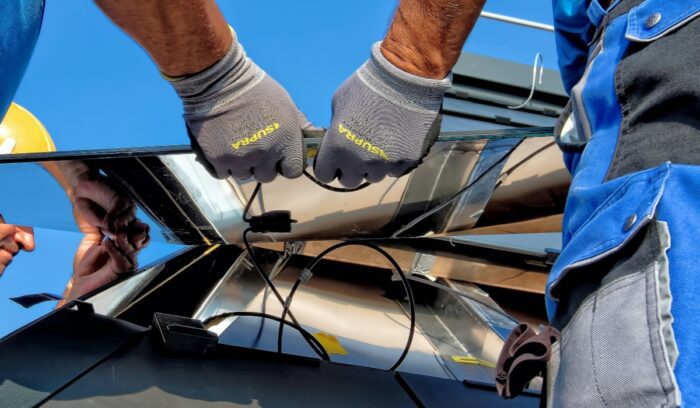
France requires new commercial rooftops to be green or solar (2015)
France’s 2015 green roof law made the country one of the first to legally require new commercial buildings to install either living vegetation or solar panels on their rooftops. The mandate created a guaranteed market for commercial solar installation that did not depend on voluntary uptake. It became a model for similar building code requirements adopted in cities and countries worldwide in subsequent years.

Florida votes 73% to remove property tax on solar equipment (2016)
In November 2016, roughly 73% of Florida voters approved a ballot measure exempting home solar equipment from property tax assessments — a rare, wide bipartisan coalition on clean energy policy. The measure also defeated a utility-backed counter-measure on the same ballot. The vote illustrated that popular support for solar access crosses political lines when framed around homeowner rights and energy choice rather than climate.

Benin commits to solar as its primary electricity source by 2030
Benin formally committed to making solar photovoltaics its primary electricity source by 2030, ending years of dependence on power imports from neighboring nations that left households and businesses with unreliable supply. The policy marks a significant turn in West African energy governance, where domestic renewable deployment is increasingly framed as an energy security imperative rather than an environmental aspiration. Benin’s commitment adds to a growing list of sub-Saharan nations using solar to leapfrog fossil fuel infrastructure.
Fusion energy: the long game on clean power’s ultimate prize
Fusion has been ‘thirty years away’ for most of the past century, but the record-setting plasma confinement times achieved in China and France between 2023 and 2026 represent genuine scientific progress — measurable, reproducible, and accelerating. These milestones do not yet mean commercial fusion power is imminent, but they do mean the physics is being solved at a pace that has shifted serious energy analysts from dismissal to cautious attention.

China sustains fusion plasma for over 17 minutes — a world record (2026)
Scientists at China’s EAST tokamak in Hefei sustained superheated plasma at 100 million degrees Celsius for 1,066 seconds — more than 17 minutes — the longest plasma confinement time ever recorded at that temperature. The achievement more than doubled the same machine’s 2023 record of 403 seconds. It is the most significant experimental milestone in fusion energy in decades.
China’s EAST tokamak holds plasma for 1,066 seconds, doubling its own record (2025)
China’s Experimental Advanced Superconducting Tokamak held superheated plasma stable for 1,066 seconds in early 2025 — more than double the 403-second record it set in 2023. The achievement demonstrates that the machine’s confinement performance is improving systematically rather than episodically. Each new record narrows the distance between experimental plasma physics and a working fusion power plant.
France’s WEST tokamak holds fusion plasma for a record 22 minutes (2025)
The WEST Tokamak in southern France sustained a hydrogen plasma for 1,337 seconds — more than 22 minutes — beating the previous record by roughly 25%, while using just 2 megawatts of heating power and without damaging the reactor’s internal components. The result established a new global benchmark for plasma endurance at the time of its achievement. France’s record and China’s subsequent one represent a productive international competition that is advancing the field on multiple fronts.
More clean energy stories

Australia’s households install record 3.5 million panels in 2017
The outlook
The trajectory is unambiguous. Renewables are adding capacity faster than any energy source in history, costs keep falling, and storage — from Utah’s geothermal baseload deal to Switzerland’s 27-meter flow battery pit — is beginning to solve the intermittency problem that long limited clean power.
Fusion remains a longer-horizon bet, but China’s 17-minute plasma record and France’s 22-minute run signal that scientific progress is real and accelerating. The technologies that seemed speculative a decade ago are entering engineering rather than physics.
The open question is speed, not direction. Whether the transition outpaces climate tipping points depends on grid investment, permitting reform, and whether the policy momentum that created the cost curves is maintained — even as the economics increasingly stand on their own.
Frequently asked questions
How much of the world’s electricity now comes from clean energy?
As of 2025, renewables represent 49% of all global installed power capacity. For the first time in recorded history, clean energy sources generated more electricity worldwide than coal over a single half-year period. Solar drove 83% of new electricity demand growth globally, according to energy think tank Ember.
Which country has the most solar power installed?
China is the first and only country to reach 1 terawatt of installed solar photovoltaic capacity, a milestone crossed in 2025. That is equivalent to 1.6 million utility-scale arrays running simultaneously. China also plans to reach 3,600 gigawatts of combined wind and solar by 2035 — more than the entire current U.S. generating capacity.
Is renewable energy now cheaper than fossil fuels?
Yes, decisively. According to a July 2025 IRENA report, 91% of new renewable power projects built in 2024 were cheaper than any new fossil fuel alternative. Onshore wind now delivers electricity at record low prices. The economic case for new coal or gas plants has effectively collapsed in most markets.
How did Uruguay get to nearly 100% renewable electricity?
Uruguay transformed its grid from near-total dependence on fossil fuel imports to 97–99% renewable electricity in roughly 15 years. The shift began in 2008 when an oil price spike prompted a government decision to build out domestic wind and solar resources aggressively. The transition was driven by energy security economics rather than climate policy, and it has been operationally stable for years.
How does Finland address energy and heating sustainability?
Helsinki installed the world’s largest air-to-water heat pump, built by MAN Energy Solutions, capable of warming 30,000 homes on renewable electricity alone even at temperatures as low as -4°F. Finland’s approach uses district heating infrastructure — already widespread in Nordic cities — as the backbone for electrified, renewable-powered building heat, replacing gas and oil-fired systems at city scale.
When did electric vehicles start outselling traditional cars in major markets?
In China, one in four new cars sold in 2023 was fully battery-electric, with plug-in vehicles of all types capturing 37% of the market — up from just 6.3% three years earlier. Globally, EV sales topped 20 million units in 2025, a 27% annual increase. IRENA and the IEA project EVs at 35% of global new car sales by 2030.
About this article
🤖 This article is AI-generated, based on a framework created by Peter Schulte.
🌍 It aims to be inspirational but clear-eyed, accurate, and evidence-based, and grounded in care for the Earth, peace and belonging for all, and human evolution.
💬 Leave your notes and suggestions in the comments below — I will do my best to review and implement where appropriate.
✉️ One verified piece of good news, one insight from Antihero Project, every weekday morning. Subscribe free.
