
Curated by Peter Schulte · Published 2026-06-16 · Last updated 2026-06-16
The ocean is winning ground.
As of April 2026, more than 10% of the world’s seas are officially protected — up from 8.6% just two years earlier. The High Seas Treaty, two decades in the making, entered into force in January 2026, giving legal protection to the roughly two-thirds of the ocean that lie beyond any nation’s borders.
Fisheries are rebounding. Whale populations are surpassing pre-whaling numbers. Coral restoration is achieving survival rates once thought impossible. Nations from Colombia to French Polynesia are blowing past the global 30×30 biodiversity target.
These aren’t isolated wins — they reflect a generational shift in how humanity governs the sea.
Key takeaways
- More than 10% of the world’s oceans are now officially protected, up from 8.6% in 2024 — the fastest expansion in history.
- The High Seas Treaty entered into force in January 2026, giving the first-ever binding legal protection to the open ocean.
- 94% of tracked U.S. fish stocks are no longer being overfished — an all-time record low.
- Nations including Colombia (47%), Australia (52%), and French Polynesia have already exceeded the global 30×30 ocean protection target.
- Coral restoration, debt-for-nature swaps, plastic bans, and Indigenous stewardship are emerging as the most effective tools in the marine conservation toolkit.
Recovery at a glance
| Subject | Recovery | Where |
|---|---|---|
| World ocean coverage | 10.01% officially protected, up from 8.6% in two years | Global |
| High Seas Treaty | Entered into force Jan 2026, protecting 64% of ocean for first time | International |
| French Polynesia MPA | 4.5 million sq km — world's largest marine protected area | French Polynesia |
| Eastern Australian humpback whales | 50,000+ individuals — surpassing pre-whaling numbers | Australia |
| Colombia marine protection | 47.4% of marine and coastal areas protected | Colombia |
| Australia ocean protection | 52% of oceans protected — more than any other country | Australia |
| U.S. fish stocks | 94% of tracked stocks no longer overfished — all-time record | United States |
| Coho salmon, Mendocino Coast | 30,000+ adults returned — 10x the count from a decade ago | California, USA |
| Papua New Guinea MPA | ~200,000 sq km no-take reserve proposed in Coral Triangle | Papua New Guinea |
| Mauritius coral restoration | 98% survival rate for heat-conditioned transplanted coral | Mauritius |
| Ecuador Galápagos debt-for-nature swap | $450 million unlocked — largest debt-for-nature deal ever | Ecuador |
| Chile ocean protection | Over 1 million sq km of sea fully protected | Chile |
| Sei whales | Reappeared in Argentine waters after ~100-year absence | Argentina |
| Green sea turtles | Removed from IUCN endangered list for first time in decades | Global |
| Biden offshore drilling ban | 625 million acres of U.S. coastal waters permanently protected | United States |
| Dominica sperm whale reserve | World's first protected area designed specifically for sperm whales | Dominica |
On this page
- Why this matters
- What’s driving the comeback
- Global marine protection milestones: treaties and coverage targets
- National ocean protection: countries expanding and exceeding marine protected areas
- Fisheries reform and marine species rebounds
- Coral restoration and innovative marine science
- Plastic pollution: bans, cleanups, and ocean accountability
- Legal rights, climate accountability, and ocean governance innovations
- More wildlife comebacks
- The outlook
- Frequently asked questions
Why this matters
Ocean conservation has entered a new era — one defined not by incremental gains but by structural change at global scale.
The passage of the High Seas Treaty, the expansion of protected area networks past the 10% global threshold, and a cascade of national commitments from Colombia to the Azores represent a shift in political will that was unimaginable a decade ago.
What makes this moment significant is the convergence: legal frameworks, financial instruments, Indigenous stewardship, and scientific innovation are all accelerating at once. The ocean isn’t just being studied — it’s being governed.
By the numbers
- 10.01% of the world’s oceans are now officially protected as of April 2026, up from 8.6% two years prior
- 94% of tracked U.S. fish stocks are no longer being overfished — the best result since federal record-keeping began
- Eastern Australian humpback whales topped 50,000 individuals in 2024, exceeding pre-whaling population numbers
- French Polynesia’s Tainui Atea MPA spans over 4.5 million square kilometers — the largest on Earth
- Ecuador’s Galápagos debt-for-nature swap unlocked an estimated $450 million — the largest such deal ever signed
- More than 40 nations pledged $12 billion by 2030 to protect coral reefs
- The EU committed €3.5 billion — the largest single ocean pledge ever made at the Our Ocean Conference
What’s driving the comeback
The most effective interventions share a common trait: they combine legal force with local buy-in.
Debt-for-nature swaps — pioneered at scale by Ecuador’s Galápagos deal and replicated with Indonesia’s coral reefs — unlock conservation finance without new public spending. Indigenous stewardship, visible in California’s first tribal Marine Stewardship Area, Hawaii’s Ākoʻakoʻa coral program, and Canada’s First Nations conservation agreement, has proven especially durable because communities have direct stakes in healthy ecosystems.
Fisheries management is another proof point. The U.S. West Coast groundfish fishery’s 25-year comeback and the record-low U.S. overfishing rate both trace directly to rigorous catch limits enforced over decades — unglamorous, technical work that paid off. The lesson: sustained regulatory discipline outperforms short-term interventions every time.
Global marine protection milestones: treaties and coverage targets
The past four years produced a cluster of ocean governance breakthroughs that would have seemed utopian a decade ago. What connects them is a shift from voluntary aspiration to binding legal obligation — and the critical mass of nations willing to back it with money and ratification.

10% of the world’s oceans are now officially protected
As of April 2026, 10.01% of the world’s seas carry official protected status — a threshold crossed for the first time in history. That represents roughly 5 million square kilometers of newly safeguarded waters added in just two years, an expanse larger than the entire European Union.

UN member states agree to landmark deal to protect life in international waters
For the first time, the world has a binding legal framework for the high seas — the vast international waters covering roughly half of Earth’s surface that had long existed beyond environmental law. More than 190 countries agreed to the deal, creating a foundation for protected areas and environmental standards across open ocean.

Seventy-plus nations sign historic high seas treaty on day one
More than 76 countries and the European Union signed the High Seas Treaty on its very first day open for signatures at the UN General Assembly — a signal of unusually broad political momentum. The agreement creates the first-ever legal framework to establish protected areas across international waters.

Palau becomes first nation to ratify the High Seas Treaty
Palau, a tiny Pacific nation of around 340 islands, became the first country in the world to ratify the High Seas Treaty. The move put early ratification pressure on larger nations and underscored how small island states have consistently led ocean protection efforts.
The High Seas Treaty enters into force, giving the open ocean its first legal protection
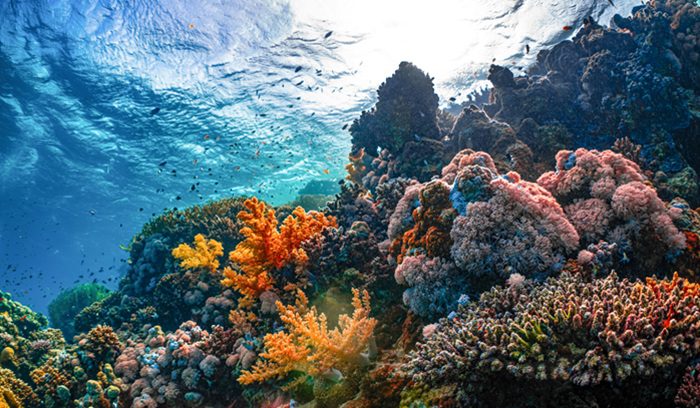
After nearly 20 years of negotiations, 60 nations ratified the High Seas Treaty by September 2025, triggering its entry into force on January 17, 2026. The roughly two-thirds of the ocean beyond national borders now has binding legal protection for the first time in history.

UN high seas treaty confirmed in force, opening a new era of ocean governance
The BBNJ Agreement’s entry into force extends international environmental law to the approximately 64% of ocean lying outside any country’s territorial waters. For the first time, marine protected areas can be established and environmental impact assessments required in the open ocean.
Historic Montreal deal: nearly 200 countries pledge 30×30 protection
Nearly 200 countries agreed in Montreal to protect 30% of the planet’s land and oceans by 2030, a leap from 16% of land and 8% of seas then safeguarded. The agreement also commits wealthy nations to increased biodiversity finance — making it both a conservation and a development compact.
National ocean protection: countries expanding and exceeding marine protected areas
A striking number of nations haven’t just pledged marine protection — they’ve delivered it at scales that exceed global targets. These stories reveal that ambition is no longer the bottleneck; implementation and enforcement are the next frontier.

Samoa protects 30% of its ocean years ahead of the 2030 deadline
Samoa’s national marine spatial plan formally designated nine new marine protected areas covering 30% of its ocean territory — meeting the global 30×30 biodiversity target years early. The plan protects coral reefs, mangrove forests, and seagrass meadows critical to coastal communities.

Portugal creates Atlantic sanctuary, protecting 27% of its ocean waters
Portugal’s new marine protected area around the Gorringe Ridge pushed the country’s protected marine territory from 19% to 27% of its vast Atlantic waters. Announced at a UN Oceans Conference, the designation covers biologically rich seamount habitat in the deep Atlantic.

Chile’s ocean protection surpasses one million square kilometres
Chile has designated vast stretches of its Pacific waters as fully protected ocean, barring industrial fishing, deep-sea mining, and oil exploration across more than one million square kilometers. The move shields critical habitat for blue whales, whale sharks, and other vulnerable species.

Colombia protects 47% of marine areas, far exceeding the 30×30 goal
Colombia has already protected 47.4% of its marine and coastal areas, dramatically surpassing the global 30×30 commitment made by 196 nations in 2022. Much of that progress has been shared with Indigenous communities and Afro-descendant groups, embedding local stewardship into formal protection.

Australia pledges to protect 52% of its oceans — more than any other country
Australia’s ocean protection expanded significantly with a sub-Antarctic marine reserve quadrupling to add 300,000 square kilometers — an area roughly the size of Italy. The expansion around Heard and McDonald Islands shields glaciers, albatrosses, macaroni penguins, and rare deep-sea species.

French Polynesia creates the world’s largest marine protected area
French Polynesia’s Tainui Atea marine protected area, announced at the 2025 UN Ocean Conference, spans over 4.5 million square kilometers — making it the largest marine protected area on Earth. The designation bans bottom trawling and deep-sea mining while preserving traditional fishing rights.
Papua New Guinea proposes one of the world’s largest no-take marine reserves
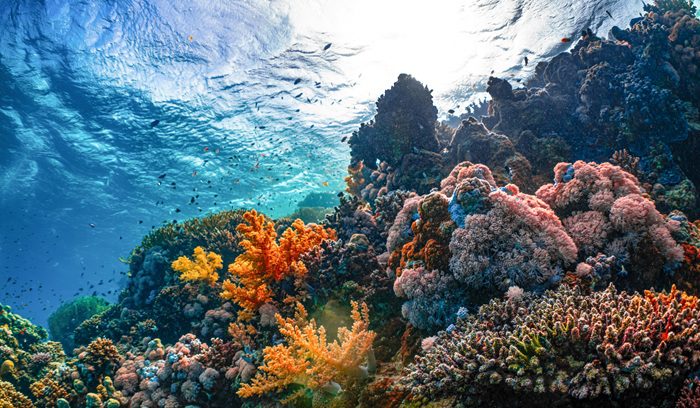
Papua New Guinea pledged to protect roughly 200,000 square kilometers of Pacific Ocean inside the Coral Triangle — an expanse nearly the size of the United Kingdom. The proposed Western Manus Marine Protected Area sits in waters recognized as among the most biodiverse on the planet.

Indonesia commits to protecting 10% of its seas by 2030 and 30% by 2045
Indonesia’s marine protection plan would eventually shield nearly a million square kilometers of some of Earth’s most biodiverse waters in a two-phase expansion. The country’s eastern seas sit within the Pacific Coral Triangle, giving its commitment outsized global significance.

Marshall Islands establishes its first marine sanctuary around pristine Pacific atolls
The Marshall Islands created its first federal marine protected area, shielding 48,000 square kilometers of ocean around the remote Bikar and Bokak atolls. A National Geographic Pristine Seas expedition found these waters hold the highest reef fish biomass anywhere surveyed in the Pacific.

The Azores builds the largest marine protected area network in the North Atlantic
Marine protected area status now covers 287,000 square kilometers around Portugal’s Azores islands — the largest such network in Europe. Half of that expanse bans fishing and other harmful activities outright, giving deep-sea corals, whales, manta rays, and sharks genuine refuge.

Peru approves long-awaited national marine reserve
Peru’s new Grau Tropical Sea National Reserve safeguards 115,675 hectares of ocean where the warm Eastern Pacific meets the cold Humboldt Current — a zone the IUCN ranks among the 70 most vital places on Earth for marine biodiversity. Humpback whales birth their calves in these waters.

Biden permanently bans offshore drilling across 625 million acres of U.S. coastal waters
President Biden’s executive action placed 625 million acres of U.S. coastal waters permanently off-limits to offshore drilling, covering the entire East Coast, the eastern Gulf of Mexico, and the Pacific coastlines of Washington, Oregon, and California. The scale of the protection is unprecedented in American history.

California’s Chumash Heritage sanctuary becomes the nation’s third-largest marine sanctuary
Chumash Heritage National Marine Sanctuary now protects 4,543 square miles of California coastline, making it the country’s third-largest marine sanctuary. It is the first marine sanctuary anywhere in the U.S. shaped from the start by Indigenous tribes, setting a new precedent for co-governance.

Mexico designates 20 new protected areas covering more than 5 million acres
Mexico expanded its protected areas by roughly 5.7 million acres across 12 states and two coastal zones, with the largest designation — Bajos del Norte national park — safeguarding grouper spawning grounds and hawksbill turtles in the Gulf of Mexico. The move adds critical habitat across two coastlines.

Dominica creates the world’s first sperm whale reserve
Dominica’s new sperm whale reserve protects roughly 200 whales living year-round in an 800-square-kilometer stretch of ocean off the island’s western coast — the first protected area anywhere designed specifically for this species. Commercial fishing and large ships will be restricted from the zone.

Brazil shields 271,000 acres of Atlantic coast to protect a rare river dolphin
Brazil placed more than 271,000 acres of ocean, estuary, and mangrove habitat under federal protection along its Atlantic coast — one of the country’s largest coastal conservation actions in years. The zone was created primarily to defend the boto-cinza, a rare gray river dolphin unique to the region.

The Philippines protects 151,000 acres of coral reef in the Coral Triangle
Philippine President Ferdinand Marcos Jr. signed legislation creating the Panaon Island Protected Seascape in 2025, safeguarding 151,000 acres within the Pacific Coral Triangle. The protected area’s coral cover runs three times higher than the Philippine average, making it a critical biodiversity stronghold.

Ghana doubles its protected fishing zone to shield small-scale fishers
Ghana’s Fisheries and Aquaculture Act 2025 doubled the Inshore Exclusive Zone from 6 to 12 nautical miles, offering a landmark victory for artisanal fishing communities along one of West Africa’s most pressured coastlines. The reform explicitly protects small-scale fishers from industrial competition in nearshore waters.

Colombia’s $245 million Heritage initiative protects nearly 80 million acres of land and sea
Heritage Colombia pools $245 million from governments, international institutions, and private donors to protect nearly 80 million acres of land and sea over the next decade. Colombia holds some of the planet’s most significant biodiversity, making the scale of this investment globally significant.
Fisheries reform and marine species rebounds
Some of the ocean’s most dramatic recoveries aren’t measured in protected area kilometers but in the return of species once pushed to the edge by industrial hunting or overfishing. These stories share a common arc: sustained legal protection and rigorous management over decades eventually tipping populations back toward abundance.

U.S. overfishing hits an all-time record low
Overfishing in U.S. waters reached a hopeful milestone: 94% of tracked fish stocks are no longer being overfished, the best result since federal record-keeping began. Atlantic mackerel populations off the Gulf of Maine and Cape Hatteras recovered enough to come off the overfishing list entirely.

West Coast groundfish fishery completes a 25-year historic comeback
After more than two decades of strict catch limits and rigorous scientific monitoring, the U.S. West Coast groundfish fishery has been fully rebuilt — completing a recovery called one of the greatest fishery management success stories in history. The turnaround took roughly 60 years of sustained regulatory effort.

Coho salmon surge 10x on California’s Mendocino Coast
More than 30,000 endangered coho salmon adults returned to spawn on California’s Mendocino Coast this past season — roughly ten times the count from a decade ago. Biologists who once walked miles of empty stream are now finding fish throughout the watershed.

Eastern Australian humpback whales exceed pre-whaling population numbers
Humpback whale recovery in eastern Australia reached a milestone once considered impossible: the population surpassed 50,000 individuals in 2024, exceeding pre-whaling numbers for the first time. Just sixty years ago, industrial hunting had reduced this group to a fraction of its former size.

Sei whales reappear in Argentine waters after nearly 100 years
Sei whales returned to Argentina’s coastal waters for the first time in roughly a century, after industrial whaling wiped them out in the 1920s and 1930s. These blue-grey giants — the third-largest whales on Earth — had been prime targets for hunters precisely because of their speed.

Papahānaumokuākea marine reserve drives significant tuna rebound
The vast Papahānaumokuākea marine reserve in Hawaii, spanning over 580,000 square miles, was created to protect biodiversity and culturally sacred Indigenous sites — but it’s also delivering significant tuna rebounds beyond its borders. The reserve demonstrates that protected areas can benefit commercial fisheries far outside their boundaries.

Hawaii becomes the first U.S. state to ban shark fishing
Hawaii became the first U.S. state to protect all shark species, recognizing them as both ecologically essential and culturally sacred. More than 100 million sharks are killed annually worldwide and populations have plummeted; Hawaii’s ban offers a model for states and nations looking to protect keystone predators.
40-plus nations pledge $12 billion to fund coral reef protection
More than 40 nations pledged $12 billion by 2030 to safeguard coral reef ecosystems that roughly a billion people rely on for food, income, and storm protection. It is the largest coordinated reef protection commitment of its kind, blending public and private funding.

Green sea turtles are no longer endangered, IUCN confirms
The IUCN removed green sea turtles from its endangered list for the first time in decades following a 2025 reassessment. Nesting populations have grown significantly since the 1970s, driven by legal protections, beach patrols, and the long-term compounding effect of conservation effort.

World’s largest shipping line voluntarily reroutes to protect blue whales
The world’s largest container shipping company voluntarily rerouted its vessels away from waters where pygmy blue whales live and feed off Sri Lanka — with no regulatory requirement to do so. Scientists estimate the rerouting reduced the risk of fatal ship strikes by 15%.
Coral restoration and innovative marine science
Coral reefs cover less than 1% of the ocean floor but support roughly a quarter of all marine species — and they are under acute stress from warming seas. The stories in this section show that restoration science is advancing faster than many expected, with heat-resistant coral, large-scale nursery programs, and major public and private funding commitments changing the odds.

Mauritius achieves 98% coral survival rates with heat-stress conditioning
Researchers at the Mauritius Oceanography Institute achieved a 98% survival rate for transplanted coral fragments by using heat-stress conditioning — a technique that pre-adapts coral to warmer waters before transplanting. The result is turning heads across the marine science world as a scalable model for reef restoration.

New $25 million program targets 120 miles of coral reef off Hawaii’s Big Island
The Ākoʻakoʻa initiative is taking on 120 miles of degraded reef off the Kona coast with $25 million in funding, pairing marine scientists with Native Hawaiian communities. The program’s name means both ‘coral’ and ‘to assemble,’ reflecting its collaborative design.

Colombia launches the Americas’ largest ocean reef restoration project
Colombia’s government-backed reef restoration effort aims to plant one million coral fragments across 494 acres of degraded Caribbean seafloor — one of the most ambitious marine recovery programs anywhere on Earth. The project pairs underwater nurseries and scientific methods with Indigenous and community stewardship.
U.S.-Indonesia debt-for-nature deal targets coral reef protection over nine years
A $35 million debt-for-nature swap between the U.S. and Indonesia will channel sovereign debt payments into coral reef protection over the next nine years — the first such agreement focused specifically on coral reefs. The deal targets nearly 17,000 square kilometers of reef habitat in one of the world’s most biodiverse marine regions.

Ecuador secures largest-ever debt-for-nature deal for Galápagos
Ecuador executed the largest debt-for-nature swap ever signed, unlocking an estimated $450 million for Galápagos marine conservation. The deal converts expensive international bonds into a cheaper loan, channeling the savings into a new conservation trust that will run for decades.
Plastic pollution: bans, cleanups, and ocean accountability
Plastic pollution is one of the ocean’s most visible and persistent threats — but this wave of policy action shows that bans, liability rulings, and cleanup technology are beginning to close the tap. What’s notable here is the geographic breadth: from California to Lagos to Thailand, the consensus that single-use plastic is a solvable problem is going global.

California passes the first sweeping U.S. law to reduce single-use plastic
California’s landmark single-use plastic law sets a binding 25% reduction target by 2032, putting responsibility on the companies producing the materials rather than consumers. A new producer-led organization will run recycling programs and pay $500 million annually into a fund supporting the transition.

California bans all plastic shopping bags at grocery stores
California’s plastic bag ban takes full effect January 1, 2026, eliminating even the thicker ‘reusable’ plastic bags that had quietly replaced the originals across grocery stores, pharmacies, and convenience stores statewide. The law closes a loophole that had undermined earlier bag legislation.

U.S. plastic bag bans have already prevented billions of bags from being used
Researchers estimate that plastic bag bans eliminate nearly 300 single-use bags per person each year in places that adopt them. A study covering New Jersey, Vermont, Philadelphia, Portland, and Santa Barbara found measurable reductions across all five jurisdictions.

The Ocean Cleanup removes its first 100,000 kg of plastic from the Great Pacific Garbage Patch
The Ocean Cleanup crossed a meaningful milestone by pulling more than 100,000 kilograms of independently certified ocean-sourced plastic from the Great Pacific Garbage Patch. The bulk came from ‘Jenny,’ a system deployed in 2021 that swept a large area of the central Pacific.
Thailand bans imports of plastic waste to curb toxic pollution
Thailand’s plastic waste import ban, effective January 2025, closed the door on more than 1.1 million tonnes of foreign plastic scrap that entered the country between 2018 and 2021. Much of that waste was never recycled — factories often burned it, releasing toxic chemicals into communities and coastal waterways.

Lagos bans single-use plastics across one of Africa’s most polluted cities
Lagos prohibited styrofoam containers, plastic cutlery, plates, and straws from July 1, 2025, across a city of 15 million people that generates at least 13,000 tons of waste daily. Plastic had been clogging the city’s canals and worsening seasonal flooding before the ban took effect.

China launches a coordinated three-year plan to clean up coastal ocean litter
China is targeting 65 bay areas along its 18,000-kilometer coastline in a coordinated campaign run by four ministries, with permanent cleanup systems to be in place by 2027. What distinguishes the plan from past efforts is its multi-ministry coordination and commitment to systematic rather than one-off cleanup.

Chevron ordered to pay $744 million to restore Louisiana’s wetlands
A jury ordered Chevron to pay $744.6 million — with interest pushing the total past $1.1 billion — to restore marshland in Louisiana’s Plaquemines Parish damaged by decades of Texaco’s oil industry activity. The landmark verdict establishes that fossil fuel companies can be held financially liable for coastal habitat destruction.
Legal rights, climate accountability, and ocean governance innovations
Beyond protected area boundaries, a parallel revolution in ocean law is underway — one that extends rights, liability, and binding obligations into territory they have never reached before. These stories share a common thread: using legal architecture to change the incentives that drive ocean damage at its source.

Island nations win landmark climate ruling from the world’s oceans court
Nine small island nations won a landmark ruling from the world’s top ocean court declaring that greenhouse gases absorbed by the sea legally constitute marine pollution for the first time. The coalition — including Tuvalu, Antigua and Barbuda, and Vanuatu — used the ruling to establish new legal obligations for high-emitting nations.

Brazil’s city of Linhares grants legal rights to ocean waves — a world first
The Brazilian city of Linhares became the first government anywhere to extend legal personhood to part of the ocean, recognizing the waves at the mouth of the Doce River as rights-bearing. The waves had been severely degraded and the legal status creates standing to defend them in court.

Countries reach historic deal to cut shipping emissions
The International Maritime Organization’s April 2025 agreement on shipping emissions covers the ocean-going vessels responsible for 85% of the maritime industry’s CO₂. The framework pairs progressively tightening fuel standards with a levy structure designed to fund the transition to cleaner shipping.

British Columbia, Canada, and First Nations announce a $1 billion conservation agreement
A three-way $1 billion nature agreement between Canada’s federal government, British Columbia, and First Nations leaders aims to more than double the share of the province protected from industrial activity. It is the first three-way agreement of its kind in Canadian history and models a new approach to conservation governance.

Canada commits $1.8 billion to protect 30% of its lands and waters by 2030
Canada pledged $1.8 billion toward protecting 30% of its lands and waters by 2030, one of the largest conservation investments in the country’s history. Prime Minister Mark Carney announced the plan under the global Kunming-Montréal biodiversity framework, reinforcing Canada’s commitment to the international target.

The EU makes its biggest-ever ocean investment at €3.5 billion
The European Union’s €3.5 billion ocean conservation pledge, announced at the Our Ocean Conference, is the largest single ocean commitment any government has ever made at the forum. The package funds marine pollution reduction, sustainable fisheries reform, and blue economy innovation across member states.

Greece becomes the first EU country to ban bottom fishing in marine protected areas
Greece’s bottom trawling ban made it the first European Union country to exclude this destructive practice from its marine protected areas, covering stretches of the Aegean and Ionian seas. Trawling drags weighted nets across the seafloor, tearing up ancient coral and other marine habitat — the ban protects what designation alone could not.

California’s first Indigenous Marine Stewardship Area declared by three tribal nations
Three sovereign tribal nations along California’s northern coast declared nearly 700 square miles of ocean and coastline as the first Indigenous Marine Stewardship Area in U.S. history. The Tolowa Dee-ni’, Yurok, and Bear River tribes established the zone under their own authority, separate from state or federal designation.

Australia’s environment minister blocks a coal mine threatening the Great Barrier Reef
For the first time ever, Australia’s federal environment minister used national environmental law to block a proposed coal mine located just 10 kilometers from the Great Barrier Reef. The proposed open-cut mine would have operated for about 20 years, and the decision sets a precedent for using environmental powers to protect marine ecosystems from adjacent land-based threats.

Finland becomes the world’s first country to ban cargo ships from dumping wastewater
Finland became the first country in the world to extend a wastewater dumping ban to cargo ships in its coastal waters — a rule that previously applied only to passenger ferries. The Baltic Sea, shallow and slow to refresh, desperately needed the protection: roughly 2,000 ships transit it regularly.
More marine protection stories

Ecuador becomes first Latin American country committed to Fisheries Transparency Initiative standards
The outlook
The trajectory is unambiguously positive — but fragile.
The High Seas Treaty still needs far more ratifications to be fully operational, and protected areas are only as strong as the enforcement behind them. Several of the largest MPA commitments in this collection remain proposed or in early implementation.
What these wins prove is that scale is achievable when political will, financing, and science align. The question for the next decade isn’t whether ocean protection works — these stories answer that — but whether the momentum can survive political transitions and economic pressures that will test every commitment made.
Frequently asked questions
How much of the world’s ocean is currently protected?
As of April 2026, 10.01% of the world’s oceans are officially designated as protected — crossing the 10% threshold for the first time in history. That represents roughly 5 million square kilometers of newly safeguarded waters added in just two years, up from 8.6% in 2024.
What is the High Seas Treaty and has it entered into force?
The High Seas Treaty (formally the BBNJ Agreement) is the first binding international legal framework to protect the roughly 64% of the ocean that lies beyond any nation’s territorial waters. It entered into force on January 17, 2026, after 60 nations ratified it — ending decades during which the open ocean had no formal environmental protection.
Which countries have already met the 30×30 ocean protection target?
Several nations have already exceeded the 30×30 goal of protecting 30% of oceans by 2030. Colombia leads at 47.4% of its marine and coastal areas protected. Australia has committed to protecting 52% of its oceans. Samoa formally designated 30% of its ocean territory years ahead of the 2030 deadline, and French Polynesia’s single MPA alone covers 4.5 million square kilometers.
What is a debt-for-nature swap and how does it fund marine protection?
A debt-for-nature swap converts a country’s expensive foreign debt into a cheaper loan, with the savings channeled into a conservation trust or fund. Ecuador used the largest-ever such deal to unlock $450 million for Galápagos marine conservation. A similar $35 million agreement between the U.S. and Indonesia is funding coral reef protection over nine years.
What is the biggest marine protected area in the world?
As of 2025, French Polynesia’s Tainui Atea marine protected area is the largest on Earth, spanning over 4.5 million square kilometers. It bans bottom trawling and deep-sea mining while preserving traditional fishing rights for local communities.
Are fisheries and fish populations actually recovering?
Yes — measurably. In the U.S., 94% of tracked fish stocks are no longer being overfished, the best result since federal record-keeping began. The U.S. West Coast groundfish fishery completed a full rebuild after 25 years of strict management. Coho salmon on California’s Mendocino Coast surged to more than 30,000 returning adults — roughly ten times the count from a decade ago.
About this article
🤖 This article is AI-generated, based on a framework created by Peter Schulte.
🌍 It aims to be inspirational but clear-eyed, accurate, and evidence-based, and grounded in care for the Earth, peace and belonging for all, and human evolution.
💬 Leave your notes and suggestions in the comments below — I will do my best to review and implement where appropriate.
✉️ One verified piece of good news, one insight from Antihero Project, every weekday morning. Subscribe free.
