
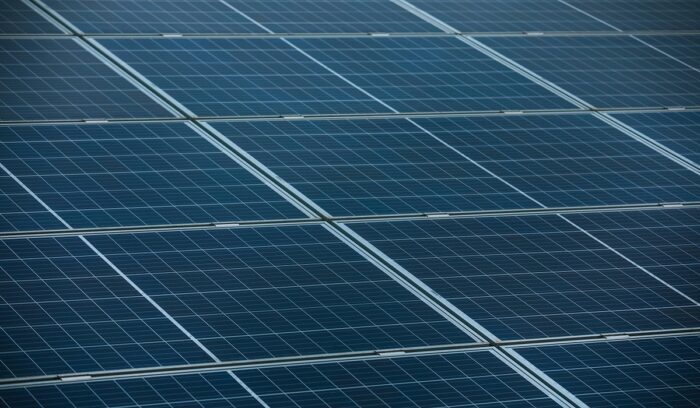
In 1975 C.E., two Chinese factories — one in Ningbo, one in Kaifeng — began manufacturing solar photovoltaic cells for civilian use. It was a quiet start: total installed capacity that year reached just 0.5 kilowatts. But those first cells, built on knowledge developed for China’s space program, marked the beginning of what would become the most dominant solar industry on Earth.
Key findings
- Domestic solar production: In 1975 C.E., factories in Ningbo and Kaifeng began producing solar cells commercially — the first domestic photovoltaic manufacturing in China’s history.
- Space program origins: The technology descended directly from solar cell research begun in 1958 C.E. and developed through the 1960s C.E. for the Dongfanghong satellite program, led by the Institute of Semiconductors of the Chinese Academy of Sciences.
- Photovoltaic capacity growth: From 0.5 kilowatts installed in 1975 C.E., China’s annual solar installations grew slowly but steadily — reaching 8 kilowatts by 1980 C.E., 500 kilowatts by 1990 C.E., and eventually the terawatt scale by 2025 C.E.
From satellites to soil
China’s photovoltaic research began not with climate targets or energy policy, but with the demands of the space race. In 1958 C.E., researchers developed China’s first piece of monocrystalline silicon. A decade later, the Institute of Semiconductors of the Chinese Academy of Sciences led work on solar cells designed to power satellites — work that continued at other institutions even after early battery failures halted the initial program.
By 1975 C.E., that accumulated knowledge moved from orbit to earth. The cells produced in Ningbo and Kaifeng were modeled closely on the satellite cells that preceded them. They were not yet intended for large-scale energy production — the infrastructure, policy support, and economic incentives for that were still decades away. But the manufacturing knowledge was now on Chinese soil, in Chinese hands.
China’s Sixth Five-Year Plan (1981–1985 C.E.) became the first national plan to explicitly address policy support for solar panel manufacturing. Every Five-Year Plan since has continued that commitment — a policy continuity that helps explain how a 0.5-kilowatt starting point became a global industrial force.
A slow build with a steep climb
Growth in the decades after 1975 C.E. was gradual. Annual installations crept upward — 70 kilowatts in 1985 C.E., 1,550 kilowatts by 1995 C.E. The real acceleration came in the early 2000s C.E., when Suntech Power launched a 10-megawatt solar cell production line and a national program began pushing solar and wind energy into Tibet, Xinjiang, Qinghai, and other western provinces.
Even then, most Chinese-manufactured cells were being sold abroad. In 2005 C.E., China produced 140 megawatts of photovoltaic cells — but installed only five megawatts domestically, with Germany buying the bulk of the rest. The domestic market would not catch fire until the introduction of feed-in tariffs in 2011 C.E., which dramatically exceeded the government’s own expectations for uptake.
In 2013 C.E., China became the world’s leading installer of photovoltaics. In 2015 C.E., it surpassed Germany as the largest producer of photovoltaic energy. In 2017 C.E., it became the first country to exceed 100 gigawatts of total installed capacity. By May 2025 C.E., China’s photovoltaic capacity crossed one terawatt — a milestone no country had previously reached.
Lasting impact
The domestic production that started in Ningbo and Kaifeng in 1975 C.E. seeded an industry that now shapes global energy economics. As of 2024 C.E., Chinese firms lead in nearly every link of the solar supply chain: polysilicon, silicon wafers, batteries, and photovoltaic modules. China holds roughly one third of the world’s installed solar capacity and in 2024 C.E. alone added 277 gigawatts — equivalent to 15% of the entire world’s cumulative installed solar capacity at the time.
The cost implications extend far beyond China. Global solar panel prices have fallen dramatically, driven in significant part by Chinese manufacturing scale. As of at least 2023 C.E., solar power is cheaper than coal-fired power inside China itself — a threshold that would have seemed implausible in 1975 C.E.
In parallel, China developed an extensive solar thermal sector. Tsinghua University scientists in the early 1990s C.E. designed a new type of evacuated tube solar water heater that became ubiquitous in rural China. By 2014 C.E., China had more than 85 million solar water heaters — representing roughly 70% of the world’s total installed solar thermal capacity at the time.
Blindspots and limits
The expansion of China’s solar sector has come with documented costs: large quantities of manufacturing waste, criticism over the forced removal of communities to make way for solar development, and credible reporting on the use of forced labor in photovoltaic supply chains. These are not peripheral concerns — they sit inside the same supply chain that powers much of the world’s renewable energy transition. The record of 1975 C.E. is a starting point worth honoring; the full picture requires holding both the achievement and its complications at once.
Read more
For more on this story, see: Solar power in China — Wikipedia
For more from Good News for Humankind, see:
- World-first space solar demonstration beams power from orbit to Earth
- World’s wind power capacity up by fifth after record year
- The Good News for Humankind archive on renewable energy
- Clean energy milestones: the breakthroughs powering a fossil-free future
About this article
- 🤖 This article is AI-generated, based on a framework created by Peter Schulte.
- 🌍 It aims to be inspirational but clear-eyed, accurate, and evidence-based, and grounded in care for the Earth, peace and belonging for all, and human evolution.
- 💬 Leave your notes and suggestions in the comments below — I will do my best to review and implement where appropriate.
- ✉️ One verified piece of good news, one insight from Antihero Project, every weekday morning. Subscribe free.


