China

Satellite view of river system

Yangtze River showing remarkable ecological recovery following fishing ban

China’s Yangtze River is experiencing a remarkable ecological revival five years into a sweeping ten-year commercial fishing ban. Recent surveys reveal significant increases in overall fish biomass and the heartening return of critically endangered species in the world’s fifth largest river. Furthermore, thousands of former commercial fishers have been successfully transitioned into new roles as official river guardians. This massive conservation effort offers a hopeful, replicable model for global freshwater restoration.
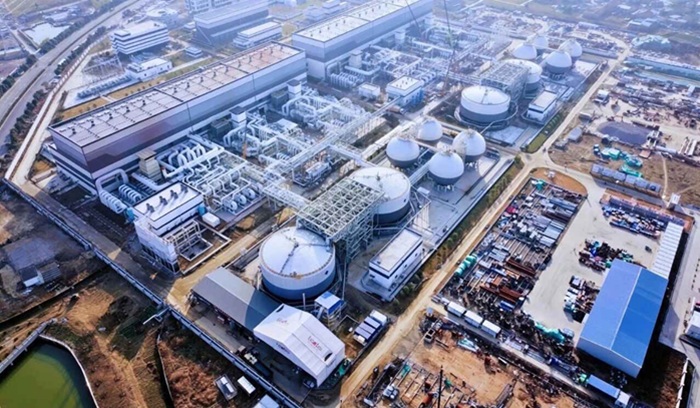

China launches world’s largest first compressed air facility

China has successfully launched the world’s largest compressed air energy storage (CAES) facility in Hubei province. This 300-megawatt plant utilizes underground salt caverns to store renewable energy, capable of reducing coal consumption by 45,000 tons and carbon emissions by 109,000 tons annually. This non-lithium technology provides a sustainable, long-duration storage solution that stabilizes the grid and enables greater integration of wind and solar power. The project demonstrates a scalable, eco-friendly alternative to chemical batteries, marking a pivotal advancement for global clean energy infrastructure.

Giant Panda

Giant pandas no longer endangered in historic conservation win

The giant panda has achieved a historic conservation milestone, officially moving from “endangered” to “vulnerable” on the IUCN Red List. This status change reflects a 17% increase in the wild population over the last decade, with numbers now reaching 1,864 individuals. The recovery is the direct result of China’s massive investment in habitat restoration, bamboo reforestation, and successful captive breeding programs. This victory proves that sustained, science-based conservation can successfully pull iconic species back from the brink of extinction.

China unveils world-first commercial supercritical carbon dioxide power generator

China has achieved a major engineering milestone with the operation of Chaoton One, a large-scale power generator located in Shandong Province. This technology moves beyond traditional steam, utilizing supercritical carbon dioxide to drive smaller, more powerful turbines. The unit is expected to deliver a 50% increase in net electricity generation compared to current steam technologies. Furthermore, it improves overall power generation efficiency by over 85%, reducing both fuel consumption and carbon emissions.

Milu deer

China’s milu deer achieves stunning population recovery

The world is celebrating a monumental conservation success: the Pere David’s deer (Elaphurus davidianus) has made a remarkable recovery from near-extinction. This unique species, often called the “milu” or “elaphure,” was saved through decades of dedicated human effort and international cooperation. The global population has rebounded from a low of just 39 individuals to an estimated 8,200 today. This achievement demonstrates the immense power of conservation science and captive breeding programs.

Aerial view of forest

China has added more than 170 million acres of forest since 1990

A new national inventory confirms China’s massive environmental success, demonstrating a major increase in forest cover roughly equivalent to the size of Texas. This unparalleled reforestation effort has dramatically enhanced the nation’s ability to sequester CO2, boosting its climate mitigation goals. By successfully reversing decades of deforestation and empowering millions of local land stewards, China has proven that large-scale ecological recovery is achievable.

Brain x-rays

Scientists reverse Alzheimer’s in mice under breakthrough treatment

A breakthrough in neurological science is offering major hope against Alzheimer’s disease. An international research team successfully used a single-injection nanotherapy to reverse symptoms in mice. This treatment rapidly clears up to 50% of toxic amyloid proteins by rebooting the brain’s own natural clearance systems. This innovation, developed by the Institute for Bioengineering of Catalonia and West China Hospital of Sichuan University, shifts the focus from managing decline to restoring function, accelerating research toward a cure for this devastating disease.

Industrial facility polluting

China commits to an absolute target to cut its emissions for the first time

China, the world’s largest emitter of greenhouse gases, has made a historic policy shift by committing to an absolute reduction in emissions for the first time. President Xi Jinping pledged that China would cut economy-wide emissions by 7-10% below peak levels by 2035. This commitment is driven by a domestic boom in clean energy, with solar and wind capacity now rapidly outpacing electricity demand growth. However, many climate critics argue that this initial 7-10% target is too modest. They point out that China is already on track to meet this goal under current policies, suggesting a far more ambitious cut is technically feasible and necessary to align with global climate targets.

Yangtze River

China removes more than 300 dams along Yangtze River tributary to restore biodiversity

China has claimed to dismantle 300 dams and decommission more than 90% of small hydropower stations along the Chishui River since 2020. The move is seen as one of the world’s largest state-led efforts to restore aquatic biodiversity, reversing decades of hydro-infrastructure development that critically endangered native fish species, the South China Morning Post reported. The Yangtze sturgeon, declared extinct in the wild by the International Union for Conservation of Nature in 2022, has now shown signs of recovery.

Air pollution from a coal plant

Global mercury emissions have fallen 70% over last four decades

Gold mining, coal burning, and cement and nonferrous metals production all release several thousand tons of mercury into the atmosphere every year, leading to tens of thousands of deaths worldwide. However, a team of Chinese scientists from schools in Tianjin, Beijing, Tibet, and Nanjing has found that mercury concentrations in the atmosphere have reduced by a staggering 70% since a peak in the year 2000.