
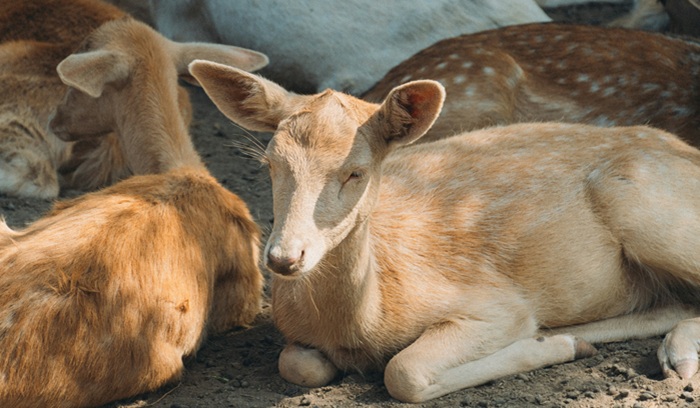
The world is celebrating a monumental conservation success: the Pere David’s deer (Elaphurus davidianus) has made a remarkable recovery from near-extinction. This unique species, often called the “milu” or “elaphure,” was saved through decades of dedicated human effort and international cooperation. The global population has rebounded from a low of just 39 individuals to an estimated 8,200 today. This achievement demonstrates the immense power of conservation science and captive breeding programs.
The recovery of this species is a profound victory for biodiversity. It proves that even when a species is functionally extinct in the wild, determined human intervention can bring it back.
The Return from Extinction
The Pere David’s deer was already extinct in its native habitat of China by the time the last global wild population was destroyed by flooding in 1895. The entire surviving population was contained in a private herd in England, gathered by the 11th Duke of Bedford, Herbrand Russell. This small herd of 39 individuals became the sole genetic reservoir for the species. This moment highlights the critical importance of early conservationists who recognized the value of protecting vulnerable species.
This small group was safeguarded at Woburn Abbey. This protection preserved the species while global events, including world wars, unfolded. This initial protection provided the necessary time for future reintroduction efforts.
The Triumph of International Cooperation
The dramatic population rebound is a direct result of decades of strategic international cooperation. The initial breeding program in the United Kingdom successfully increased the herd’s numbers over generations. This led to the establishment of several other herds in zoos and reserves across Europe. These efforts ensured genetic diversity and protected the species from a single catastrophe.
Beginning in the 1980s, a major collaborative effort began to reintroduce the deer to their native homeland in China. The Chinese government, in partnership with the UK, established dedicated nature reserves. These reserves provided protected habitat and the necessary resources for re-establishing wild populations. This successful collaboration is a model for transnational conservation initiatives.
Securing a Resilient Population
The reintroduction of the Pere David’s deer to China was a major success. The deer were initially placed in carefully managed reserves, such as the Beijing Milu Ecological Research Center. These protected environments allowed the population to grow and adapt back to wild conditions. The current population of over 8,200 individuals is stable and genetically healthy.
The recovery ensures the long-term survival of this unique species. The deer, known for their unique features like reversed antlers and webbed feet, are a vital part of their native wetland ecosystem. Their grazing habits contribute to the overall health of the marshlands. This successful reintroduction contributes positively to global biodiversity indices.
A Legacy of Hope and Stewardship
The story of the Pere David’s deer is a powerful legacy of hope and dedicated stewardship. It demonstrates that the worst effects of human impact and natural disasters can be reversed. The survival of the species was entirely dependent on human ingenuity and long-term commitment. The successful reintroduction inspires conservationists working to save other critically endangered species.
The recovery of the milu provides valuable lessons in genetics, habitat restoration, and transboundary cooperation. This victory reinforces the idea that every species is worth saving. The World Wildlife Fund (WWF) highlights the success of species recovery programs globally. The IUCN Red List tracks the status of the species, confirming its move away from critical status.
Resources
- World Wildlife Fund (WWF) on Species Recovery Successes
- International Union for Conservation of Nature (IUCN) Red List Status of Pere David’s Deer
- The Pere David’s Deer Conservation Strategy Overview
- Smithsonian National Zoo on Milu Conservation History
More Good News
-

Alzheimer’s risk cut in half by drug in landmark prevention trial
A clinical trial from Washington University in St. Louis and published in The Lancet Neurology found that long-term high-dose treatment with the antibody drug gantenerumab reduced Alzheimer’s risk by roughly 50% in people with dominantly inherited Alzheimer’s disease — a rare genetic form caused by mutations that make the disease near-certain. The results are statistically uncertain and apply to less than 1% of all Alzheimer’s cases, but they provide the first evidence that removing amyloid plaques before symptoms appear can meaningfully change the course of the disease.
-

Marie-Louise Eta becomes the first female head coach in men’s top-flight European football
Marie-Louise Eta, 34, was appointed head coach of Bundesliga side Union Berlin on April 12, 2026, becoming the first woman to hold the top coaching position at a men’s club in any of Europe’s Big Five leagues — the Premier League, La Liga, Serie A, Ligue 1, and Bundesliga. A Champions League winner as a player with Turbine Potsdam in 2010, Eta had already broken barriers as the first female assistant coach in the Bundesliga in 2023. She takes charge for the final five matches of the season as Union Berlin fights to secure top-flight survival, after which she was…
-

Renewables now make up at least 49% of global power capacity
Renewable energy reached 49.4% of total global installed power capacity by end of 2025, up from 46.3% in 2024, according to the International Renewable Energy Agency’s Renewable Capacity Statistics 2026. The world added 692 gigawatts of new renewable capacity last year — the largest annual addition ever recorded — with solar alone contributing 511 gigawatts. Africa recorded its highest renewable expansion on record, and the Middle East its fastest-ever growth. IRENA Director-General Francesco La Camera noted that countries investing in renewables are absorbing the current Middle East energy crisis with measurably less economic damage than fossil-fuel-dependent economies.
-

Global suicide rate has fallen by 40% since 1995
A landmark study published in The Lancet Public Health by researchers at the Institute for Health Metrics and Evaluation at the University of Washington found that the global age-standardized suicide mortality rate fell nearly 40% between 1990 and 2021 — from 15 deaths per 100,000 people to nine. The decline was driven by measurable interventions including restrictions on toxic pesticides, expanded mental health services, and national prevention strategies. Female suicide rates fell more than 50% globally over the period. Roughly 740,000 people still die by suicide each year, and rates have risen in parts of Latin America and North America,…
-
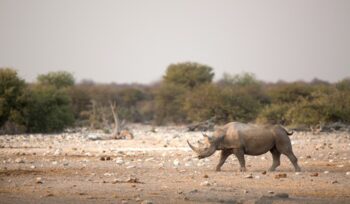
Rhinos are reintroduced back into Uganda’s wild after 43 years
The Uganda Wildlife Authority havetranslocated the first southern white rhinos to Kidepo Valley National Park — 43 years after the last rhino in the park was killed by poachers in 1983. The animals came from Ziwa Rhino Sanctuary, a breeding program established in 2005 with just six individuals that has grown Uganda’s total rhino population to 61. Four more rhinos will follow by May, with a separate group already relocated to Ajai Wildlife Reserve in January 2026. The reintroduction restores a key grazing species to one of Africa’s most remote savannah ecosystems and makes Kidepo the only national park in…