

The Yangtze River is experiencing a profound ecological revival just five years into a landmark ten-year commercial fishing ban. Chinese authorities implemented this sweeping moratorium in early 2021 to rescue the waterway from decades of severe overfishing and relentless industrial pollution. Recent environmental surveys confirm that this unprecedented, large-scale intervention is successfully breathing new life into one of the world’s most critical and biodiverse freshwater ecosystems.
The Return of Iconic and Endangered Species
One of the most encouraging signs of recovery is the rebounding population of the Yangtze finless porpoise. This highly intelligent and critically endangered marine mammal had seen its numbers plummet to roughly one thousand individuals before the ban was enacted. Recent observations indicate the population is now steadily increasing across the basin, with frequent sightings of newborn calves bringing immense hope to marine biologists and local residents alike.
Conservationists are also celebrating the resurgence of the Yangtze sturgeon, a species that was once considered on the brink of complete extinction in the wild. Decades of habitat fragmentation, dam construction, and overharvesting had decimated their natural spawning grounds along the river. Today, natural reproduction of the sturgeon has been recorded in several sections of the river, proving that aquatic life can bounce back when given the safe space to heal.
Rebuilding the Aquatic Food Web
The positive impacts of the protective ban extend far beyond a few flagship species to encompass the entire riverine environment. The overall biomass of fish in the Yangtze has increased significantly, with researchers identifying a return of dozens of native fish species that had not been seen in decades. This abundance of smaller fish is crucial because it rebuilds the foundation of the river’s complex and fragile food web.
You can read more about the initial conditions and the specific goals of this sweeping environmental policy in the recent coverage by The Guardian. The recovery of these smaller aquatic populations directly supports the survival of larger predators, amphibians, and migratory birds that rely heavily on the river basin. As the native fish return in massive numbers, the entire riparian ecosystem is becoming more robust, resilient, and naturally balanced.
From Fishermen to River Guardians
The successful implementation of this ban required a massive socioeconomic transition for the local communities living along the riverbanks. Approximately three hundred thousand commercial fishers had to give up their traditional livelihoods to allow the river an opportunity to rest and recover. To support this difficult transition, the government provided extensive vocational training, financial subsidies, and alternative long-term employment opportunities.
Many of these former commercial fishers have now been hired as official river patrol officers and dedicated environmental monitors. Their deep, generational knowledge of the river’s hidden currents and local ecology makes them ideal guardians against illegal poaching activities. This innovative employment shift not only protects the waterway but also provides stable, sustainable, and dignified incomes for thousands of local families.
A Global Model for Freshwater Restoration
The massive scale and early success of the Yangtze River restoration project offer a powerful and practical blueprint for international environmental efforts. It demonstrates clearly that even the most heavily industrialized and degraded rivers can recover if governments are willing to take bold, decisive, and long-term action. Organizations like the World Wildlife Fund have long advocated for such comprehensive, basin-wide conservation strategies to protect vulnerable global freshwater resources.
While the ten-year ban is only at its midpoint, the current trajectory suggests a highly optimistic future for the region’s overall biodiversity. Continuous monitoring and strict law enforcement will be required to ensure these early ecological gains translate into permanent environmental stability. You can explore broader global strategies for protecting inland waterways and lakes through the United Nations Environment Programme.
This achievement serves as a vital and uplifting reminder that nature possesses an incredible capacity for self-repair when human pressures are temporarily lifted. The lessons learned from the Yangtze will likely soon inform similar conservation policies for other distressed and polluted river systems around the world. For a deeper scientific understanding of freshwater biodiversity metrics and recovery rates, researchers frequently publish updated peer-reviewed findings in journals like Nature.
More Good News
-

Alzheimer’s risk cut in half by drug in landmark prevention trial
A clinical trial from Washington University in St. Louis and published in The Lancet Neurology found that long-term high-dose treatment with the antibody drug gantenerumab reduced Alzheimer’s risk by roughly 50% in people with dominantly inherited Alzheimer’s disease — a rare genetic form caused by mutations that make the disease near-certain. The results are statistically uncertain and apply to less than 1% of all Alzheimer’s cases, but they provide the first evidence that removing amyloid plaques before symptoms appear can meaningfully change the course of the disease.
-

Marie-Louise Eta becomes the first female head coach in men’s top-flight European football
Marie-Louise Eta, 34, was appointed head coach of Bundesliga side Union Berlin on April 12, 2026, becoming the first woman to hold the top coaching position at a men’s club in any of Europe’s Big Five leagues — the Premier League, La Liga, Serie A, Ligue 1, and Bundesliga. A Champions League winner as a player with Turbine Potsdam in 2010, Eta had already broken barriers as the first female assistant coach in the Bundesliga in 2023. She takes charge for the final five matches of the season as Union Berlin fights to secure top-flight survival, after which she was…
-
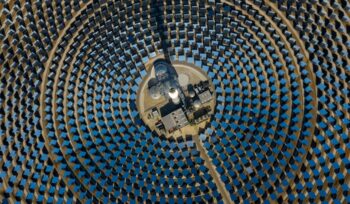
Renewables now make up at least 49% of global power capacity
Renewable energy reached 49.4% of total global installed power capacity by end of 2025, up from 46.3% in 2024, according to the International Renewable Energy Agency’s Renewable Capacity Statistics 2026. The world added 692 gigawatts of new renewable capacity last year — the largest annual addition ever recorded — with solar alone contributing 511 gigawatts. Africa recorded its highest renewable expansion on record, and the Middle East its fastest-ever growth. IRENA Director-General Francesco La Camera noted that countries investing in renewables are absorbing the current Middle East energy crisis with measurably less economic damage than fossil-fuel-dependent economies.
-

Global suicide rate has fallen by 40% since 1995
A landmark study published in The Lancet Public Health by researchers at the Institute for Health Metrics and Evaluation at the University of Washington found that the global age-standardized suicide mortality rate fell nearly 40% between 1990 and 2021 — from 15 deaths per 100,000 people to nine. The decline was driven by measurable interventions including restrictions on toxic pesticides, expanded mental health services, and national prevention strategies. Female suicide rates fell more than 50% globally over the period. Roughly 740,000 people still die by suicide each year, and rates have risen in parts of Latin America and North America,…
-
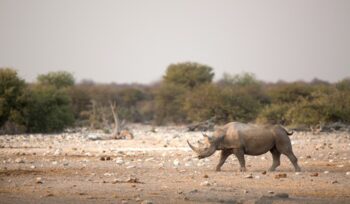
Rhinos are reintroduced back into Uganda’s wild after 43 years
The Uganda Wildlife Authority havetranslocated the first southern white rhinos to Kidepo Valley National Park — 43 years after the last rhino in the park was killed by poachers in 1983. The animals came from Ziwa Rhino Sanctuary, a breeding program established in 2005 with just six individuals that has grown Uganda’s total rhino population to 61. Four more rhinos will follow by May, with a separate group already relocated to Ajai Wildlife Reserve in January 2026. The reintroduction restores a key grazing species to one of Africa’s most remote savannah ecosystems and makes Kidepo the only national park in…