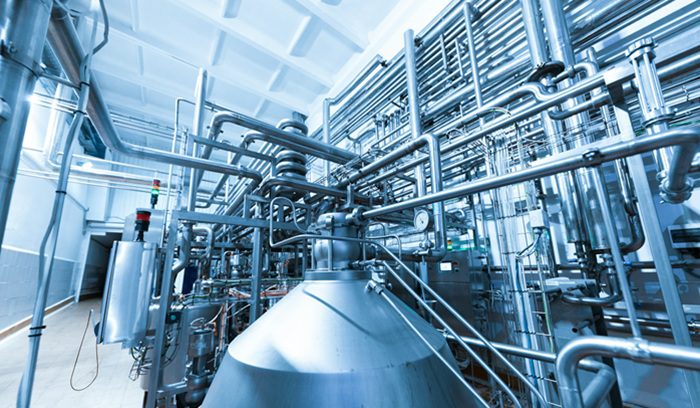
China has achieved what engineers have been chasing for decades: a commercial-scale power generator running on supercritical carbon dioxide instead of steam — and it is now feeding electricity into the national grid. The milestone, reached by a research and development team at the Harbin Electric Corporation in cooperation with Chinese state energy institutions, marks the first time this next-generation turbine technology has moved from laboratory demonstration to real-world commercial operation anywhere in the world.
At a glance
- Supercritical CO2 power: The generator uses carbon dioxide pressurized beyond its critical point — roughly 73 atmospheres — where it behaves as both liquid and gas simultaneously, enabling far more efficient energy extraction than conventional steam turbines.
- Efficiency gains: Supercritical CO2 cycles can achieve thermal efficiencies above 50%, compared to roughly 40% for the best modern steam plants, meaning significantly more electricity from the same amount of fuel or heat input.
- Compact design: Because supercritical CO2 is far denser than steam, the turbines and heat exchangers are dramatically smaller — some components shrink to one-tenth the size — which lowers construction costs and opens the door to modular power systems.
Why this technology matters
The supercritical CO2 (sCO2) Brayton cycle has been a subject of serious research at institutions including the U.S. Department of Energy’s national laboratories, Sandia National Laboratories, and the Southwest Research Institute for more than 15 years. Getting it to work at commercial scale has proven genuinely difficult.
The core challenge is engineering. At the pressures and temperatures required — often exceeding 700 degrees Celsius — materials must withstand extraordinary stress, and seals, bearings, and heat exchangers must perform with near-zero tolerance for failure. China’s achievement in crossing that threshold represents a significant materials and mechanical engineering advance, not just an energy milestone.
The technology is also fuel-agnostic. An sCO2 turbine can extract power from concentrated solar heat, nuclear reactors, natural gas combustion, geothermal sources, or industrial waste heat. That versatility makes it one of the more compelling cross-cutting technologies in the clean energy toolkit — potentially accelerating both renewable power and low-carbon industrial processes at the same time.
The road from prototype to power plant
China’s path to this milestone was methodical. The Harbin Electric Corporation had previously demonstrated a 5-megawatt sCO2 pilot unit, establishing baseline operational data. The commercial-scale generator builds on that foundation, designed to operate continuously and integrate with existing grid infrastructure rather than function merely as a research exhibit.
State backing played a decisive role. China’s national energy strategy has consistently prioritized energy efficiency technology alongside renewable capacity expansion, and sCO2 power generation fits squarely within that framework. The combination of state research funding, domestic manufacturing capability for precision components, and a large domestic energy market gave Chinese engineers the sustained resources this kind of long-horizon development requires.
International research teams — including groups funded by the U.S. Department of Energy and the International Energy Agency — have closely tracked sCO2 progress as a priority technology. The commercial breakthrough in China is expected to accelerate funding and development timelines in Europe, the United States, South Korea, and Japan.
What it means for the clean energy transition
Higher efficiency means lower fuel consumption for every megawatt-hour produced. In a natural gas plant, that directly reduces carbon emissions per unit of electricity. In a concentrated solar or nuclear application, it means more power from the same installation footprint — a significant advantage as the world tries to rapidly scale clean energy without running out of land, water, or materials.
The technology also pairs well with thermal energy storage. Heat stored in molten salt or solid media can drive an sCO2 turbine continuously, even when the sun isn’t shining or demand patterns shift. Researchers at the National Renewable Energy Laboratory have identified this combination as one of the most promising pathways to low-cost, dispatchable clean electricity.
Industrial applications add another dimension. Steel mills, cement plants, chemical refineries, and data centers all produce enormous quantities of waste heat that currently dissipates unused. Compact sCO2 systems could convert that waste heat into electricity on-site, effectively increasing the energy yield of industrial facilities without additional fuel. The International Renewable Energy Agency has highlighted waste heat recovery as one of the most underutilized resources in the global energy system.
An honest look at what remains ahead
Commercial viability at scale is not yet proven across different applications and climates. The Harbin generator represents a first, not a fleet — and moving from a single operating unit to widespread deployment will require solving supply chain challenges for specialized materials, training a new generation of engineers, and demonstrating long-term reliability data that only years of operation can provide. Cost competitiveness with established steam turbine technology also remains to be demonstrated at full industrial scale.
Still, firsts matter. The history of energy technology shows that once a generation technology proves itself commercially, adoption tends to accelerate faster than most predictions suggested. China’s achievement gives the global engineering community something it did not have before: proof that it can be done.
Read more
For more on this story, see: Good News for Humankind
For more from Good News for Humankind, see:
- Renewables now make up at least 49% of global power capacity
- Ghana establishes a marine protected area at Cape Three Points
- The Good News for Humankind archive on clean energy
About this article
- 🤖 This article is AI-generated, based on a framework created by Peter Schulte.
- 🌍 It aims to be inspirational but clear-eyed, accurate, and evidence-based, and grounded in care for the Earth, peace and belonging for all, and human evolution.
- 💬 Leave your notes and suggestions in the comments below — I will do my best to review and implement where appropriate.
- ✉️ One verified piece of good news, one insight from Antihero Project, every weekday morning. Subscribe free.