Trees & reforestation

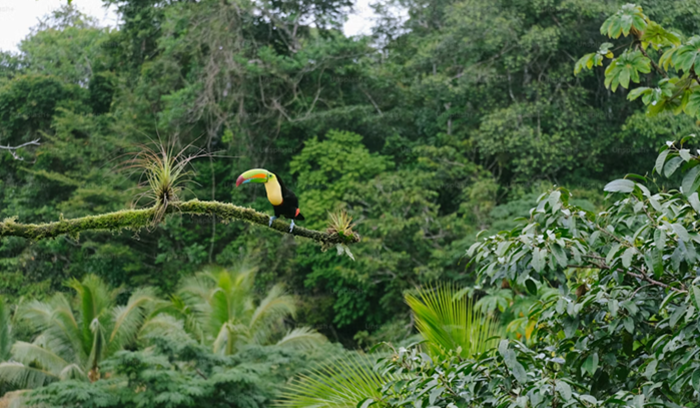
Bird in Ghanaian forest

Ghana repeals legislation that opened forest reserves to mining

In a historic win for conservation, the Parliament of Ghana has repealed L.I. 2462, effectively banning mining activities in the country’s protected forest reserves. This decision follows months of intense advocacy from a coalition of labor unions, religious groups, and environmental organizations. The repeal safeguards critical watersheds that provide drinking water to millions and protects vital habitats for endangered species. This legislative reversal marks a decisive shift toward sustainable development and restores the legal sanctity of Ghana’s natural heritage.

Aerial view of river running through rainforest

Bolivia declares its first Indigenous protected area in its Amazon

In a historic victory for conservation and Indigenous rights, Bolivia has designated Loma Santa as the first Indigenous Protected Area in its Amazon region. This landmark decision grants legal authority to the Moxeño Ignaciano, Yuracaré, and Tsimane peoples to manage their ancestral lands. By securing land tenure, the move protects vital rainforest ecosystems from illegal encroachment and deforestation. This model of Indigenous-led stewardship empowers local communities and sets a powerful precedent for environmental justice across the Amazon basin.

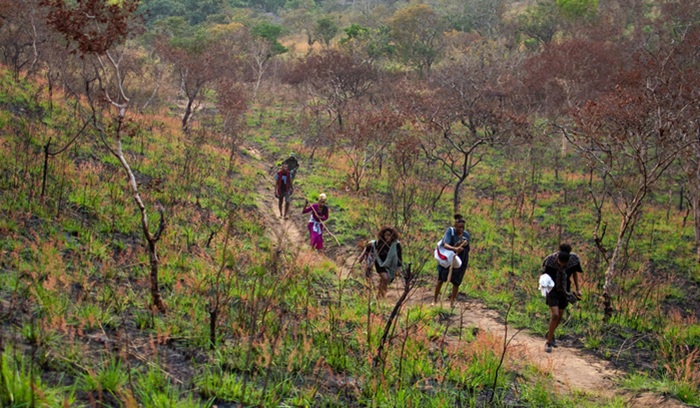
People walking through young forest

Congo Basin nations launch historic community payments for forest care initiative

A groundbreaking initiative has launched across the Congo Basin to pay local communities directly for protecting their forests. Supported by the Central African Forest Initiative (CAFI), the program uses mobile technology to transfer funds to farmers who engage in sustainable practices like agroforestry and reforestation. With over $100 million in new funding, this effort aims to scale up conservation across the Democratic Republic of Congo, Gabon, and the Republic of Congo. This model empowers local people as the primary guardians of the world’s second-largest rainforest.

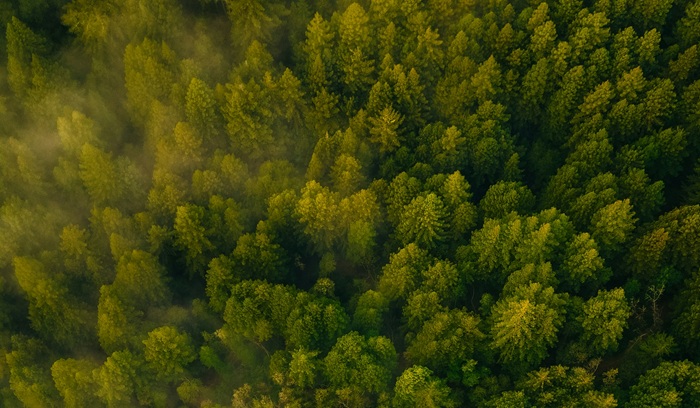
Aerial view of forest

China has added more than 170 million acres of forest since 1990

A new national inventory confirms China’s massive environmental success, demonstrating a major increase in forest cover roughly equivalent to the size of Texas. This unparalleled reforestation effort has dramatically enhanced the nation’s ability to sequester CO2, boosting its climate mitigation goals. By successfully reversing decades of deforestation and empowering millions of local land stewards, China has proven that large-scale ecological recovery is achievable.

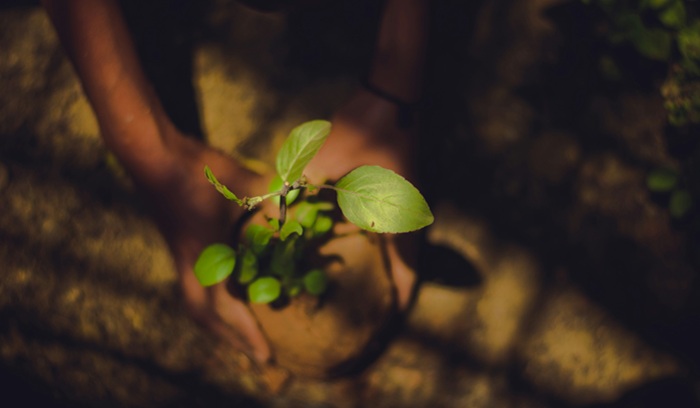
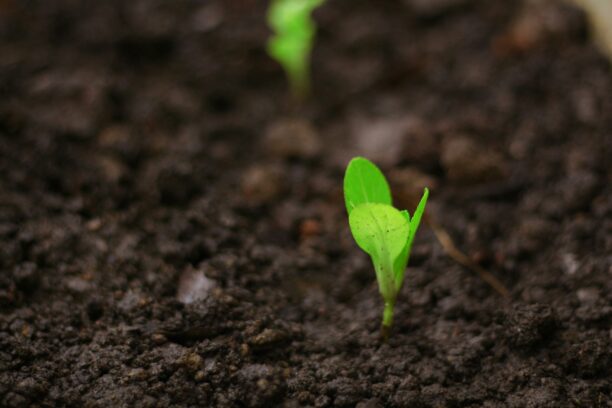
Plant sprouting from the soil

Ethiopia to plant 700 million trees in one day

Ethiopia has launched a record-breaking push to plant 700 million trees in a single day, part of a plan to grow 50 billion by 2026 to fight deforestation, boost livelihoods, and tackle climate change. By early morning, 14.9 million people had already planted 355 million seedlings. The nationwide effort has been championed by Prime Minister Abiy Ahmed since 2019 as a personal and national priority.

Amazon rainforest burning

Brazilian judge orders seizure of illegally cleared lands in the Amazon

Justice Flávio Dino of the Brazilian Supreme Court has directed the government to seize private lands where forests have been illegally razed. By one estimate, more than half of the forest lost in the Brazilian Amazon has been on private lands. The ruling also calls for halting the process known as regularization, by which land grabbers are granted title to stolen lands, even when they have illegally destroyed forest on those lands. The decision, which may be appealed, further requires the government to seek compensation from landowners who have destroyed forest.

Flower floating on the water with lilies

New Delhi transforms degraded lands into biodiversity parks

New Delhi, India’s capital city, struggles with numerous environmental challenges, including extremely poor air quality and heat waves. In response, since 2004, the city has created seven large “biodiversity parks” on previously degraded land. The Aravalli Biodiversity Park, a 692-acre park located near an upscale neighborhood, is now a thriving forest of native plants. The Neela Hauz Biodiversity Park is home to a lake that was once a dumping ground for untreated sewage. All seven parks were restored by the Delhi Development Authority and the University of Delhi and together span 2,026 acres.

Satellite from above with Earth below|nasa unsplash

First Earth Fire Alliance satellite for detecting wildfires is now in orbit

The FireSat constellation, which will consist of more than 50 satellites when it goes live, is the first of its kind that’s built to detect and track fires. It’s an initiative launched by nonprofit Earth Fire Alliance, which includes Google and Muon Space as partners, among others. According to Google, current satellite systems rely on low-resolution imagery and cover a particular area only once every 12 hours to spot large wildfires spanning a couple of acres. FireSat will be able to detect wildfires as small as the size of a classroom and deliver high-resolution visual updates every 20 minutes.

Amazon

Brazil’s crackdown on illegal mining in Munduruku Indigenous land sees success

Since November 2024, government agents have carried out 523 actions, destroying 90 camps, 15 vessels, 27 heavy machinery, and 224 engines. The coordinated government effort caused losses of $1.9 million USD to criminals. The 5.9-million-acre Munduruku Indigenous Territory, home to 6,500 people, is one of the lands that has been hardest hit by illegal mining in the country. During Bolsonaro’s administration, there was a 363% increase in the area degraded by mining which brought diseases, mercury contamination, attacks, and deaths to communities.

Silhouette of baobob trees

Seeds of 19 African tree species added to Svalbard Global Seed Vault

Norway is home to the Svalbard Global Seed Vault, a vast collection intended to secure the world’s vital genetic heritage against any eventuality. The vault currently holds duplicates of 1.3 million seed samples from nearly every corner of the world. Recently, the World Agroforestry Center deposited new seeds to the vault representing tree species of special value to communities across Africa. The 19 species represented included 13 native to Africa and six others that have found a place in the economies and ecologies of the continent.