

Ethiopia Plants 700 Million Trees in a Day as Part of Massive Green Legacy Campaign
In a bold environmental move, Ethiopia launched a national tree-planting campaign on July 31, 2025, aiming to plant 700 million seedlings in a single day. This effort forms part of the Green Legacy Initiative, spearheaded by Prime Minister Abiy Ahmed since 2019, and is a stepping stone toward the broader goal of planting 50 billion trees by 2026 (AP News).
Massive Participation and Early Results
According to state officials, by 6 a.m. local time, around 14.9 million Ethiopians had already planted 355 million seedlings across towns, cities, and rural areas. Government offices closed to encourage widespread participation, and public servants were deployed nationwide to support the efforts. Prime Minister Abiy personally took part in planting activities in Jimma, while other ministers covered additional regions (AP News).
The First Steps of a Green Revolution
Officials report that since the program’s inception in 2019, approximately 40 billion seedlings have been planted. This year’s target of 7.5 billion trees builds on that progress as Ethiopia races to meet its 2026 goal. The planting effort is often portrayed as a culture-building campaign, with citizens from age three to over 70 volunteering to make a visible environmental impact (AP News; Africanews).
Motivations and Broader Goals
Ethiopia’s ambitious planting program addresses urgent concerns such as climate change, soil erosion, deforestation, and food insecurity. Forests once covered much of the country, but percentages have declined catastrophically over the past century. The Green Legacy Initiative is seen as a national effort to restore landscapes, improve resilience, and foster environmental stewardship (Africanews).
Criticisms and Technical Concerns
Despite the campaign’s optimism, experts have raised concerns. Kitessa Hundera, a forest ecologist at Jimma University, called the initiative “noble” but criticized the absence of technical oversight in site selection and species mixing. He also noted the lack of data on seedling survival rates and questioned the feasibility of planting 700 million trees in a single day, estimating it would require the participation of around 35 million people, each planting 20 seedlings (AP News).
Human Stories and Civic Engagement
Narratives from planting sites captured the emotional and communal power of the campaign. In Addis Ababa’s Jifara Ber site, a 72-year-old grandmother planted alongside her grandchildren. “This is my third time planting trees,” said 13-year-old Nathenael Behailu, expressing his dream of a greener future. Another resident shared his pride after planting 15 seedlings early in the morning (AP News).
A Symbolic and Political Gesture
The campaign also carries political weight. Although Ethiopia has strategic environmental goals, ongoing regional conflicts and internal unrest in Tigray and Amhara mean that large-scale civic mobilization serves both ecological and political purposes. The Green Legacy Initiative is not just about reforestation—it is also an attempt to cultivate national unity and public morale (AP News).
Global Significance and Future Outlook
Globally, Ethiopia’s massive planting efforts have garnered international attention, with organizations and policymakers observing how such large-scale campaigns can influence climate strategies and regional environmental restoration.
Looking ahead, success hinges not only on planting targets but on long-term survival of trees, transparent data collection, and sustainable land management. Ethiopia’s Green Legacy could emerge as both a blueprint and a cautionary tale in implementing large-scale, nature-based climate solutions.
More Good News
-

Alzheimer’s risk cut in half by drug in landmark prevention trial
A clinical trial from Washington University in St. Louis and published in The Lancet Neurology found that long-term high-dose treatment with the antibody drug gantenerumab reduced Alzheimer’s risk by roughly 50% in people with dominantly inherited Alzheimer’s disease — a rare genetic form caused by mutations that make the disease near-certain. The results are statistically uncertain and apply to less than 1% of all Alzheimer’s cases, but they provide the first evidence that removing amyloid plaques before symptoms appear can meaningfully change the course of the disease.
-

Marie-Louise Eta becomes the first female head coach in men’s top-flight European football
Marie-Louise Eta, 34, was appointed head coach of Bundesliga side Union Berlin on April 12, 2026, becoming the first woman to hold the top coaching position at a men’s club in any of Europe’s Big Five leagues — the Premier League, La Liga, Serie A, Ligue 1, and Bundesliga. A Champions League winner as a player with Turbine Potsdam in 2010, Eta had already broken barriers as the first female assistant coach in the Bundesliga in 2023. She takes charge for the final five matches of the season as Union Berlin fights to secure top-flight survival, after which she was…
-

Renewables now make up at least 49% of global power capacity
Renewable energy reached 49.4% of total global installed power capacity by end of 2025, up from 46.3% in 2024, according to the International Renewable Energy Agency’s Renewable Capacity Statistics 2026. The world added 692 gigawatts of new renewable capacity last year — the largest annual addition ever recorded — with solar alone contributing 511 gigawatts. Africa recorded its highest renewable expansion on record, and the Middle East its fastest-ever growth. IRENA Director-General Francesco La Camera noted that countries investing in renewables are absorbing the current Middle East energy crisis with measurably less economic damage than fossil-fuel-dependent economies.
-

Global suicide rate has fallen by 40% since 1995
A landmark study published in The Lancet Public Health by researchers at the Institute for Health Metrics and Evaluation at the University of Washington found that the global age-standardized suicide mortality rate fell nearly 40% between 1990 and 2021 — from 15 deaths per 100,000 people to nine. The decline was driven by measurable interventions including restrictions on toxic pesticides, expanded mental health services, and national prevention strategies. Female suicide rates fell more than 50% globally over the period. Roughly 740,000 people still die by suicide each year, and rates have risen in parts of Latin America and North America,…
-
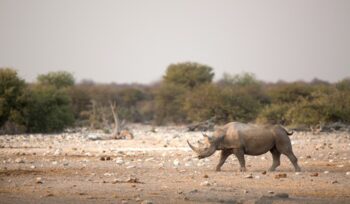
Rhinos are reintroduced back into Uganda’s wild after 43 years
The Uganda Wildlife Authority havetranslocated the first southern white rhinos to Kidepo Valley National Park — 43 years after the last rhino in the park was killed by poachers in 1983. The animals came from Ziwa Rhino Sanctuary, a breeding program established in 2005 with just six individuals that has grown Uganda’s total rhino population to 61. Four more rhinos will follow by May, with a separate group already relocated to Ajai Wildlife Reserve in January 2026. The reintroduction restores a key grazing species to one of Africa’s most remote savannah ecosystems and makes Kidepo the only national park in…