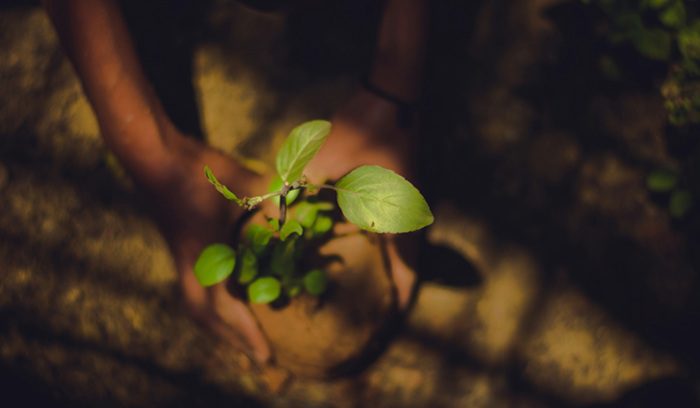
For the first time in decades, machinery has gone quiet in one of Central America’s most biodiverse landscapes. Guatemala has shut down oil extraction operations inside the Maya Biosphere Reserve — a protected area spanning roughly 2.1 million hectares in the Petén department — and launched a process to restore the land to functioning forest. The move marks one of the most significant Maya Forest rewilding efforts in the region’s modern history.
At a glance
- Maya Forest rewilding: Guatemala’s government has ended oil operations in the Maya Biosphere Reserve and initiated ecological restoration of the affected land, a decision that conservationists have sought for years.
- Maya Biosphere Reserve: The reserve is part of the Selva Maya — the largest tropical forest north of the Amazon, shared by Guatemala, Mexico, and Belize — and provides habitat for jaguars, tapirs, scarlet macaws, and hundreds of other species.
- Indigenous and local communities: Maya Q’eqchi’ and Itza’ communities who live in and around the reserve have long advocated for an end to extractive industries in the area, and stand to benefit from restored ecosystems and sustainable forest economies.
Why this forest matters
The Selva Maya is no ordinary patch of trees. Covering more than 3.5 million hectares across three countries, it is the second-largest continuous tropical forest in the Americas. Researchers have documented more than 400 bird species, over 100 mammal species, and thousands of plant species within its boundaries.
The Maya Biosphere Reserve sits at the heart of this system. It also contains thousands of unexcavated Maya archaeological sites, many still hidden beneath the canopy. For Indigenous communities, the forest is not simply an ecosystem — it is a living cultural landscape with roots stretching back millennia.
Oil extraction within the reserve has contributed to deforestation pressure, road-building in remote areas, and contamination risks near wetlands and rivers. Environmental groups have documented habitat fragmentation linked to industrial corridors that made surrounding land more accessible to illegal loggers and poachers.
What rewilding looks like here
Restoration in a complex tropical ecosystem takes time — often decades. The first steps typically involve removing infrastructure, allowing natural regeneration to begin, and replanting native species in areas where soil has been compacted or contaminated.
Conservation organizations working in the Petén, including the Wildlife Conservation Society and local groups like Fundación para el Ecodesarrollo y la Conservación (FUNDAECO), have developed protocols for forest recovery in the Maya region. Their work includes jaguar corridor monitoring, community-based forest management, and collaborative stewardship with Indigenous rangers.
The Guatemalan government’s decision to end extraction and begin restoration aligns with commitments made under the Kunming-Montreal Global Biodiversity Framework, which calls on nations to protect 30 percent of land and sea areas by 2030 C.E. Guatemala’s restored oil field acreage would contribute meaningfully toward that target.
An honest look at the challenges ahead
Shutting down extraction is one thing — sustaining the political will and financial resources to complete a full rewilding program is another. Deforestation driven by cattle ranching and agricultural encroachment remains a serious and ongoing threat in the Petén, and enforcement of protected area boundaries has historically been inconsistent. The success of this effort will depend on whether Guatemala’s conservation commitments are matched with funding, genuine community partnership, and long-term institutional follow-through.
Still, the closure of the oil fields represents a turning point. It signals that the economic calculus around the Maya Forest is shifting — that the ecological and cultural value of intact forest is beginning to outweigh short-term extraction revenues. For the jaguars, the forest peoples, and the climate systems that depend on this canopy, that shift is not a small thing.
Read more
For more on this story, see: Good News for Humankind — Guatemala rewilding
For more from Good News for Humankind, see:
- Ghana expands marine protected area at Cape Three Points
- Alzheimer’s risk cut in half by drug in landmark prevention trial
- The Good News for Humankind archive on Guatemala
About this article
- 🤖 This article is AI-generated, based on a framework created by Peter Schulte.
- 🌍 It aims to be inspirational but clear-eyed, accurate, and evidence-based, and grounded in care for the Earth, peace and belonging for all, and human evolution.
- 💬 Leave your notes and suggestions in the comments below — I will do my best to review and implement where appropriate.
- ✉️ One verified piece of good news, one insight from Antihero Project, every weekday morning. Subscribe free.