
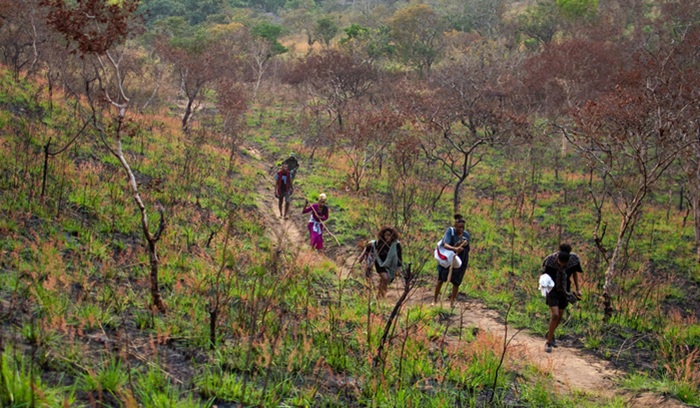
Nations across the Congo Basin have launched a groundbreaking initiative to protect one of the world’s most vital ecosystems. The new “Payments for Environmental Services” (PES) program directly compensates local communities for their role in forest conservation. This financial mechanism, unveiled at the COP30 climate summit, is designed to encourage sustainable practices like agroforestry and reforestation. It represents a major shift in how conservation is funded and managed in the region.
This initiative acknowledges that the people living in the forest are its best guardians. By providing direct financial incentives, the program empowers farmers and villages to protect their natural heritage. This approach aligns economic development with environmental stewardship.
Direct Payments for Verified Action
The core innovation of this program is its direct payment model. Using mobile technology, funds are transferred securely to participants who verify their conservation activities. This system reduces bureaucracy and ensures that the financial benefits reach the people doing the actual work on the ground.
The program covers a wide range of activities, including deforestation-free agriculture and sustainable forest management. Hundreds of farmers have already signed contracts, and initial payments were successfully distributed this month. This early success proves the system’s efficiency and fairness. It offers a scalable model for conservation finance that can be replicated across the continent.
Scaling Up with Global Support
The initiative is supported by the Central African Forest Initiative (CAFI), which has committed over $100 million in additional funding to expand the program. This financial backing is crucial for scaling the project beyond its pilot phase. The goal is to reach thousands of communities across the Democratic Republic of Congo, the Republic of Congo, and Gabon.
The program builds on a decade of pilot projects that demonstrated the effectiveness of paying for performance. In the Democratic Republic of Congo alone, contracts already cover thousands of hectares of land. This massive investment signals a strong international commitment to preserving the Congo Basin. It is a recognition of the region’s critical role in global climate stability. You can read more about the structure of these payments from the Central African Forest Initiative (CAFI).
Protecting a Global Carbon Sink
The Congo Basin is the world’s second-largest tropical rainforest and a massive carbon sink. Protecting it is essential for mitigating global climate change. The region has faced intense pressure from logging and agricultural expansion, losing millions of hectares of forest in recent decades. This new payment scheme offers a viable economic alternative to destruction.
By monetizing the value of standing forests, the program changes the economic equation for local communities. It makes conservation a profitable endeavor rather than a cost. This shift is vital for slowing deforestation rates and preserving the region’s immense biodiversity. The World Wildlife Fund (WWF) is a key partner in implementing these conservation strategies.
A Model for Community-Led Conservation
This initiative is a powerful example of community-led conservation. It respects local knowledge and land rights, ensuring that conservation strategies are culturally appropriate. By involving communities directly in the monitoring and verification process, the program builds local capacity and ownership.
The success of this rollout offers hope for other high-forest, low-deforestation nations. It proves that international climate finance can be effectively channeled to the grassroots level. This model fosters a sense of shared responsibility for the planet’s health. The United Nations Capital Development Fund (UNCDF) supports similar financial mechanisms for green growth. Furthermore, the Center for International Forestry Research (CIFOR) provides case studies on the effectiveness of payment for ecosystem services.
Resources
- Central African Forest Initiative (CAFI) on Payments for Environmental Services
- World Wildlife Fund (WWF) on Congo Basin Conservation
- United Nations Capital Development Fund (UNCDF) on Green Growth Initiatives
- Center for International Forestry Research (CIFOR) on PES Case Studies
More Good News
-

Alzheimer’s risk cut in half by drug in landmark prevention trial
A clinical trial from Washington University in St. Louis and published in The Lancet Neurology found that long-term high-dose treatment with the antibody drug gantenerumab reduced Alzheimer’s risk by roughly 50% in people with dominantly inherited Alzheimer’s disease — a rare genetic form caused by mutations that make the disease near-certain. The results are statistically uncertain and apply to less than 1% of all Alzheimer’s cases, but they provide the first evidence that removing amyloid plaques before symptoms appear can meaningfully change the course of the disease.
-

Marie-Louise Eta becomes the first female head coach in men’s top-flight European football
Marie-Louise Eta, 34, was appointed head coach of Bundesliga side Union Berlin on April 12, 2026, becoming the first woman to hold the top coaching position at a men’s club in any of Europe’s Big Five leagues — the Premier League, La Liga, Serie A, Ligue 1, and Bundesliga. A Champions League winner as a player with Turbine Potsdam in 2010, Eta had already broken barriers as the first female assistant coach in the Bundesliga in 2023. She takes charge for the final five matches of the season as Union Berlin fights to secure top-flight survival, after which she was…
-
Renewables now make up at least 49% of global power capacity
Renewable energy reached 49.4% of total global installed power capacity by end of 2025, up from 46.3% in 2024, according to the International Renewable Energy Agency’s Renewable Capacity Statistics 2026. The world added 692 gigawatts of new renewable capacity last year — the largest annual addition ever recorded — with solar alone contributing 511 gigawatts. Africa recorded its highest renewable expansion on record, and the Middle East its fastest-ever growth. IRENA Director-General Francesco La Camera noted that countries investing in renewables are absorbing the current Middle East energy crisis with measurably less economic damage than fossil-fuel-dependent economies.
-

Global suicide rate has fallen by 40% since 1995
A landmark study published in The Lancet Public Health by researchers at the Institute for Health Metrics and Evaluation at the University of Washington found that the global age-standardized suicide mortality rate fell nearly 40% between 1990 and 2021 — from 15 deaths per 100,000 people to nine. The decline was driven by measurable interventions including restrictions on toxic pesticides, expanded mental health services, and national prevention strategies. Female suicide rates fell more than 50% globally over the period. Roughly 740,000 people still die by suicide each year, and rates have risen in parts of Latin America and North America,…
-
Rhinos are reintroduced back into Uganda’s wild after 43 years
The Uganda Wildlife Authority havetranslocated the first southern white rhinos to Kidepo Valley National Park — 43 years after the last rhino in the park was killed by poachers in 1983. The animals came from Ziwa Rhino Sanctuary, a breeding program established in 2005 with just six individuals that has grown Uganda’s total rhino population to 61. Four more rhinos will follow by May, with a separate group already relocated to Ajai Wildlife Reserve in January 2026. The reintroduction restores a key grazing species to one of Africa’s most remote savannah ecosystems and makes Kidepo the only national park in…