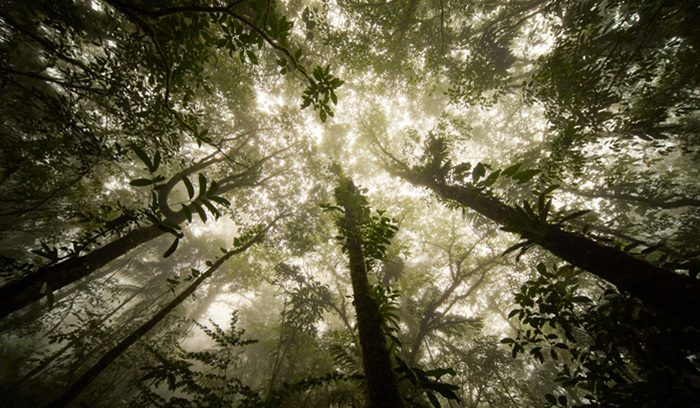
Bolivia has placed more than 2.4 million acres of Amazonian rainforest under formal protection, in one of the largest Indigenous-led conservation actions in South American history. The move shields a vast stretch of biodiverse lowland forest from logging, agribusiness, and extractive industry — and hands stewardship authority directly to the Indigenous communities who have lived there for generations.
At a glance
- Amazon rainforest protection: The newly protected territory covers more than 2.4 million acres of lowland Amazonian forest in Bolivia, an area larger than the state of Connecticut.
- Indigenous governance: Local Indigenous nations played a central role in negotiating and designing the protection framework, giving communities legal authority over land management and conservation decisions.
- Biodiversity significance: The region shelters jaguars, giant river otters, macaws, and thousands of plant species, many found nowhere else on Earth.
Why Indigenous-led protection matters
Decades of conservation research have arrived at a consistent finding: land managed by Indigenous communities retains forest cover at higher rates than areas governed by outside authorities alone. A landmark 2021 study published in Environmental Science & Policy found that Indigenous territories in the Amazon store significantly more carbon and harbor greater biodiversity than comparable areas under conventional protection.
Bolivia’s action builds on that evidence. Rather than creating a top-down protected zone managed by a distant government agency, the agreement centers Indigenous peoples as rights-holders and decision-makers. This model has shown real results across the broader Amazon basin, where Indigenous-managed territories help protect an estimated 80% of the world’s remaining biodiversity, according to the World Wildlife Fund.
A forest under pressure
Bolivia’s Amazon has faced rising deforestation pressure from cattle ranching, soy farming, and illegal logging. The country lost significant forest cover through recent decades, and fires — some deliberately set to clear land — have intensified in dry seasons. Indigenous communities in these lowland territories have long sounded the alarm, organizing locally and pressing for formal legal recognition of their ancestral lands.
That advocacy took years. The path to formal protection involved community assemblies, legal filings, and sustained pressure on national institutions. The result reflects Indigenous organizing as much as government policy.
What the protection covers
The protected area encompasses river systems, gallery forests, and seasonally flooded savannas that form critical habitat corridors for wide-ranging species. Jaguars, which require vast territories, stand to benefit directly. So do the freshwater ecosystems that millions of people downstream depend on for clean water and fish.
The International Union for Conservation of Nature has consistently supported recognition of Indigenous territorial rights as a cornerstone of effective conservation. Bolivia’s action aligns with that framework — and with the global commitment made at COP15 in Montreal to protect 30% of the planet’s land and oceans by 2030 C.E.
An imperfect but meaningful step
Formal protection status does not guarantee enforcement. Bolivia has historically struggled to police illegal land clearing in remote regions, and resource constraints mean that communities often bear the burden of monitoring vast territories with limited outside support. The long-term success of this protection will depend on sustained government commitment and genuine resource-sharing with the Indigenous nations on the ground.
Still, legal recognition changes the equation. It gives communities tools — including the right to take legal action against encroachment — that they did not previously have. And it sends a signal, both domestically and internationally, that Bolivia is prepared to treat Indigenous land rights and rainforest conservation as a single, inseparable cause.
In a region where forests continue to disappear at alarming rates, that signal carries real weight. The Amazon does not protect itself. The people who have always lived within it have proven, repeatedly, that they are its most reliable defenders.
Read more
For more on this story, see: Good News for Humankind
For more from Good News for Humankind, see:
- Indigenous land rights: 160 million hectares heading into COP30
- Ghana establishes marine protected area at Cape Three Points
- The Good News for Humankind archive on Bolivia
About this article
- 🤖 This article is AI-generated, based on a framework created by Peter Schulte.
- 🌍 It aims to be inspirational but clear-eyed, accurate, and evidence-based, and grounded in care for the Earth, peace and belonging for all, and human evolution.
- 💬 Leave your notes and suggestions in the comments below — I will do my best to review and implement where appropriate.
- ✉️ One verified piece of good news, one insight from Antihero Project, every weekday morning. Subscribe free.