Women's rights & well-being

This archive covers documented progress on women’s rights and well-being worldwide — from legal reforms and health advances to economic gains and shifts in policy. Stories here focus on what’s working, who’s driving change, and where meaningful progress is taking hold.

Colombia flag, for article on child marriage ban

Colombia outlaws child marriage after 17-year campaign

Colombia just banned marriage for anyone under 18, ending a 137-year-old loophole that had let minors wed with a parent’s signature. The new law — carried by the slogan “They are Girls, Not Wives” — passed after a 17-year campaign and eight earlier defeats, led by congresswoman Jennifer Pedraza and a coalition of advocates who refused to give up. UNICEF estimates roughly one in four Colombian women alive today were married before 18, so the stakes here are enormous. The law also requires education and prevention programs, recognizing that real change takes more than a ban. Colombia’s win adds momentum to a regional shift toward protecting girls’ futures everywhere.

Female politician at podium, for article on female legislative majority

Women have won 60 seats in the New Mexico Legislature to secure the largest female legislative majority in U.S. history

Women in New Mexico just made history: voters sent 60 women to the 112-seat state Legislature, the largest female legislative majority by seat count any U.S. state has ever seen. The new class crosses party lines and includes Heather Berghmans, who campaigned on housing while raising an infant daughter, and Republican Nicole Chavez, the first Latina legislator-elect in her Albuquerque district. Many credit training programs like Emerge with building a pipeline that turns first-time candidates into seasoned lawmakers. It’s the latest chapter in a long climb — women held roughly 11% of state legislative seats nationwide in 1980 and about a third heading into 2024 — and a reminder that representation grows through patient, deliberate work.

Ovarian and Cervical Cancer Awareness. a Teal Ribbon, for article on cervical cancer treatment

New cervical cancer treatment regime ‘cuts risk of dying from disease by 40%’

Cervical cancer treatment just took its biggest leap in 25 years, and the breakthrough comes from a surprisingly simple idea: changing the timing. In a trial spanning the U.K., Mexico, India, Italy, and Brazil, women who received a short course of chemotherapy before standard chemoradiation were 40% less likely to die from the disease. Even better, the drugs involved are already approved, affordable, and widely available — meaning hospitals could adopt this approach without waiting on a new wonder drug. For the hundreds of thousands of women diagnosed each year, especially in lower-income countries where cervical cancer hits hardest, it’s a rare kind of medical good news: a major gain that’s actually within reach.

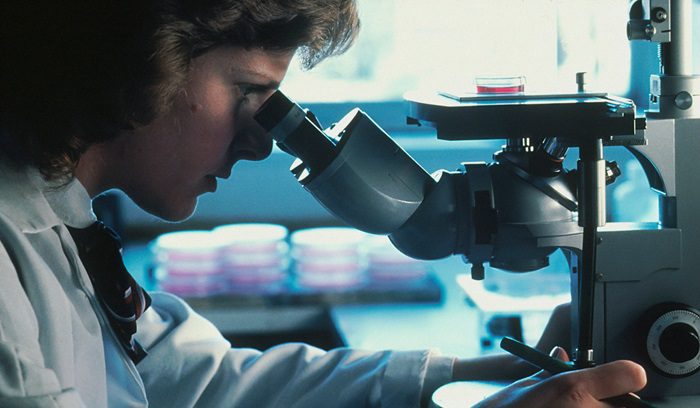
image for article on ovarian cancer prevention vaccine

Scientists in the U.K. developing world’s first vaccine to prevent ovarian cancer

OvarianVax, in development at the University of Oxford, has just received up to £600,000 from Cancer Research U.K. to pursue the world’s first vaccine designed to prevent ovarian cancer before it begins. The idea is to train the immune system to recognize over 100 proteins found on early-stage ovarian cancer cells, then destroy those cells before they can spread. For women carrying BRCA gene mutations, who currently face the wrenching choice of preventive surgery that ends fertility and triggers early menopause, a vaccine could transform what’s possible. It’s still early days, with lab work and clinical trials ahead, but the project signals a real shift in cancer research: moving from treatment toward prevention, and giving high-risk women better options worldwide.

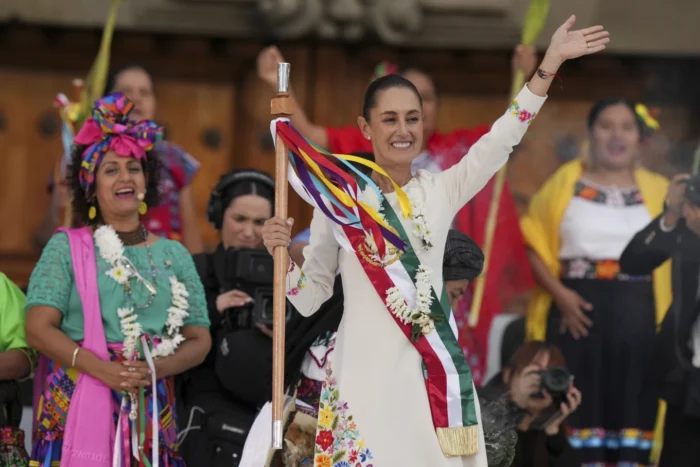
Good news, for article on Mexico's first female president

Claudia Sheinbaum is sworn in as Mexico’s first female president

Claudia Sheinbaum won Mexico’s presidency with roughly 59% of the vote in June 2024 — the largest margin in the country’s modern democratic era — and took office as the first woman and first Jewish person to lead the nation of 130 million. A climate scientist with a doctorate in energy engineering, she contributed to landmark IPCC reports before entering politics, and as Mexico City’s environment secretary she helped launch the Metrobús system that reshaped how millions get around. In her first months in office, she used a legislative supermajority to write universal healthcare and inflation-beating minimum wage protections directly into the constitution. Her rise signals that scientific expertise and bold social reform can sit at the very center of democratic leadership.

Anchorage, for article on Alaska abortion access

Nurse practitioners can provide abortions in Alaska, judge rules

Reproductive healthcare in Alaska took a meaningful step forward when a Superior Court ruling allowed nurse practitioners and physician assistants to provide medication abortion, and the change has reshaped daily life at clinics. Planned Parenthood’s Anchorage and Fairbanks locations went from offering abortion services one day a week to every day of the week, a shift that matters enormously in a state where reaching a provider can mean flying hundreds of miles. The Alaska Supreme Court is now weighing whether to reinstate the older physician-only rule, with justices openly questioning how geography shapes what counts as a burden. However the court rules, the case is a powerful reminder that healthcare access depends on who’s allowed to help — and where they live.

South Korean flags, for article on catch-up vaccination

‘Major milestone’ immunization campaign begins in North Korea with support of UNICEF

North Korea’s vaccination comeback is reaching every corner of the country — all 210 counties at once, with pregnant women included alongside children for the first time. Backed by UNICEF, more than four million doses arrived in July 2024 to jumpstart the effort, covering everything from measles to polio to hepatitis B. Over 7,200 health workers have been trained to deliver shots and respond to any reactions, and new freezers and cold boxes are keeping vaccines viable in remote areas. Before the pandemic, immunization coverage topped 96%, rivaling wealthy nations — a reminder that rebuilding what’s been lost is possible. Stories like this one show how patient, coordinated global health work can quietly restore protection for an entire generation.

Big Ben with bridge over Thames and flag of England against blue sky in London, for article on women in Parliament

British voters elect record number of women to Parliament

Britain’s 2024 general election sent at least 242 women to the House of Commons, the most in the chamber’s history and a jump from the previous record of 220 set in 2019. That brings female representation past 37% of the 650-seat lower house, climbing steadily from 30% just a decade ago. Behind the number is decades of deliberate work by parties to recruit women candidates, alongside shifting expectations about who belongs in power. Research suggests that once women hold more than a token share of seats, legislatures tend to take up health, education, and family policy with fresh seriousness. It’s a reminder that representation, once it reaches a critical mass, starts reshaping what democracies pay attention to.

Sierra Leone woman, for article on child marriage ban

Sierra Leone bans child marriage

Sierra Leone just made child marriage a serious crime, with anyone arranging the marriage of a girl under 18 now facing at least 15 years in prison. President Julius Maada Bio signed the Prohibition of Child Marriage Act in Freetown alongside First Lady Fatima Bio, who led the six-year campaign that made it happen. Her fight is personal — she nearly became a child bride herself. The law reaches grooms, parents, and even wedding guests, and it lands in a country where the Ministry of Health estimates one in three girls is married before 18. For a movement working to keep girls in school and alive through childbirth, this is the kind of legal backbone that changes what’s possible.

Contraceptives, for article on free contraception program

Free contraception initiative helps Finland reduce teenage abortions by 66%

Free contraception cut Finland’s teen abortion rate by 66% over roughly two decades, one of the steepest drops ever recorded in a high-income country. The shift came when municipalities began quietly weaving no-cost birth control into the same youth clinics where teenagers already get vaccines and check-ups, no awkward conversations or out-of-pocket costs required. Researchers say the lesson is refreshingly simple: young people aren’t avoiding contraception because they don’t understand it, but because of cost, stigma, or logistics — and Finland removed all three. As governments worldwide search for ways to support young people’s health and futures, this offers a quietly powerful blueprint: trust teenagers, meet them where they are, and the rest tends to follow.