
Technology & innovation

This archive covers technology and innovation breakthroughs that improve lives, protect the environment, and expand human possibility. From medical devices to clean energy tools, the stories here focus on what’s working and who’s making it happen.

a f z, for article on sintashta culture chariot

Sintashta culture pioneers the spoked-wheel chariot on the Eurasian steppe

Chariots first appear in the archaeological record around 2000 BCE, when people of the Sintashta culture buried two-wheeled vehicles alongside horses and bronze weapons on the steppes of what is now Russia and Kazakhstan. Their breakthrough was the spoked wheel, light enough for a horse to pull at speed. Within centuries, the design had spread across the ancient world.

Papyrus, for article on papyrus writing material

Ancient Egyptians turn papyrus into a writing material used across the ancient world

Papyrus writing material emerged along the Nile Delta around 3,000 B.C.E., when Egyptian workers learned to slice the pith of a wetland sedge, layer it crosswise, and hammer it into smooth, rollable sheets. The oldest surviving examples, found at Wadi al-Jarf in 2012, record the final years of building the Great Pyramid. Portable writing had arrived.

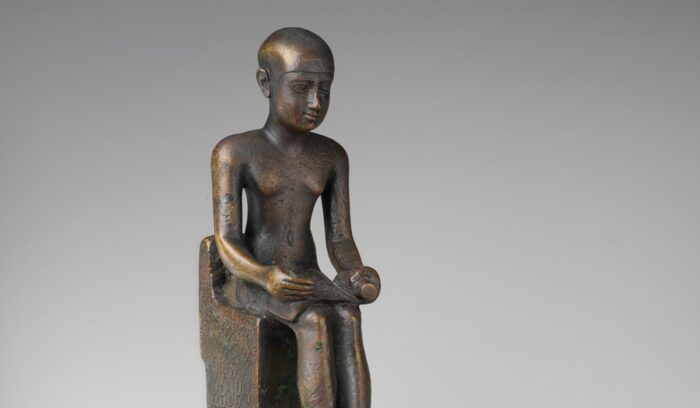
Statuette, for article on cancer diagnosis history

The Edwin Smith Papyrus records the first known written cancer diagnosis

The Edwin Smith Papyrus, written around 2650 B.C.E., contains what historians recognize as the oldest known written diagnosis of cancer. In a surgical text methodically working through 48 cases, an Egyptian scribe described hard, cool tumors of the breast and offered an unflinching verdict: “There is none.” Naming a disease honestly, it turns out, is itself ancient medicine.

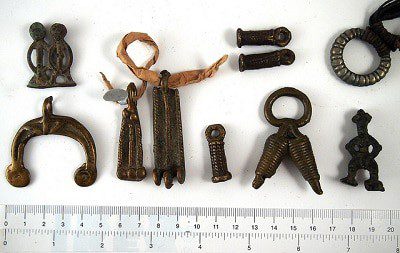
image for article on ancient comb history

Ancient comb finds in Persia reveal a grooming tradition 5,000 years old

Ancient combs roughly 5,000 years old have turned up in Persian settlements, already refined enough to suggest generations of earlier craft. Parallel traditions emerged independently in China, Japan, and across Africa around the same era, shaped from bone, ivory, and wood. A small grooming tool, arrived at again and again by strangers solving the same quiet problem.

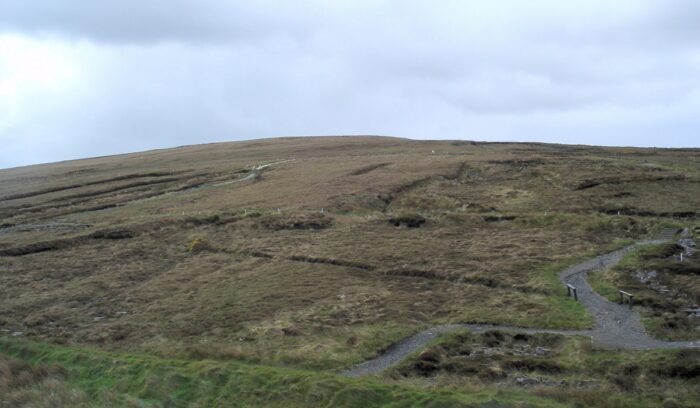
Ceide Fields neolithic site, for article on Céide Fields

Céide Fields of Ireland may be the world’s oldest field system

Céide Fields, buried beneath peat on Ireland’s northwest coast, may be one of the world’s oldest known farming landscapes, with radiocarbon dating pointing to around 3,500 B.C.E. A local schoolteacher first spotted the stone walls in the 1930s while cutting peat. Hidden below the bog lies over 100 kilometers of walls — the quiet trace of a community that chose to reshape its land.

patrick fore unsplash, for article on leavened bread wild yeast, for article on lost-wax casting

Ancient Egypt’s bakers discover leavened bread using wild yeast

Leavened bread likely emerged in Egyptian kitchens around 4000 B.C.E., when dough left sitting on a warm day caught wild yeast and rose into something lighter and more flavorful than anything before it. Bakers couldn’t explain it, but they saved a piece of each batch and passed the living culture forward — a quiet craft that would feed civilizations for the next six thousand years.

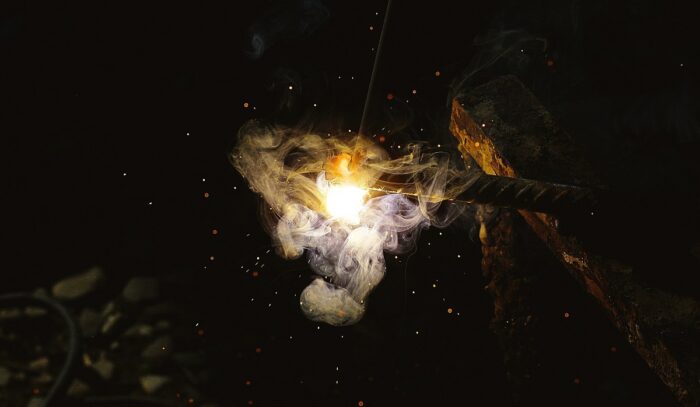
Smelting, for article on sub-Saharan copper smelting

Early copper smelting emerges independently across sub-Saharan Africa

Copper smelting in the Sahel emerged around 2000 B.C.E., when communities in what’s now Niger began pulling metal from stone through their own trial and error. The Agadez furnaces show no clear sign of North African influence, suggesting locally developed technique. It’s a quiet reminder that invention has always happened in more places than textbooks once allowed.