
Four Latin American countries join forces to form huge marine reserve
Panama, Ecuador, Colombia, and Costa Rica announced the Eastern Tropical Pacific Marine Corridor, a fishing-free corridor that will cover more than 200,000 square miles.
Oceans cover more than 70% of Earth’s surface and support the food, climate, and biodiversity systems that billions of people depend on. This archive tracks real progress in marine conservation — from expanding protected areas and restoring coral reefs to reducing plastic pollution and rebuilding fish populations. Each story focuses on what’s working and who is making it happen.

Panama, Ecuador, Colombia, and Costa Rica announced the Eastern Tropical Pacific Marine Corridor, a fishing-free corridor that will cover more than 200,000 square miles.

In IUCN’s Red List update, the seven most commercially fished tuna species were reassessed. Four moved in a positive direction thanks to countries enforcing more sustainable fishing quotas and successfully combatting illegal fishing.

The National Marine Fisheries Service on Friday finalized rules to expand the Southern Resident orca’s critical habitat from the Canadian border down to Point Sur, California, adding 15,910 square miles (41,207 square kilometers) of foraging areas, river mouths and migratory pathways.

The Thai Department of Conservation said four ingredients commonly found in sun creams were shown to destroy coral larvae, obstruct coral reproduction and cause reef bleaching.

The Shusha Island Coral Park will cover 100 hectares and become a global center to showcase innovations to protect and restore coral reefs and accelerate conservation solutions.

Gabon’s new shark and ray protections represent one of the more comprehensive marine wildlife frameworks on the African continent, covering dozens of species with legally binding rules across all fisheries. The legislation bans shark finning, requires immediate release of the most vulnerable species, and sets zero quotas for endangered sharks until populations recover. Artisanal fishers retain access to smaller coastal species, balancing conservation with local food security. Enforcement and long-term funding remain open questions, but Gabon’s decade-built framework offers neighboring Gulf of Guinea nations a replicable model for protecting shared waters.

Called the ANZPAC Plastics Pact, the agreement aims to drastically reduce plastic waste from Australia, New Zealand, and the Pacific by 2025. Among the signatories are big brands like Coca-Cola, Nestle, and Woolworths.
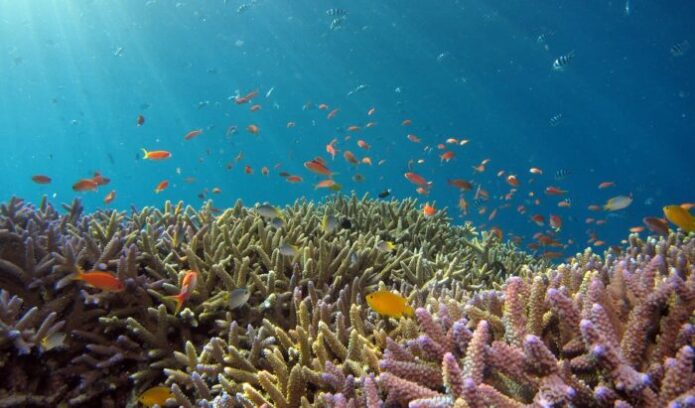
So far, 85,000 corals have been planted in the area and the coral cover of the seafloor in the park increased from 6% to 50% between 2010 to 2017.

The two parks will be established around Christmas Island and the Cocos (Keeling) Islands in the Indian Ocean to the northwest of continental Australia. The new parks cover 740,000 square kilometers (286,000 square miles) of ocean.

The U.K. government, under the Blue Belt program, has announced its plan to install underwater camera rigs for monitoring ocean wildlife across over 4 million square kilometers of ocean space.