Climate crisis

The climate crisis demands action — and action is happening. This archive tracks real progress: policy wins, clean-energy milestones, community resilience, and scientific advances that show meaningful change is possible. Stories here come from every corner of the world.

Coral reef with anemone, for article on coral reef restoration

New program to restore 120 miles of coral reefs off Big Island of Hawai’i

Coral reef restoration along Hawaiʻi’s Big Island just got a serious boost: a new $25 million initiative called Ākoʻakoʻa is taking on 120 miles of degraded reef off the Kona coast. The name means both “coral” and “to assemble,” and that’s the whole idea — marine scientists, Native Hawaiian practitioners, state agencies, and local nonprofits working as one. A new propagation facility in Kailua-Kona will grow heat-resilient corals while researchers test what helps reefs bounce back. Guiding it all is the Hawaiian principle of Mālama I Ka ʻĀina, caring for the land so the ocean can thrive. With reefs in trouble worldwide, this kind of partnership — Indigenous wisdom and Western science as equals — is a model other coastal communities will want to watch.

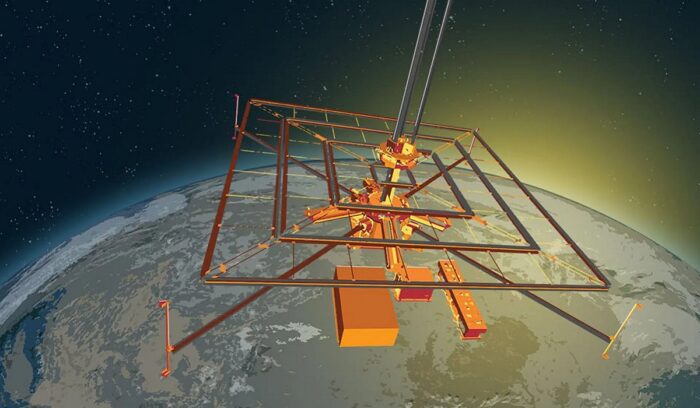
CalTech Space Solar array, for article on space solar power

World-first space solar demonstration beams power from orbit to Earth

Space-based solar power just crossed from theory into reality: a Caltech team has, for the first time, beamed energy from orbit down to a receiver on Earth. The signal arrived at a rooftop in Pasadena exactly when, where, and at the frequency engineers predicted — proof that the precision needed for a future full-scale array is achievable. The demonstrator weighed just 50 kilograms and used flexible, lightweight arrays never before flown for this purpose. The eventual vision is enormous and far from cheap, but the appeal is simple: panels in space see no night and no clouds. If this technology matures, clean power could one day reach communities far beyond the grid’s reach.

Inside a steel plant, for article on New Zealand emissions reduction

New Zealand announces $140m project to transition its major steel plant from coal to renewable energy

New Zealand is putting $140 million toward swapping out the coal furnaces at its largest steel plant — a single project that will shrink the country’s total emissions by a full 1%. The Glenbrook plant currently burns coal to turn iron-rich sands into steel, but a new electric arc furnace will melt recycled scrap instead, drawing power from a grid already running on roughly 80% renewables. By 2027, the switch is expected to cut 800,000 tonnes of carbon a year — more than every other government-funded emissions project combined. Heavy industry has long been called the hardest sector to decarbonize, and this is exactly the kind of proof-of-concept the rest of the world needs.

Coal mining, for article on India coal plant pause

India pauses plans to add new coal plants for at least five years

India just hit pause on new coal. The country’s Ministry of Power won’t consider new coal-fired power plant proposals for at least five years, opening the door for renewables to take on more of the load. India already ranks fourth globally for installed wind and solar capacity, and the updated plan aims to push non-fossil sources to 57% of the energy mix by 2027. To handle the swings of sun and wind, planners are pairing the buildout with 51.5GW of battery storage by 2030. For the world’s third-largest emitter, a pause like this is more than a planning tweak — it’s a signal that the future of electricity for 1.4 billion people is being written in renewables.

Microsoft logo, for article on fusion power purchase agreement

Helion announces world’s first fusion energy purchase agreement with Microsoft

Fusion energy just took a big step from lab to grid: Helion Energy has signed the world’s first commercial fusion power purchase agreement, promising Microsoft at least 50 megawatts of electricity from a plant targeted to come online in 2028. That timeline is roughly a decade ahead of most expert projections for commercial fusion. Helion has already built six prototypes and reached the 100-million-degree plasma temperatures considered necessary for self-sustaining reactions, with Constellation handling the grid-side logistics. The engineering road ahead is steep, and nothing is guaranteed. But moving fusion from research aspiration onto a real buyer’s procurement list is a meaningful shift, hinting at a future where zero-carbon baseload power becomes a practical piece of the climate puzzle.