Climate crisis

The climate crisis demands action — and action is happening. This archive tracks real progress: policy wins, clean-energy milestones, community resilience, and scientific advances that show meaningful change is possible. Stories here come from every corner of the world.

Rainforest canopy, for article on tropical forest reserve

The Democratic Republic of Congo to create the Earth’s largest protected tropical forest reserve

The Democratic Republic of Congo just passed legislation protecting 540,000 square kilometers of tropical forest — an area the size of France, and now the largest protected tropical forest reserve on Earth. At its heart is the Kivu-Kinshasa Green Corridor, which aims to create 500,000 jobs by linking renewable energy hubs, sustainable farming, and the communities that depend on the forest. The model is already working at smaller scale inside Virunga National Park, where a similar partnership has generated over 21,000 jobs in five years — 11% of them held by people who left armed militias. It’s a rare plan that treats conservation, poverty, and peace as the same problem, offering a blueprint the world badly needs.

Solar farm from above, for article on India solar capacity additions, for article on India solar capacity

India adds record 24.5 GW of solar in 2024

India’s solar boom hit a new high in 2024, with 24.5 gigawatts of new capacity added in a single year — more than double the year before. A big part of that growth came from rooftops: 700,000 households installed panels in just 10 months, helped along by a new government subsidy aimed at lower-income families. Off-grid solar nearly tripled, bringing electricity to rural communities the main grid has long struggled to reach. India’s total renewable capacity now sits above 209 gigawatts, nearly rivaling Germany’s entire power system. What makes this milestone resonate beyond India is the pairing of massive utility-scale projects with solar that actually reaches ordinary homes — a model the rest of the world’s clean energy transition could learn from.

New York, for article on NYC offshore wind farm

New York City to get a $3 billion, 80,000-acre offshore wind farm

Offshore wind is coming to New York City for the first time, with Empire Wind 1 set to power roughly half a million residents by 2027. Developed by Equinor and backed by a $3 billion financing package, the 810 MW project will be the first to plug directly into the city’s grid — covering about 6% of NYC’s electricity needs. Construction will run through a redeveloped South Brooklyn Marine Terminal, creating more than 1,000 union jobs along the waterfront. It’s not a silver bullet, but it’s a working proof of concept: the largest U.S. city now has a real, physical link to clean ocean wind, and a template other coastal cities can follow.

Good news for British climate action, for article on acts of union 1707, for article on U.K. renewable energy

Renewable power set to overtake fossil fuels in the U.K. this year for the first time

U.K. renewables made history in 2024, generating 37 percent of the country’s electricity and edging out fossil fuels for the first full calendar year on record. The shift has been remarkably fast — as recently as 2021, fossil fuels still produced nearly half of Britain’s power. Wind led the charge, with onshore generation jumping 23 percent in the first nine months of the year after England lifted its longstanding planning ban. The same year, Britain shut down its very last coal plant, closing a chapter that began in 1882. For a grid that powers homes, transport, and industry, this turning point lays the foundation every other climate goal depends on.

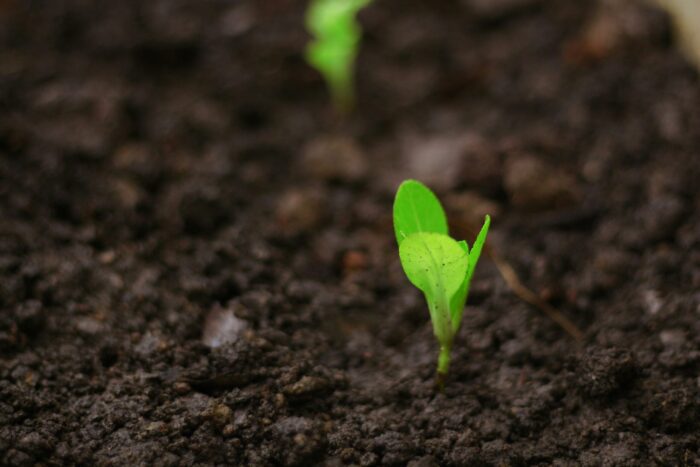
Green plant sprout in cracked soil, for article on Great Green Wall

China completes historic 1,800-mile “Great Green Wall”

China’s Great Green Wall has helped lift forest cover from under 10% in 1949 to nearly a quarter of the country’s land today, across roughly 1,800 miles of arid north. In dunes near Hongshui village, 78-year-old farmer Wang Tianchang and his family have spent four decades planting sweetvetch shrubs in tidy squares — a technique locals call “holding down the sand” — alongside pines and blue spruces that now shield their fields. Tens of thousands of volunteers join each planting season, and species choices have grown sharper after decades of trial and error. The honest picture includes monoculture missteps and stubborn sandstorms, but Africa’s own Great Green Wall is drawing explicit inspiration — proof that patient, place-based restoration can ripple far beyond where the first seedlings go in.

Solar panels, for article on utility-scale solar farm, for article on Pacific renewable energy, for article on dome-shaped solar cells

Australia to invest $125m in Pacific island off-grid and community scale renewables

Pacific renewable energy just got a $125 million boost from Australia, with $75 million earmarked specifically for off-grid solar and community-scale systems in remote villages. That means real things: a health clinic that can refrigerate vaccines, a school that can stay open after dark, a fishing cooperative that can keep its catch cold. The remaining funding supports grid planning and local expertise, so the transition outlasts any single project. For island nations who’ve contributed least to climate change but face rising seas and fiercer storms, this is the kind of practical, grant-based help they’ve long been asking for — and a hopeful signal that wealthier neighbors are finally starting to listen.

Dongying floating solar farm, for article on offshore floating solar

China activates world’s largest offshore floating solar installation

Offshore floating solar just reached gigawatt scale: a fleet of 2,934 steel-truss platforms now sits eight kilometers off China’s Shandong coast, generating enough electricity each year to power roughly 2.6 million urban residents. Activated in November 2024, the Dongying farm is the largest installation of its kind ever built, anchored to withstand storms and saltwater in the Bohai Sea. Moving panels out to sea sidesteps the fierce competition for land that solar faces nearly everywhere, and the cooler ocean environment can actually help panels run more efficiently. As countries hunt for clean power without paving over farmland or forests, the ocean is starting to look less like an obstacle and more like the next great frontier.

Teepees under the northern lights, for article on Indigenous-led conservation

Indigenous governments in the Canada’s Northwest Territories sign $375M deal to protect their land

Indigenous-led conservation took a major leap in Canada’s Northwest Territories, where 22 Indigenous governments signed a $375 million agreement to steward their ancestral lands over the next decade. It’s one of the largest Indigenous-led conservation efforts anywhere in the world, and crucially, the nations themselves decide how the money is used — whether for land guardians, new protected areas, climate research, or language and culture programs rooted in the land. “We’re protecting the spirit of the land,” said Dehcho Grand Chief Herb Norwegian, describing the land itself as a living organ in need of care. As global conservation increasingly recognizes that Indigenous-managed territories safeguard extraordinary biodiversity, this agreement offers a powerful model for what real partnership can look like.

Brazil renews plan to restore 30 million acres of degraded land

Brazil’s new restoration plan sets out to revive 12 million hectares of degraded land — about half the size of the United Kingdom — by 2030. Launched at the COP16 biodiversity summit, Planaveg 2.0 leans on a hopeful reality: 5.6 million hectares in the Amazon are already regrowing on their own, simply because clearing has stopped. The rest will take real work, including planting and stronger compliance from private landowners, who hold roughly three-quarters of the targeted land. In a country home to up to 18% of the world’s known species, even partial success would ripple far beyond its borders — a reminder that protecting biodiversity globally runs straight through the forests and farms of Brazil.

Coal pollution, for article on Germany coal use

German coal use plunges nearly 40% in 2024

Germany’s coal cleanup took a striking leap forward: hard coal use in power plants dropped 39 percent in the first nine months of 2024 compared to the same stretch in 2023, avoiding roughly 20 million tonnes of CO2. The shift is being driven by a surge in renewables, which now supply more than half of Germany’s electricity, alongside cleaner imports from European neighbors. Lignite, the dirtier sibling, fell 14.5 percent over the same months. Analysts now expect Germany’s coal exit to arrive well before its 2038 legal deadline. When the continent’s largest economy can pull this off, it reshapes what’s possible for every country still wrestling with how to leave coal behind.