
Qaraoun culture flourishes in modern-day Lebanon
The Qaraoun culture is a culture of the Lebanese Stone Age around Qaraoun in the Beqaa Valley.
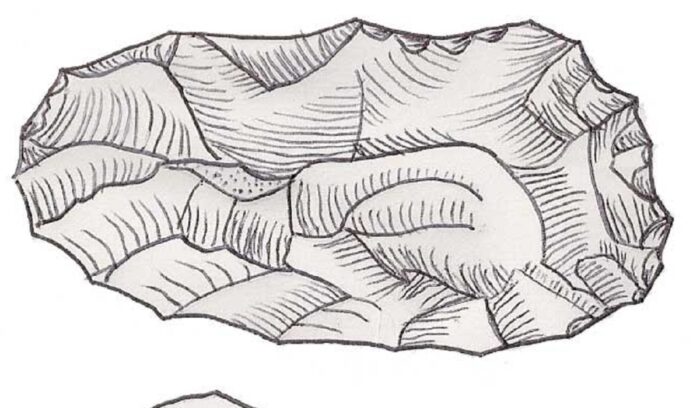
The Qaraoun culture is a culture of the Lebanese Stone Age around Qaraoun in the Beqaa Valley.
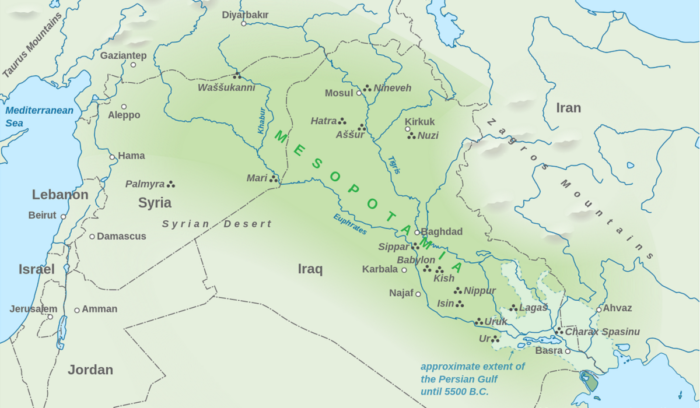
Archaeological excavations starting in the 1840s C.E. have revealed human settlements dating to 10,000 B.C.E. in Mesopotamia that indicate that the fertile conditions of the land between two rivers allowed an ancient hunter-gatherer people to settle in the land, domesticate animals, and turn their attention to agriculture.

The history of the domesticated sheep goes back to between 11000 and 9000 B.C.E., and the domestication of the wild mouflon in ancient Mesopotamia.

Kebarian culture was an archaeological culture in the eastern Mediterranean area (c. 18,000 to 12,500 BP). The Kebaran were a highly mobile nomadic population, composed of hunters and gatherers in the Levant and Sinai areas who used microlithic tools.

The invention of the mortar and pestle 35,000 years ago gave early humans an efficient way to process wild grains and medicinal herbs. This brilliant tool unlocked hidden calories within tough seeds, allowing communities to thrive in harsh environments. Ultimately, this simple engineering feat sparked the global transition to agriculture.

It is assumed to be one of the earliest known sites containing Upper Paleolithic technologies including Ahmarian cultural objects.
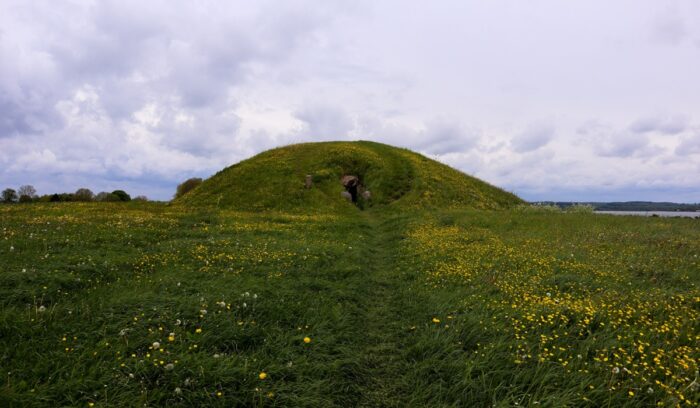
The earliest practice of human burial, dating back to sites like Qafzeh Cave in modern-day Israel, marked a monumental achievement in human history. This deliberate act of interment created cohesive social communities and provided a shared ritual for processing grief. More profoundly, it required advanced abstract thought and planning, affirming the inherent value of the individual beyond survival. This invention of ritual laid the essential foundation for all subsequent human culture and civilization.
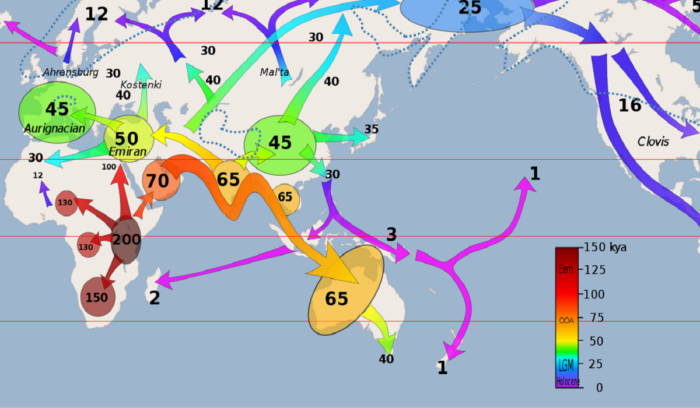
Early Homo sapiens settling the Arabian Peninsula demonstrated exceptional ingenuity by mastering abstract climate models and deep planning. Migrating through “Green Arabia” between 130,000 and 75,000 years ago, these pioneers developed resilient technologies and social cohesion, proving critical for their successful global dispersal.