
Ubaid culture thrives in ancient Mesopotamia
Ubaid culture is characterized by large unwalled village settlements, multi-roomed rectangular mud-brick houses and the appearance of the first temples of public architecture in Mesopotamia.

Ubaid culture is characterized by large unwalled village settlements, multi-roomed rectangular mud-brick houses and the appearance of the first temples of public architecture in Mesopotamia.

The population of the eastern mound has been estimated to be, at maximum, 10,000 people.

Archaeologists have long debated what caused the Neolithic Revolution, when prehistoric human beings gave up the nomadic life, founded villages and began to farm the land.
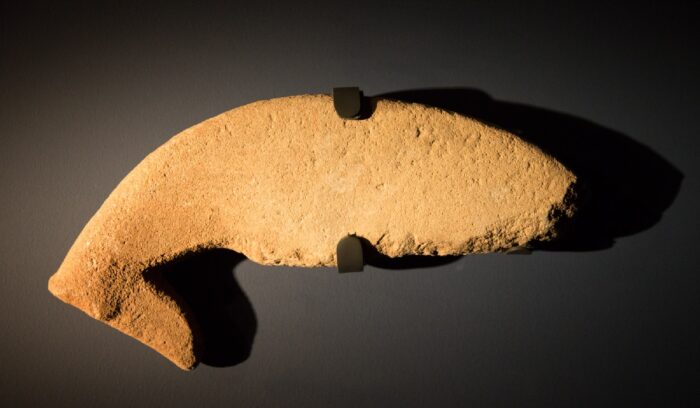
Al-Magar was a prehistoric culture of the Neolithic whose epicenter lied in modern-day southwestern Najd in Saudi Arabia. Al-Magar is possibly one of the first cultures in the world where widespread domestication of animals occurred.

Fully-developed village farming emerged at various Zagros sites such as Jarmo, Sarāb, upper Ali Kosh, and upper Gūrān.
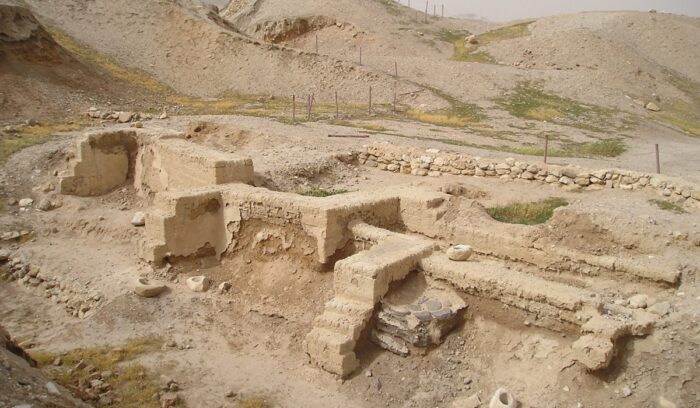
Jericho is one of the earliest continuous settlements in the world.

According to archaeological and genetic evidence, wild cattle or aurochs (Bos primigenius) were likely domesticated independently at least twice and perhaps three times.
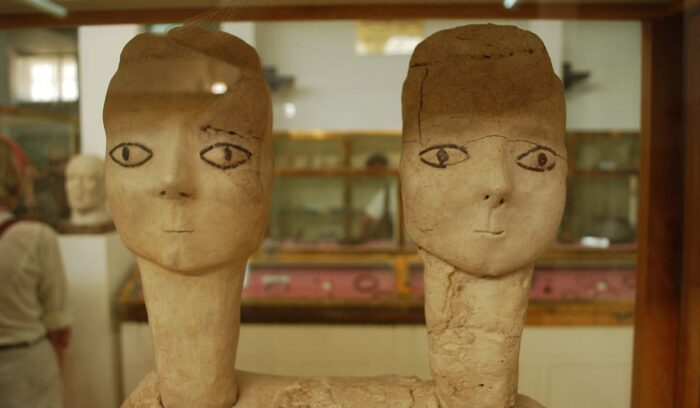
The 9th millennium MPPNB period in the Levant represented a major transformation in prehistoric lifeways from small bands of mobile hunter-gatherers to large settled farming and herding villages in the Mediterranean zone.

The origins of our modern wheat, according to genetics and archaeological studies, are found in the Karacadag mountain region of what is today southeastern Turkey–wheat makes up two of the classic eight founder crops of the origins of agriculture.

The beginning of this process in different regions has been dated from 10,000 to 8,000 B.C.E. in the Fertile Crescent and perhaps 8000 B.C.E. in the Kuk Early Agricultural Site of Melanesia.