
Abel Tasman becomes first European to explore New Zealand
Abel Tasman was the first known European explorer to reach the islands of Tasmania and New Zealand, and to sight the Fiji islands.

Abel Tasman was the first known European explorer to reach the islands of Tasmania and New Zealand, and to sight the Fiji islands.

Galileo is a central figure in the transition from natural philosophy to modern science and in the transformation of the scientific Renaissance into a scientific revolution.

Kepler’s work improved the heliocentric theory of Nicolaus Copernicus, explaining how the planets’ speeds varied, and using elliptical orbits rather than circular orbits with epicycles.
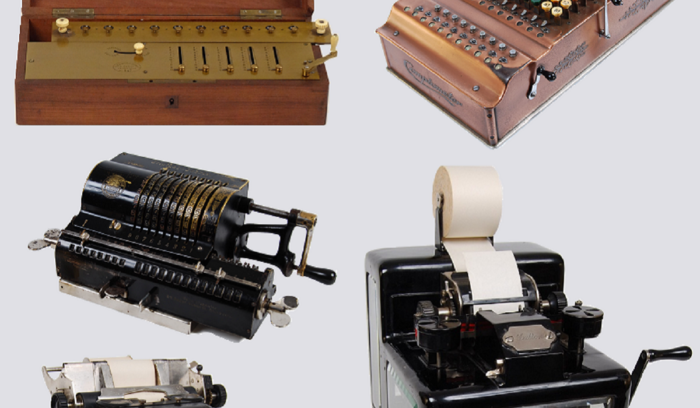
His machine was composed of two sets of technologies: an abacus made of Napier’s bones and a dialed pedometer to perform additions and subtractions.
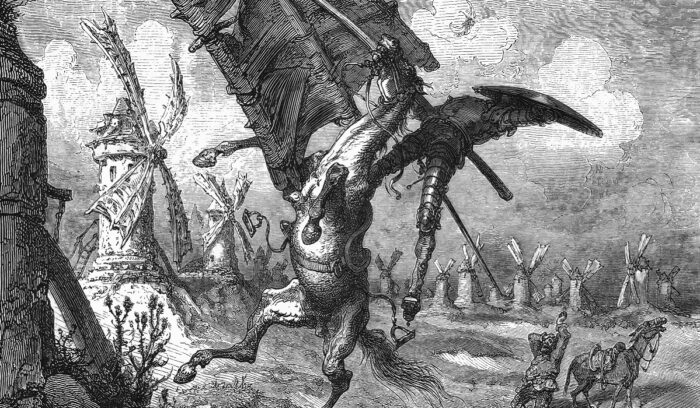
Published in two volumes, in 1605 and 1615, Don Quixote is considered the most influential work of literature from the Spanish Golden Age and the entire Spanish literary canon
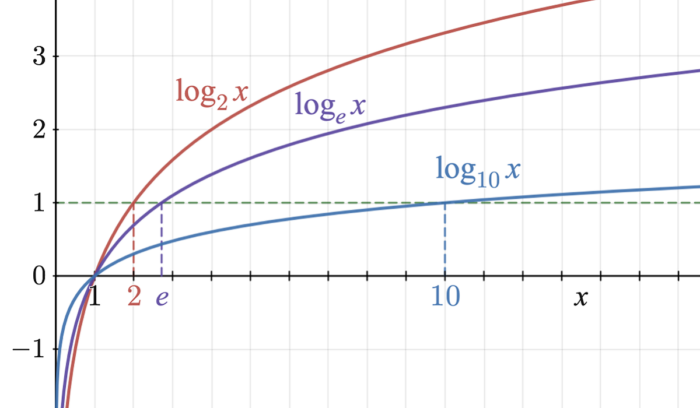
The history of logarithm in seventeenth century Europe is the discovery of a new function that extended the realm of analysis beyond the scope of algebraic methods.
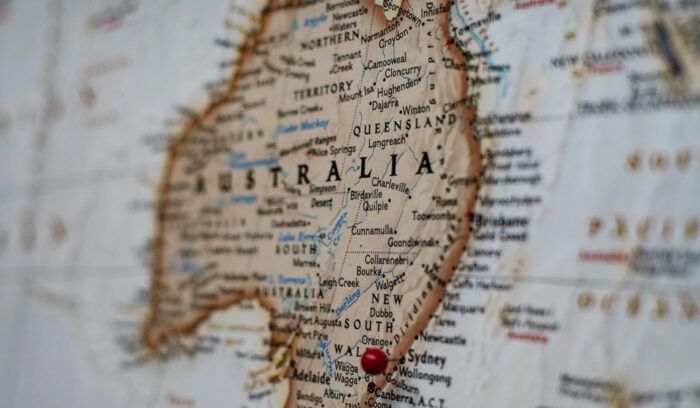
The first known landing in Australia by Europeans was by Dutch navigator Willem Janszoon in 1606. Twenty-nine other Dutch navigators explored the western and southern coasts in the 17th century, and dubbed the continent New Holland.

Hamlet is Shakespeare’s longest play, and is considered among the most powerful and influential works of world literature, with a story capable of “seemingly endless retelling and adaptation by others”.

The microscope was said to have a magnification of 3x when fully closed, and 9x when fully extended.

The Polish–Lithuanian Commonwealth was a dual state, a bi-confederation of Poland and Lithuania ruled by a common monarch. It was one of the largest and most populous countries of 16th- to 17th-century Europe.