Good News

Reproductive rights protesters

Wisconsin Supreme Court strikes down state’s 1849 near-total abortion ban

In a 4-3 decision, the court’s liberal majority affirmed a lower court ruling that overturned the 176-year-old ban and left in place a more recent law in Wisconsin allowing most abortions until about the 20th week of pregnancy. As was the case in many states with similar older laws, or newer so-called trigger laws, the ban came back into effect after the U.S. Supreme Court’s decision to strike down Roe v. Wade in 2022. In short order, the decision prompted Planned Parenthood’s Wisconsin operations to suspend abortion services in the state.
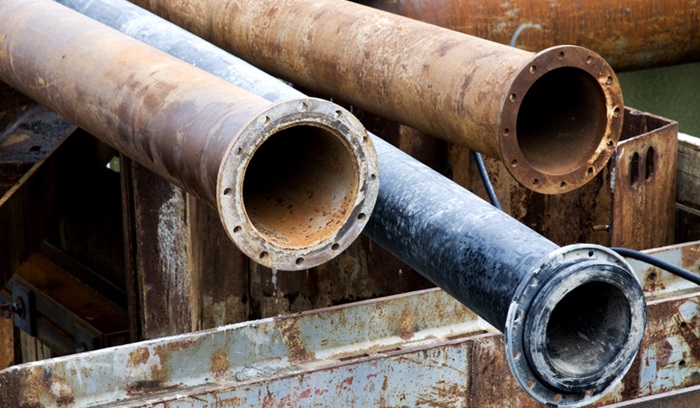
Metal pipes

Flint, Michigan at last replaces corroded pipes after lead crisis

Flint’s lead crisis began in 2014, when the city began drawing water sourced from the Flint River instead of from Lake Huron. The river water was more corrosive than the lake water, and the city failed to take the additional steps needed to prevent lead from leaching into drinking water. In 2017, a federal court ordered the city to replace all lead pipes within three years. Eight years later is the project finally complete. State officials told a federal court this week that the city has excavated more than 28,000 properties in search of lead water lines and replaced nearly 11,000 pipes.

South Africa flag

South Africa to ban highly toxic pesticide Terbufos

In a decision welcomed by advocacy groups and researchers, South Africa’s Cabinet has approved a ban on the import of Terbufos, a highly toxic pesticide linked to the deaths of six children in a South African township in October 2024. The South African Human Rights Commission (SAHRC) called the decision “a historic milestone in the realization of critical socio-economic rights, including the right to health, clean water, a safe environment, and adequate food.”

Mosquito on a leaf

Suriname becomes first country in the Amazon region to eliminate malaria

Suriname has officially been certified malaria-free by the World Health Organization (WHO). This certification marks the successful interruption of indigenous malaria transmission for at least three consecutive years – a major step forward in the global fight against one of humanity’s deadliest diseases. With today’s announcement, WHO has now certified 46 countries and one territory malaria-free – and each one has successfully prevented the re-establishment of the disease.

Midwife and mother

Virginia becomes first U.S. state to recognize autonomous midwifery practice

Autonomous midwifery practice enables midwives to conduct their professional work by providing evidence-based, high-quality, and ethical care across pregnancy, childbirth, and postpartum, as well as providing other reproductive health care. Now, Virginia midwives can not only practice autonomously but also receive 100% free schedule reimbursement from private insurance and Medicaid. They can also serve on a 24-hour on-call duty roster for nursery care when physicians are unavailable, addressing staffing shortages in rural areas.

Euro bills

Germany to raise minimum wage from €12.82 to €14.60 by 2027

The wage increase will take place in two stages. First, it will be increased from €12.82 per hour to €13.90 at the beginning of 2026. It will then increase again by €0.70 a year later. This means German workers would typically earn close to €2,500, making it the second-highest minimum wage in the European Union after Luxembourg, which mandates a monthly minimum of €2,638.

Silhouette behind prison bars

Vietnam abolishes death penalty for eight crimes

The legal reforms in Vietnam ended the death penalty for eight crimes, including trying to overthrow the government, damaging state infrastructure, making and selling fake medicine, starting wars, spying, drug trafficking, embezzlement, and taking bribes. The new rules also say that anyone already sentenced to death for these crimes but not yet executed by July 1 will have their sentence changed to life in prison after a final decision by Vietnam’s highest court.

Pride flag

The number of out LGBTQ+ elected officials in the U.S. has tripled since 2017

This year’s Out for America report from the LGBTQ+ Victory Institute showed an overall 2.4% increase in out LGBTQ+ representation between June 2024 and May 2025 and a 198% increase since the organization, which provides training and support for out candidates, first launched the report in 2017. While the majority of LGBTQ+ elected officials serve in state and local offices, 2025 saw a 33% increase in the number of out U.S. House representatives, bringing the total number to 12.

Solar farm

China achieves historic 1 TW solar capacity milestone

China has continued its reign as the undisputed global leader in renewable energy, with its solar capacity now surpassing a whopping 1 terawatt (TW). According to the Energy Information Administration, the total global electricity capacity in 2022 was less than 9 TW. From January to May, new solar installations totaled 197 GW, up 388% from the same period last year. In May alone, China added 92 GW of new capacity, a 105% increase from April and the highest monthly figure on record. China reached its first 1 GW of installed solar just 15 years ago in 2010.

Irish flags

Ireland shuts down its last coal-fired power plant

Ireland has become the 15th coal-free country in Europe, having ended coal power generation at its 915 MW Moneypoint coal plant in County Clare. Initially commissioned in the mid-1980s by ESB, Moneypoint was intended to help Ireland offset the impact of the oil crises in the 1970s by providing a dependable source of energy. But with Ireland now generating a lot more renewable energy, coal burning is no longer such an urgent need.