

Democracy is becoming visibly more inclusive in the United States. The number of openly LGBTQ+ elected officials has soared, more than tripling since 2017. This unprecedented surge is a major milestone for political and social equality. It signals a fundamental shift in how diverse candidates are perceived and elected across the nation.
This increase proves that sustained political engagement and visibility lead to concrete, positive change in government. This trend not only reflects society’s growing acceptance but also empowers LGBTQ+ individuals to shape policy and governance at every level.
Expanding Voice in Government
The dramatic tripling of elected officials has happened across all levels of government. These successful candidates hold positions from local school boards to the U.S. Congress. This broad-based success is extremely significant.
It means that issues impacting the LGBTQ+ community are now championed by officials who have relevant life experience. This includes fighting for non-discrimination protections, equitable healthcare access, and anti-bullying measures. Having openly LGBTQ+ officials in office makes government bodies more reflective of the diverse populations they serve. This visibility breaks down stereotypes and fosters greater understanding among colleagues and constituents.
The Positive Impact on Policy and Health
The presence of elected officials from marginalized communities has a measurable impact on public health and policy outcomes. States with higher rates of LGBTQ+ representation are more likely to enact protective laws. They also allocate more resources to public health programs aimed at this community.
These policies directly improve the lives of citizens. They lead to better mental health outcomes and reduced discrimination in areas like housing and employment. This political inclusion acts as a powerful counterbalance to legislative attempts in some states to roll back LGBTQ+ rights. Where a few advocates once fought alone, there is now a growing coalition of officials defending equality from within the halls of power.
A Beacon for Future Generations
The tripling of elected officials in less than a decade is an inspiring example of perseverance for the next generation. It shows young LGBTQ+ people that they can not only participate in society but lead it. This public visibility is a powerful antidote to stigma and provides crucial role models. It demonstrates that success and authenticity are compatible.
This wave of political success is a testament to the decades of work by civil rights organizations. They fought for the acceptance that allows diverse candidates to campaign and win in areas where they were once marginalized. This progress signals a larger shift in the national consciousness. Voters across demographic groups are increasingly willing to elect candidates based on merit. This suggests a future where political talent is judged purely on their qualifications and platform, a profound advancement for democratic ideals.
Resources
- Victory Fund Institute on LGBTQ+ Elected Officials
- Human Rights Campaign on State Equality Index
- National Center for Transgender Equality
- Brookings Institution on Diversity in Government
More Good News
-

Alzheimer’s risk cut in half by drug in landmark prevention trial
A clinical trial from Washington University in St. Louis and published in The Lancet Neurology found that long-term high-dose treatment with the antibody drug gantenerumab reduced Alzheimer’s risk by roughly 50% in people with dominantly inherited Alzheimer’s disease — a rare genetic form caused by mutations that make the disease near-certain. The results are statistically uncertain and apply to less than 1% of all Alzheimer’s cases, but they provide the first evidence that removing amyloid plaques before symptoms appear can meaningfully change the course of the disease.
-

Marie-Louise Eta becomes the first female head coach in men’s top-flight European football
Marie-Louise Eta, 34, was appointed head coach of Bundesliga side Union Berlin on April 12, 2026, becoming the first woman to hold the top coaching position at a men’s club in any of Europe’s Big Five leagues — the Premier League, La Liga, Serie A, Ligue 1, and Bundesliga. A Champions League winner as a player with Turbine Potsdam in 2010, Eta had already broken barriers as the first female assistant coach in the Bundesliga in 2023. She takes charge for the final five matches of the season as Union Berlin fights to secure top-flight survival, after which she was…
-

Renewables now make up at least 49% of global power capacity
Renewable energy reached 49.4% of total global installed power capacity by end of 2025, up from 46.3% in 2024, according to the International Renewable Energy Agency’s Renewable Capacity Statistics 2026. The world added 692 gigawatts of new renewable capacity last year — the largest annual addition ever recorded — with solar alone contributing 511 gigawatts. Africa recorded its highest renewable expansion on record, and the Middle East its fastest-ever growth. IRENA Director-General Francesco La Camera noted that countries investing in renewables are absorbing the current Middle East energy crisis with measurably less economic damage than fossil-fuel-dependent economies.
-
Global suicide rate has fallen by 40% since 1995
A landmark study published in The Lancet Public Health by researchers at the Institute for Health Metrics and Evaluation at the University of Washington found that the global age-standardized suicide mortality rate fell nearly 40% between 1990 and 2021 — from 15 deaths per 100,000 people to nine. The decline was driven by measurable interventions including restrictions on toxic pesticides, expanded mental health services, and national prevention strategies. Female suicide rates fell more than 50% globally over the period. Roughly 740,000 people still die by suicide each year, and rates have risen in parts of Latin America and North America,…
-
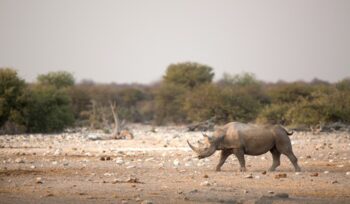
Rhinos are reintroduced back into Uganda’s wild after 43 years
The Uganda Wildlife Authority havetranslocated the first southern white rhinos to Kidepo Valley National Park — 43 years after the last rhino in the park was killed by poachers in 1983. The animals came from Ziwa Rhino Sanctuary, a breeding program established in 2005 with just six individuals that has grown Uganda’s total rhino population to 61. Four more rhinos will follow by May, with a separate group already relocated to Ajai Wildlife Reserve in January 2026. The reintroduction restores a key grazing species to one of Africa’s most remote savannah ecosystems and makes Kidepo the only national park in…