
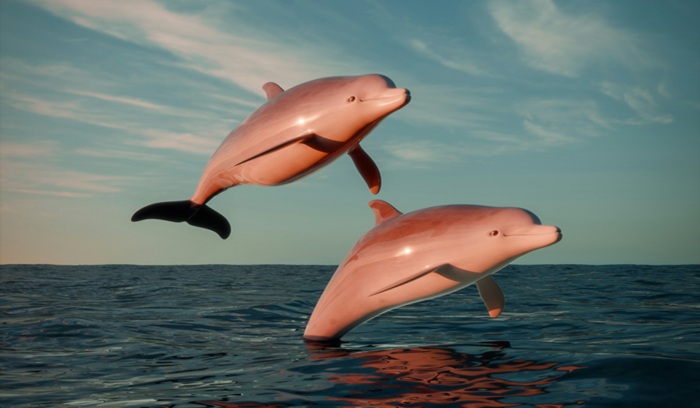
Singapore’s largest resort complex has quietly made a significant break with its past. Resorts World Sentosa (RWS) is halting the sourcing of wild dolphins for its oceanarium and suspending its captive-breeding program, according to insiders who spoke to Mongabay. The decision marks a rare and meaningful shift from one of Asia’s most prominent entertainment venues — and arrives as global momentum against cetacean captivity continues to build.
At a glance
- Captive breeding halt: Resorts World Sentosa is suspending its breeding program for Indo-Pacific bottlenose dolphins (Tursiops aduncus) and will no longer source wild animals to replenish its oceanarium population.
- Dolphin welfare panel: RWS is assembling an expert panel to determine the long-term future of the more than 20 dolphins currently held at the facility, the youngest of whom is a 7-year-old male named Kenzo.
- Cetacean captivity ban: An international movement against keeping dolphins and whales for entertainment has recently produced national bans in Mexico, Canada, and France, putting pressure on facilities across Asia to follow suit.
A troubled history at the oceanarium
RWS obtained 27 Indo-Pacific bottlenose dolphins from the Solomon Islands in 2008 and 2009 C.E. At least four died during transit or from infections contracted during transport. When the dolphin exhibit opened to the public in 2013 C.E., animal welfare groups launched a sustained campaign against it.
RWS has long defended the facility, telling Mongabay that its dolphins “receive round-the-clock care” from marine mammal specialists, veterinary staff, and environmental health professionals. But critics have argued that good care cannot fully compensate for the fundamental restrictions of captive life.
“No amount of veterinary care or good diet can change their restrictive and unnatural environment,” said Darian McBain, a sustainability expert and former chief sustainability officer at seafood company Thai Union Group and the Monetary Authority of Singapore. McBain noted that keeping dolphins also poses reputational and financial risks for organizations that present themselves as sustainability leaders.
What comes next for the dolphins
The harder question is what happens to the animals already in the facility. Staff who spoke to Mongabay expressed doubt that the dolphins — many of whom have spent their entire adult lives in captivity — could survive if returned to the wild. That concern is widely shared among marine mammal experts.
Lincoln O’Barry, campaign coordinator at the Dolphin Project, which rehabilitates formerly captive dolphins in natural sea pens on the Indonesian island of Bali, framed it plainly: “Some dolphins can adapt after years in captivity, some can’t. It’s like prison — some people walk out after decades like nothing happened, while others can lose their minds.”
Rob Lott of the U.K.-based Whale and Dolphin Conservation added that any eventual release would need to return animals to the original Solomon Islands population from which they were captured. That process, he said, involves significant political and legal hurdles — a reminder that the path from captivity to the ocean is rarely short or simple.
Anbarasi Boopal, former co-chief executive of Singapore animal welfare charity Animal Concerns Research and Education Society (ACRES), welcomed the news as a positive step while calling on RWS to be transparent about its long-term plans for the animals in its care. RWS declined to comment directly on the sourcing and breeding programs but confirmed it is assembling the expert panel.
A signal to the rest of Asia
Singapore has a particular influence in Southeast Asia as a financial and cultural hub. Decisions made by its major institutions — especially those with international tourism footprints — carry weight beyond its borders.
The global movement against cetacean captivity has picked up speed in recent years. Mexico, Canada, and France have each introduced legislation banning the practice for entertainment purposes. Advocacy groups have long targeted RWS as one of the most prominent holdouts in Asia, and they are watching the expert panel process closely.
The facility’s next steps — whether that means phased retirement to sea sanctuaries, long-term care in upgraded habitats, or eventual release assessments — will shape how this story is ultimately judged. The halt on sourcing and breeding is a floor, not a ceiling.
Still, the fact that a major commercial resort in Asia is convening independent experts and stepping back from wild capture is itself a milestone worth noting. It reflects a broader shift in what the public — and the tourism industry — is willing to accept.
Read more
For more on this story, see: Mongabay
For more from Good News for Humankind, see:
- Ghana establishes a new marine protected area at Cape Three Points
- Renewables now make up at least 49% of global power capacity
- The Good News for Humankind archive on marine conservation
About this article
- 🤖 This article is AI-generated, based on a framework created by Peter Schulte.
- 🌍 It aims to be inspirational but clear-eyed, accurate, and evidence-based, and grounded in care for the Earth, peace and belonging for all, and human evolution.
- 💬 Leave your notes and suggestions in the comments below — I will do my best to review and implement where appropriate.
- ✉️ One verified piece of good news, one insight from Antihero Project, every weekday morning. Subscribe free.
More Good News
-

Chinese solar exports double in last month to hit record high
China’s solar exports hit a record 68.03 gigawatts in March 2026, nearly doubling February’s volume as countries raced to replace disrupted Middle Eastern oil and gas. Fifty nations logged all-time-high imports of Chinese solar equipment that month, with African countries jumping 176% from February alone. Behind those numbers are governments that had been moving cautiously on renewables and suddenly found solar to be the fastest, cheapest answer on the table. Battery and electric vehicle shipments climbed alongside the panels, hinting at a clean-energy package moving together. The takeaway is hopeful even amid hard circumstances: when fossil fuels falter, the world…
-
Coho salmon returns surge 10x on California’s Mendocino Coast over last decade
Coho salmon are back on California’s Mendocino Coast in numbers no one alive expected to see: more than 30,000 endangered adults returned to spawn this past season, roughly ten times the count from a decade ago. Biologists who once walked miles of empty stream are now finding fish tucked under their boots and spawning in channels barely a foot and a half wide. The turnaround follows decades of patient work — over 100 restoration projects, removed culverts, and rebuilt floodplains — meeting a rare stretch of favorable ocean conditions. It’s a reminder that endangered species can come back when communities…
-
Botswana officially strikes anti-sodomy law from its national penal code
Botswana has officially erased its colonial-era anti-sodomy law from the national penal code in 2026, transforming a 2019 court victory into permanent written statute. The original provision, imported under British rule in the 19th century, had once threatened same-sex couples with up to seven years in prison. Striking the language itself matters because unconstitutional laws left on paper can still be used to harass and stigmatize, even when unenforceable. Botswana now joins a small group of African nations that have gone beyond court rulings to fully cleanse discriminatory language from their books. With more than 60 countries still criminalizing same-sex…
