
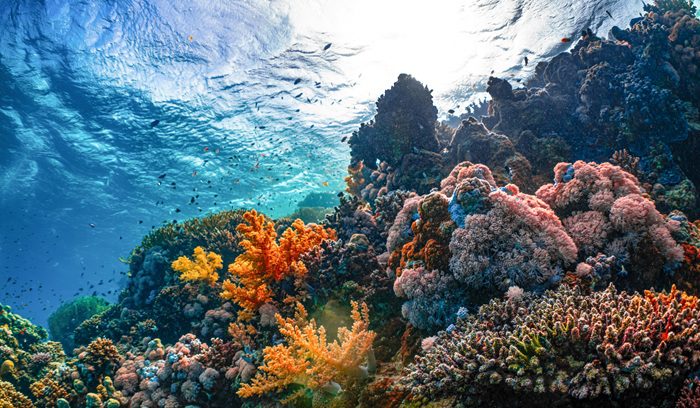
Papua New Guinea has announced its intention to protect roughly 200,000 square kilometers of Pacific Ocean waters — an area nearly the size of the United Kingdom. The proposed Western Manus Marine Protected Area would cover one of the most biologically rich and least explored stretches of ocean on Earth, and could move the world meaningfully closer to its goal of protecting 30% of the ocean by 2030 C.E.
At a glance
- Marine protected area: The proposed Western Manus MPA would cover approximately 200,000 sq km (77,220 sq miles) of the Pacific Ocean off Papua New Guinea’s coast.
- Pristine Seas expedition: A 2024 C.E. National Geographic Pristine Seas survey found vibrant coral reefs and previously unrecorded deep-sea species in the region — alongside low predator numbers, a sign of fishing pressure.
- Ocean biodiversity: The waters support an extraordinary range of marine life, from shallow coral ecosystems to deep-sea species still unknown to science.
Why these waters matter
The Bismarck Sea and surrounding Pacific waters off Papua New Guinea sit within the Coral Triangle — often called the Amazon of the seas. This region holds some of the highest marine biodiversity on the planet, including critical habitats for sharks, dolphins, whales, rays, and countless reef species.
What makes the Western Manus region especially significant is how little science knows about it. The 2024 C.E. Pristine Seas expedition turned up species that had never been formally recorded, suggesting that the deep-sea environments here remain largely unmapped. That scientific mystery is part of what makes protection so urgent: some places deserve safeguarding before they are fully catalogued, not after.
Low predator numbers observed during the expedition point to ongoing fishing pressure even in these remote waters. Large predators — sharks especially — are among the first species to disappear when fishing intensifies, and their absence signals ecosystems already under stress. A no-take marine reserve gives those populations a chance to recover.
A bold step toward 30×30
The announcement positions Papua New Guinea as a leader in the global Pristine Seas movement and in the broader Kunming-Montréal Global Biodiversity Framework, which commits nations to protecting 30% of land and ocean by 2030 C.E. At roughly 200,000 sq km, this single designation would represent a substantial contribution toward that target.
Marine protected areas of this scale do more than preserve biodiversity. Research consistently shows that well-enforced no-take zones rebuild fish populations, strengthen reef resilience against bleaching, and support the food security of coastal communities. For Papua New Guinea’s island provinces — where millions of people depend on the ocean for protein and livelihoods — a healthier sea is also a more reliable one.
From intention to enforcement
The announcement describes an intention to protect these waters, and that distinction matters. Declaring a marine protected area and enforcing one are two different things. Vast ocean reserves have sometimes existed on paper while illegal fishing continued unchecked — a pattern conservation advocates call “paper parks.” Papua New Guinea will need sustained investment in monitoring, patrol capacity, and community engagement to make this protection real.
Local voices add texture to that challenge. Community members in Manus Province have already observed coastlines moving further inland and pollution affecting their shores — pressures that a marine reserve alone cannot fully address. The reserve’s success will depend on how well it integrates with the lives and concerns of the people who live closest to these waters.
What the science found
The 2024 C.E. National Geographic Pristine Seas expedition documented reefs that, despite fishing pressure elsewhere, remained visually stunning and structurally intact in places. Deep-sea surveys turned up species new to the scientific record — a reminder that the ocean’s inventory is still very much incomplete.
That incompleteness is itself an argument for protection. Science cannot measure the value of what it has not yet found. Locking these waters away from industrial extraction before that knowledge exists is a form of humility the ocean may reward for centuries.
If Papua New Guinea follows through on this commitment, the Western Manus Marine Protected Area could become one of the largest no-take reserves in the Pacific — a genuine contribution to the health of a global ocean that belongs to everyone.
Read more
For more on this story, see: National Geographic Society
For more from Good News for Humankind, see:
- International community achieves 30×30 goal of protecting 30% of world’s oceans
- In historic deal, nearly 200 countries agree to protect 30% of land and sea to protect biodiversity
- The Good News for Humankind archive on marine conservation
- Ocean & marine protection: the wins safeguarding life beneath the waves
About this article
- 🤖 This article is AI-generated, based on a framework created by Peter Schulte.
- 🌍 It aims to be inspirational but clear-eyed, accurate, and evidence-based, and grounded in care for the Earth, peace and belonging for all, and human evolution.
- 💬 Leave your notes and suggestions in the comments below — I will do my best to review and implement where appropriate.
- ✉️ One verified piece of good news, one insight from Antihero Project, every weekday morning. Subscribe free.


