The eighth annual Our Ocean Conference, held in Panama City on March 2–3, 2023 C.E., produced 341 commitments worth nearly $20 billion to protect the world’s seas. Delegates from governments, philanthropies, and conservation groups pledged funding for expanding marine protected areas, strengthening biodiversity corridors, and cutting plastic pollution — a signal that global ambition for ocean protection is growing.
At a glance
- Marine protection commitments: Delegates made 341 pledges worth nearly $20 billion, covering marine protected areas, biodiversity corridors, and ocean sustainability programs.
- Panama marine protected area: Panama announced an expansion of its Banco Volcán MPA by 36,058 square miles, bringing ocean protection within its exclusive economic zone to more than 54%.
- 30×30 ocean goal: Bloomberg Philanthropies and Arcadia established a $51 million fund to help Indigenous peoples, local communities, NGOs, and governments protect 30% of the world’s oceans by 2030.
Panama steps up as host and leader
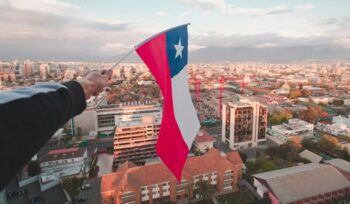
Panama became the first Latin American country to host an Our Ocean Conference — and it used the moment to make a headline commitment of its own.
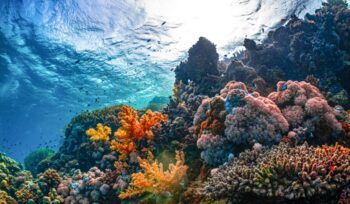
President Laurentino Cortizo Cohen opened the event by calling on nations to treat the ocean “as a source of life and recognize it as a great ally in our fight against the climate and biodiversity crises.” Panama then announced the expansion of its Banco Volcán Marine Protected Area in the Caribbean Sea, adding 36,058 square miles to an area originally established in 2015 C.E. at 5,487 square miles. The expanded zone covers deep-sea mountain ranges and high-biodiversity waters.
Héctor Guzmán, a marine biologist at the Smithsonian Tropical Research Institute and co-founder of the marine conservation network MigraMar, contributed to the scientific research behind the expansion. He said Panama is “not only ensuring the conservation of its marine biodiversity and the livelihoods of the people who depend on these ecosystems in the long-term, but is also positioned to lead a much more ambitious regional effort.”
Panama’s Ministry of Environment also announced the country’s intention to stop more than 160,000 tons of plastic from being imported and consumed by eliminating single-use plastics, including cups, utensils, plastic packaging, and virgin plastic.
A wave of global pledges
The U.S. and the European Union made among the largest individual pledges — roughly $6 billion and $865 million, respectively — to help protect marine biodiversity around the world.
Bloomberg Philanthropies and Arcadia jointly established a $51 million fund to support Indigenous peoples and local communities, NGOs, and governments in expanding marine protections. The fund is explicitly tied to the Kunming-Montreal Global Biodiversity Framework target of protecting 30% of the world’s oceans by 2030, known widely as 30×30.
A coalition of organizations also committed $5 million to help developing countries join the high seas treaty being negotiated in New York at the same time as the conference — a treaty that was ultimately agreed upon that same week.
In the Eastern Tropical Pacific, the Connect to Protect Eastern Tropical Pacific Coalition announced $118.5 million in combined private and public funding to strengthen protections for the Eastern Tropical Pacific Marine Corridor. That corridor spans more than 500,000 square kilometers of biodiverse waters shared by Ecuador, Colombia, Panama, and Costa Rica.
Cross-border conservation and what it signals
Dan Crockett, oceans and climate director at the NGO Blue Marine Foundation, attended the conference and called the scale of commitments “impressive.” He told Mongabay there was “a strength to the amount of money being put on the table,” adding that Sustainable Development Goal 14 — Life Below Water — has long been critically underfunded.
Crockett said he found particular encouragement in countries working across political boundaries to create shared marine protected areas. Migratory species, he noted, “do not know about or respect” country borders.
“If environment ministers can set down their differences and come together around ambitious ocean conservation, it provides a lot of hope for the potential for 30 by 30,” he said.
Tony Long, chief executive of Global Fishing Watch, echoed that optimism while urging the next step. “There have been some fantastic commitments here, but we still need those actions to take place,” he said. “The more we see the community come together to drive those actions forward, the quicker the health of our ocean will be maintained.”
Pledges are a start, not a finish line
Previous Our Ocean conferences have generated more than 1,800 commitments worth approximately $108 billion since the series began. That accumulated record shows sustained and growing global will — but also the persistent gap between promise and implementation that advocates and researchers continue to track.
Financial pledges at diplomatic conferences are not binding, and translating billions in commitments into protected waters, enforced rules, and funded communities has historically been the harder challenge. Monitoring and accountability mechanisms will determine whether the 2023 C.E. pledges deliver measurable outcomes for ocean biodiversity.
Read more
For more on this story, see: Mongabay — Our Ocean Conference in Panama generates $20 billion in commitments for marine protection
For more from Good News for Humankind, see:
- Ghana establishes a marine protected area at Cape Three Points
- Alzheimer’s risk cut in half by drug in landmark prevention trial
- The Good News for Humankind archive on marine conservation
About this article
- 🤖 This article is AI-generated, based on a framework created by Peter Schulte.
- 🌍 It aims to be inspirational but clear-eyed, accurate, and evidence-based, and grounded in care for the Earth, peace and belonging for all, and human evolution.
- 💬 Leave your notes and suggestions in the comments below — I will do my best to review and implement where appropriate.
- ✉️ One verified piece of good news, one insight from Antihero Project, every weekday morning. Subscribe free.