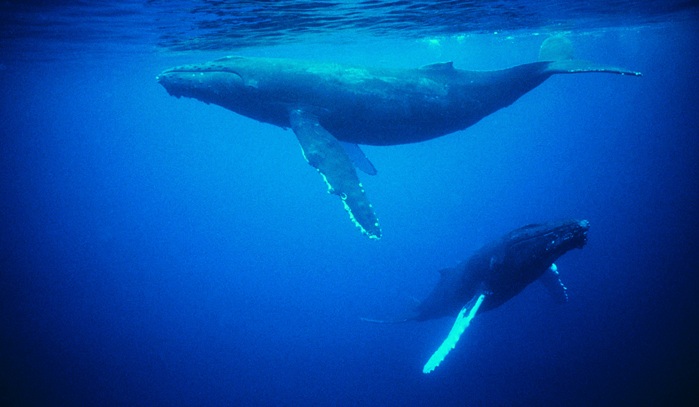
In the mid-1990s C.E., the United States led a sweeping international effort to protect the ocean mammals most at risk from commercial shipping and industrial fishing — delivering binding agreements that would shape how nations manage cetacean populations for decades.
At a glance
- Right whale protection: The Clinton administration proposed requiring commercial ships to report when entering North Atlantic right whale habitat and to receive guidance on avoiding collisions — a critical safeguard for a population of roughly 300 animals.
- Dolphin protection agreement: U.S.-led negotiations produced a multilateral agreement protecting dolphins in the eastern tropical Pacific Ocean, backed by legislation the Senate passed 99–0 and signed into law in August 1997 C.E.
- Coral reef partnership: The U.S. co-founded the International Coral Reef Initiative in 1994 C.E. with seven other nations, mobilizing joint research and coordinated protection for reefs that serve as nurseries for much of the ocean’s marine life.
Why the right whale proposal mattered
By the mid-1990s C.E., the North Atlantic right whale was one of the most endangered large mammals on Earth. Commercial whaling had reduced the population to the edge of survival, and ship strikes had become the leading human cause of death for the animals that remained.
The Clinton administration’s response was practical rather than symbolic. Under the U.S. proposal, vessels entering right whale habitat would be required to report their position and receive updated guidance on where the animals had been recently sighted. The logic was straightforward: if captains knew where whales were, they could alter course.
That kind of real-time coordination between maritime commerce and conservation biology was new. It acknowledged that ships weren’t going to stop running — but that the routes they took could be negotiated with the ocean’s other inhabitants in mind.
A 99-to-0 vote and what it represented
The dolphin protection agreement stands out for its political unanimity. Negotiations led by the U.S. produced a multilateral accord covering the eastern tropical Pacific, where tuna fishing operations had for decades resulted in large-scale dolphin mortality as bycatch.
The International Dolphin Conservation Program Act, which codified the agreement into U.S. law, passed the Senate 99–0 in 1997 C.E. That margin is striking. Environmental legislation rarely commands that kind of consensus, and it reflected how thoroughly the scientific and commercial fishing communities had aligned around a workable solution.
The agreement required participating fishing fleets to adopt specific gear modifications and operational changes that dramatically reduced dolphin mortality. It also created an international observer program to verify compliance — a monitoring mechanism that gave the agreement teeth.
The broader ocean architecture
The cetacean protections were part of a much larger framework the Clinton administration was building across the 1990s C.E. The U.S. led the call for a global ban on ocean dumping of low-level radioactive waste at the London Convention in 1993 C.E., becoming the first nuclear power to advocate the ban. It worked with other nations to ratify a legally binding treaty on migratory fish stocks in August 1996 C.E., addressing overfishing that had put thousands of fishermen out of work.
The administration also hosted the Washington Conference on land-based marine pollution and led international negotiations to address persistent organic pollutants — chemicals that accumulate in the bodies of marine mammals, including the very whales and dolphins the other policies were trying to protect.
Together, these initiatives sketched out what coherent ocean governance could look like: not individual protections in isolation, but an interlocking set of agreements that addressed threats from multiple directions at once.
What held and what remained unfinished
The dolphin protection framework proved durable. The Inter-American Tropical Tuna Commission has continued to monitor compliance, and dolphin mortality in the eastern tropical Pacific dropped dramatically in the years following the agreement — from hundreds of thousands of deaths annually in earlier decades to a few thousand by the late 1990s C.E.
Right whale recovery has been harder. The shipping protocols helped, but entanglement in fishing gear emerged as an equally serious threat, and the population has struggled to grow even with protections in place. As of the early 2020s C.E., the North Atlantic right whale population remained critically low, and scientists have continued pushing for stricter fishing gear regulations beyond what the 1990s C.E. framework envisioned.
That unfinished work doesn’t diminish what the Clinton-era push accomplished. It demonstrated that international cetacean protection agreements were negotiable, that commercial industries could adapt, and that scientific monitoring could be written into law in ways that produced measurable results. Those precedents have shaped every major ocean protection effort that followed.
The National Oceanic and Atmospheric Administration continues to manage right whale protections, building on the regulatory architecture established in this period. The foundations laid in the 1990s C.E. remain the legal and diplomatic bedrock for U.S. engagement on cetacean conservation today.
Read more
For more on this story, see: The White House — Protecting the Oceans: President Clinton and Vice President Gore
For more from Good News for Humankind, see:
- Ghana’s marine protected area at Cape Three Points
- Renewables now make up at least 49% of global power capacity
- The Good News for Humankind archive on marine conservation
About this article
- 🤖 This article is AI-generated, based on a framework created by Peter Schulte.
- 🌍 It aims to be inspirational but clear-eyed, accurate, and evidence-based, and grounded in care for the Earth, peace and belonging for all, and human evolution.
- 💬 Leave your notes and suggestions in the comments below — I will do my best to review and implement where appropriate.
- ✉️ One verified piece of good news, one insight from Antihero Project, every weekday morning. Subscribe free.
More Good News
-

Poland to recognize same-sex marriages from E.U. states
Same-sex marriages performed elsewhere in the EU must now be formally recognized in Poland, the country’s Supreme Administrative Court ruled — a turning point for a nation that still offers no domestic legal recognition for same-sex unions. Rights groups estimate that 30,000 to 40,000 Polish citizens have married abroad, and many can now see those unions entered into Poland’s civil registry for the first time. The case began with a couple who wed in Germany in 2018 and were turned away by Warsaw officials; when the ruling was read, activists in the courtroom broke into applause. In a country where…
-

More than 50 nations attend world-first conference on phasing out fossil fuels
Fossil fuel phaseout talks just crossed a real threshold: for the first time, more than 50 nations sat down together specifically to plan a way off coal, oil, and gas. The two-day gathering in Santa Marta, Colombia, brought together an unusually wide mix — major producers like Australia, Norway, and Canada alongside Pacific island nations like Tuvalu and Vanuatu, with Europe and emerging economies in between. No binding deals were expected, but the recommendations will feed into a voluntary roadmap being shaped under Brazil’s COP30 leadership. It’s a small, hopeful shift: producers and consumers finally talking openly about a transition…
-

Singapore stops sourcing and breeding dolphins
Resorts World Sentosa, home to more than 20 Indo-Pacific bottlenose dolphins, is halting both wild sourcing and captive breeding at its Singapore oceanarium. The resort is now assembling an independent expert panel to figure out what’s next for the animals in its care, including a 7-year-old named Kenzo. It’s a meaningful shift from one of Asia’s most prominent entertainment venues, and one animal welfare groups have pushed toward for over a decade. With Mexico, Canada, and France already banning cetacean captivity for entertainment, this quiet decision in Singapore signals that the tide is turning across Asia too, reshaping what travelers…