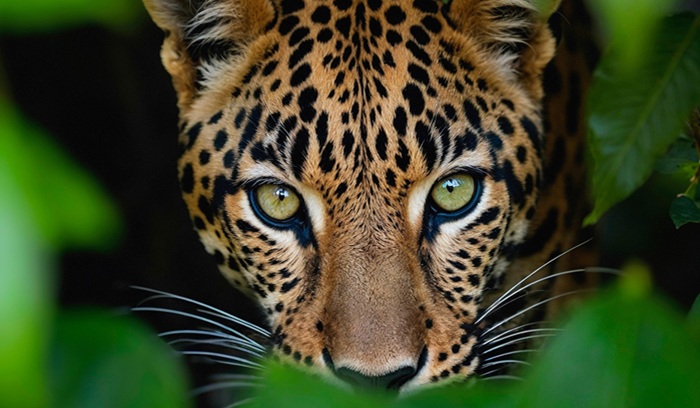
A nationwide census completed in 2025 C.E. has confirmed what conservationists had hoped but dared not assume: Mexico’s wild jaguar population has grown by roughly 30%, reaching 5,326 individual animals — up from approximately 4,100 counted in a previous survey. The turnaround reflects years of coordinated work between field scientists, government agencies, and the Indigenous and rural communities who share land with these big cats every day.
At a glance
- Jaguar population: A 2024 C.E. census confirmed 5,326 jaguars across Mexico — a roughly 30% increase over the prior count — making it the largest mammal census ever conducted in the country.
- Camera trap network: Researchers deployed 920 motion-capture cameras across 414,000 hectares in 15 states over 90 days, with nearly 50 scientists working alongside local community leaders.
- Regional distribution: The Yucatán Peninsula holds the largest concentration at 1,699 jaguars, followed by the south Pacific region (1,541), northeast and central Mexico (813), the north Pacific (733), and the central Pacific coast (540).
Why the count matters
The jaguar (Panthera onca) is the third-largest big cat in the world and the largest native to the Americas. It shares a common genetic ancestor with lions and leopards — and, unlike either of those species, it has managed to hold on at the northern edge of its range in Mexico, as close as the animal gets to the United States.
Mexico’s jaguar population sits at the far periphery of a range that stretches through Central America and deep into the South American rainforest and Pantanal. That peripheral status makes it both ecologically significant and particularly vulnerable. When Gerardo Ceballos and his team at the National Alliance for Jaguar Conservation (ANCJ) conducted the first systematic nationwide count in 2010 C.E., they expected to find around 1,000 individuals. They found 4,100 — four times their projection. The new census adds another 1,200 animals to that total.
Ecologists classify the jaguar as an umbrella species. Protect it, and you protect almost everything sharing its habitat: deer, peccaries, armadillos, river otters, hundreds of bird species, and the forest systems that sustain them all. Rising jaguar numbers signal that prey populations are stable, forest cover is intact, and the broader ecosystem is functioning.
How scientists told individuals apart
Counting jaguars accurately is harder than it sounds. The census team needed to avoid double-counting animals that move across large territories. Their solution was the jaguar’s own markings.
Like human fingerprints, every jaguar’s rosette pattern is unique. Those distinctive spots — rings with smaller spots inside them — are arranged differently on every individual. Some jaguars also carry long dark markings along their spines, further distinguishing them. When camera traps captured high-quality images, researchers could match individuals across sites with confidence, producing a count that reflects actual animals rather than estimates inflated by repeat sightings.
The 90-day census covered 15 states and involved nearly 50 researchers alongside community members who know the terrain. It stands as the largest census ever conducted for any mammal species in Mexico.
The role of local communities
The census methodology points to something deeper than scientific technique. Local community leaders were embedded in the fieldwork from the start — not as guides hired for logistics, but as partners whose knowledge of specific landscapes shaped where cameras were placed and how researchers moved through the terrain.
That partnership reflects a broader shift in how jaguar conservation in Mexico has operated since the 2010 C.E. baseline count. The ANCJ’s campaign focused on maintaining protected areas, reducing jaguar conflict with cattle ranchers, and building genuine public awareness of why the cats matter. Programs that compensate ranchers quickly for livestock losses and provide predator-proof corrals have reduced retaliatory killings. The World Wildlife Fund has documented similar coexistence strategies across jaguar range countries, and the results consistently show the same pattern: when local people benefit economically from wildlife, they protect it.
Indigenous communities whose traditional territories overlap with prime jaguar habitat have played a particularly significant role in monitoring efforts. Their land stewardship practices and ecological knowledge have strengthened the data in ways external conservation organizations could not have achieved alone. The IUCN, which still classifies the jaguar as Near Threatened globally, has increasingly recognized community-based conservation as essential to reversing range-wide decline.
What remains unresolved
Mexico’s recovery is real, but it sits within a larger picture that is still troubling. Deforestation, agricultural expansion, and human-wildlife conflict continue to suppress jaguar populations across much of Central and South America. Mexico’s own northern jaguar populations — historically present in Sonora and connecting into the American Southwest — remain critically low, a reminder that a 30% gain in one country does not automatically translate across a fragmented range.
The tension between land rights, agricultural livelihoods, and conservation needs is also unresolved in several corridors. Not every landscape agreement is finalized, and the National Commission of Protected Natural Areas (CONANP) continues to face development pressure on the edges of key habitats. The long-term effects of climate change on tropical forest structure add further uncertainty.
What the new census does confirm is that focused, community-rooted conservation can move the needle on large predator recovery within years, not generations. That is not a small thing. The Wildlife Conservation Society has documented how rarely large predator populations rebound once they collapse — which makes Mexico’s 5,326 jaguars, and the communities that helped count them, genuinely worth celebrating.
Read more
For more on this story, see: Birds Outside My Window
For more from Good News for Humankind, see:
- Ghana’s marine protected area at Cape Three Points
- Indigenous land rights and 160 million hectares of protected habitat
- The Good News for Humankind archive on Mexico
About this article
- 🤖 This article is AI-generated, based on a framework created by Peter Schulte.
- 🌍 It aims to be inspirational but clear-eyed, accurate, and evidence-based, and grounded in care for the Earth, peace and belonging for all, and human evolution.
- 💬 Leave your notes and suggestions in the comments below — I will do my best to review and implement where appropriate.
- ✉️ One verified piece of good news, one insight from Antihero Project, every weekday morning. Subscribe free.
More Good News
-

More than 50 nations attend world-first conference on phasing out fossil fuels
Fossil fuel phaseout talks just crossed a real threshold: for the first time, more than 50 nations sat down together specifically to plan a way off coal, oil, and gas. The two-day gathering in Santa Marta, Colombia, brought together an unusually wide mix — major producers like Australia, Norway, and Canada alongside Pacific island nations like Tuvalu and Vanuatu, with Europe and emerging economies in between. No binding deals were expected, but the recommendations will feed into a voluntary roadmap being shaped under Brazil’s COP30 leadership. It’s a small, hopeful shift: producers and consumers finally talking openly about a transition…
-

Singapore stops sourcing and breeding dolphins
Resorts World Sentosa, home to more than 20 Indo-Pacific bottlenose dolphins, is halting both wild sourcing and captive breeding at its Singapore oceanarium. The resort is now assembling an independent expert panel to figure out what’s next for the animals in its care, including a 7-year-old named Kenzo. It’s a meaningful shift from one of Asia’s most prominent entertainment venues, and one animal welfare groups have pushed toward for over a decade. With Mexico, Canada, and France already banning cetacean captivity for entertainment, this quiet decision in Singapore signals that the tide is turning across Asia too, reshaping what travelers…
-
The Bahamas officially eliminates mother-to-child transmission of HIV
The Bahamas just became the 12th country or territory in the Americas certified by the World Health Organization for eliminating mother-to-child HIV transmission — meaning babies born there now enter the world free of the virus by design, not by luck. The country built this through a quietly powerful idea: every pregnant woman, regardless of nationality or legal status, gets HIV screening at her first prenatal visit and again later in pregnancy, with treatment and follow-up offered free. Reaching that standard across more than 700 scattered islands took years of coordination between nurses, doctors, and public clinics. More than half…