Long before any European navigator glimpsed the Caribbean, the island now called Hispaniola was already home to thousands of people who had traveled extraordinary distances to make it their own. They came not in a single moment of discovery, but in overlapping waves across centuries — from the forests of Central America and from the vast river systems of Amazonia — building communities, languages, and a civilization that would eventually produce one of the most sophisticated societies in the pre-Columbian Americas.
What the evidence shows
- Hispaniola settlement: Archaeological and anthropological evidence indicates humans were living on Hispaniola for at least 5,000 years before European contact in 1492 C.E., placing the earliest known presence around 3500–3000 B.C.E. or possibly earlier.
- Multiple migration waves: Researchers have traced at least two principal origins — early peoples from Central America (likely the Yucatán Peninsula and Belize) and Arawakan-speaking peoples from Amazonia, many of whom traveled through the Orinoco Valley in present-day Venezuela before island-hopping into the Caribbean.
- Taíno origins: The blending of these distinct migration streams over generations is believed to have given rise to the Taíno people — the civilization that Columbus encountered in 1492 C.E. and who called the island Kiskeya, Haití, and Bohío.
A journey measured in generations
The story of Hispaniola’s first peoples is a story of movement on a scale that is hard to fully imagine. The Arawakan-speaking ancestors of the Taíno did not simply cross a body of water — they traversed an entire continent, following river systems through dense rainforest before reaching the Caribbean coast and then navigating open ocean in canoes to reach island after island.
The Central American migrants made a different kind of journey — overland and then across the narrow but unpredictable waters of the early Caribbean. Both groups brought with them knowledge of agriculture, astronomy, medicine, and social organization that had been refined over thousands of years on the mainland.
What they built on Hispaniola over millennia was not simply a settlement but a living civilization. By the time European ships appeared on the horizon in the late 15th century C.E., the Taíno had organized themselves into five political units called kacikazgos, governed by leaders called kacikes, and had developed a legal and social system sophisticated enough that disputes were resolved not through warfare but through a ballgame called batey — a form of conflict resolution that historians have found remarkable for its restraint and communal logic.
A civilization on the verge of statehood
Recent archaeological and demographic research suggests that several million Taíno people were living on Hispaniola by the end of the 15th century C.E. Historians working on this period have noted that the Taíno were, at this moment, on the verge of transitioning from a nation to a nation-state — a political development that would have placed them alongside emerging states elsewhere in the world at that time.
Their economy was built on agriculture, fishing, and trade across island networks that stretched hundreds of miles. Their art, architecture, and ceremonial life reflected a deep engagement with the natural world of the Caribbean — its rivers, forests, and coastlines — accumulated over more than three thousand years of habitation.
The island they inhabited was extraordinarily rich. Smithsonian Magazine has documented the Taíno’s sophisticated relationship with Hispaniola’s environment, including their managed agricultural systems and the ecological knowledge that sustained millions of people on an island without exhausting its resources.
Lasting impact
The Taíno’s presence on Hispaniola — and across the Caribbean — shaped everything that came after, including much that the modern world uses without knowing its origin. Words like hammock, canoe, barbecue, hurricane, and tobacco all entered English through Taíno, carried first into Spanish by early colonizers who had no other words for things they had never seen.
The agricultural systems the Taíno developed, particularly their conuco mound-farming technique, were adopted by Spanish settlers and influenced Caribbean agriculture for centuries. National Geographic has traced how Taíno crop varieties — including cassava, sweet potato, and various peppers — became global staples after European contact, feeding populations far beyond the Caribbean.
More recently, genetic research published in peer-reviewed journals has confirmed that Taíno ancestry persists in significant proportions among people in the modern Dominican Republic, Puerto Rico, Cuba, and other Caribbean nations — a direct biological continuity with the people who first settled Hispaniola thousands of years ago. The long-held assumption that the Taíno were entirely wiped out has been revised substantially by this evidence.
The island they settled became the first permanent European colony in the Americas. Santo Domingo, founded in 1496 C.E. by Bartholomew Columbus on the southern coast, is considered the oldest continuously inhabited European city in the Western Hemisphere — built on ground that had sustained human life for thousands of years before any European arrived.
Blindspots and limits
The historical record of Hispaniola’s earliest settlement is incomplete by necessity. The people who first arrived left no written accounts, and much of what we know is reconstructed from archaeology, linguistics, and the genetic record — all of which continue to evolve as new research emerges. The precise timing of the earliest waves of migration remains actively debated among scholars, and the dates used here reflect current best estimates rather than settled consensus.
What is not in doubt is the scale of what was lost. Within a single generation of European contact, a civilization that had taken thousands of years to build was catastrophically dismantled — through forced labor, famine, deliberate violence, and epidemic disease against which the Taíno had no immunity. Some modern historians have classified these acts as genocide. The Taíno story cannot be told honestly without that fact.
Read more
For more on this story, see: Hispaniola.com — History of the Dominican Republic
For more from Good News for Humankind, see:
- Indigenous land rights recognized at COP30 — 160 million hectares
- Ghana establishes marine protected area at Cape Three Points
- The Good News for Humankind archive on prehistory
About this article
- 🤖 This article is AI-generated, based on a framework created by Peter Schulte.
- 🌍 It aims to be inspirational but clear-eyed, accurate, and evidence-based, and grounded in care for the Earth, peace and belonging for all, and human evolution.
- 💬 Leave your notes and suggestions in the comments below — I will do my best to review and implement where appropriate.
- ✉️ One verified piece of good news, one insight from Antihero Project, every weekday morning. Subscribe free.
More Good News
-
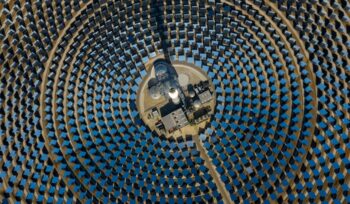
Renewables hit 49% of global power capacity for the first time
Renewable energy capacity crossed a landmark threshold in 2025, with global installed power surpassing 5,100 gigawatts and representing 49% of all capacity worldwide for the first time in history. The International Renewable Energy Agency reported a single-year addition of 692 gigawatts, led overwhelmingly by solar power, which alone accounted for 75% of new renewable installations. Clean energy now represents 85.6% of all new power capacity added globally, signaling that the transition has moved from aspiration to economic reality. The milestone carries implications beyond climate — nations with strong renewable bases demonstrated measurably greater energy security amid ongoing geopolitical instability.
-

Global suicide rate has dropped nearly 40% since the 1990s
Global suicide rates have dropped nearly 40% since the early 1990s, falling from roughly 15 deaths per 100,000 people to around nine — one of modern public health’s most significant and underreported victories. This decline was driven by expanded mental health services, crisis intervention programs, and proven strategies like restricting access to lethal means. The progress spans dozens of countries, with especially sharp declines in East Asia and Europe. Critically, this trend demonstrates that suicide is preventable at a population level — making the case for sustained investment in mental health infrastructure worldwide.
-
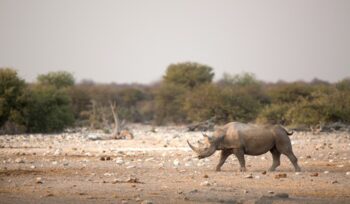
Rhinos return to Uganda’s wild after 43 years of absence
Uganda rhino reintroduction marks a historic milestone: wild rhinoceroses are roaming Ugandan soil for the first time in over 40 years. In 2026, rhinos bred at Ziwa Rhino Sanctuary were released into Kidepo Valley National Park, ending an absence caused entirely by poaching and political collapse during the Idi Amin era. The release represents decades of careful breeding, conservation funding, and community engagement. For local communities, conservationists, and a watching world, it proves that deliberate, sustained human effort can reverse even the most painful wildlife losses.