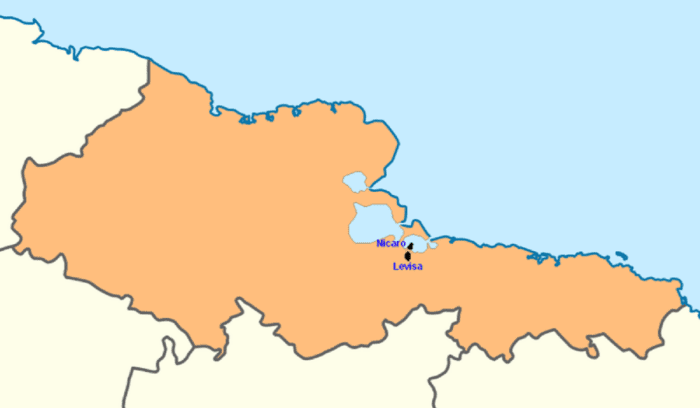
Around 5,000 years ago, a group of people made their way to a stretch of Cuban coastline and built something that would outlast them by millennia — not in stone or architecture, but in the archaeological record itself. The site they left behind, known today as Levisa, stands as the oldest confirmed evidence of human habitation on the island of Cuba, a landmark moment in the long, layered story of the Caribbean’s first peoples.
Key findings
- Levisa Cuba: The site dates to approximately 3100 B.C.E., making it the oldest known archaeological site on the island and the anchor point for understanding Cuba’s earliest human history.
- 4th millennium B.C.E. migration: Cuba’s earliest known human inhabitants arrived during the 4th millennium B.C.E., suggesting that Levisa represents the beginning — or near-beginning — of a sustained human presence on the island.
- Shell and stone tools: Neolithic cultures in Cuba used ground stone and shell tools, ornaments, and distinctive dagger-like implements called gladiolitos, pointing to a materially sophisticated way of life built around the sea.
Who were the first Cubans?
The people who built Levisa were not a civilization in the monumental sense — no pyramids, no written records, no cities. They were skilled, mobile, and intimately connected to the natural environment of the Caribbean coast.
Archaeological evidence suggests they subsisted through fishing, hunting, and harvesting wild plants. They read tides and seasons, knew which shellfish beds were productive, and understood the rhythms of an island ecology that was, at the time, largely untouched by human activity. The tools they left behind — ground stone implements and shell ornaments — speak to a culture that was anything but simple.
A broader wave of settlement followed after 2000 B.C.E., most notably represented by the Cayo Redondo and Guayabo Blanco cultures of western Cuba. These Neolithic peoples refined the subsistence strategies pioneered at places like Levisa, developing distinctive material cultures that persisted for centuries. Later still came the Guanajatabey, the Ciboney, and eventually the Taíno — each group layering new lifeways onto a landscape already shaped by thousands of years of human presence.
Cuba in the wider Caribbean story
Cuba’s first inhabitants did not arrive in isolation. The Caribbean island chain functioned as a corridor — a slow, multi-generational pathway along which peoples from northeastern South America and the wider Atlantic coast gradually moved northward and westward, island by island.
This migration pattern is one of the great unsung epics of human prehistory. With no written records and few durable structures, the evidence lives almost entirely in shell middens, stone tools, and the DNA of modern descendants. Ancient DNA studies have begun to fill in the picture, revealing complex patterns of movement, mixture, and cultural exchange that span thousands of years and hundreds of islands.
What drove these migrations is still debated. Some researchers point to population pressure and resource availability in South America. Others emphasize the role of seafaring knowledge — the ability to read stars, currents, and wind patterns across open water — as a technology that made island-hopping not just possible but routine. Either way, the people who arrived at Levisa around 3100 B.C.E. were inheritors of a maritime tradition stretching back far beyond their own lifetimes.
Lasting impact
The significance of Levisa is not only archaeological. It establishes that Cuba has been a human homeland for at least five millennia — a fact with deep implications for how we understand the island’s Indigenous heritage.
The cultures that followed Levisa’s founders left fingerprints on Cuban life that survive to this day. The Taíno, who arrived later and became the dominant Indigenous culture by the time of European contact, gave the world words like tobacco, hurricane, and canoe. They introduced Europeans to cassava bread and cultivated cotton and maize across the island. Around 400 Taíno place names and terms survived into modern Cuban Spanish, and the very name Cuba derives from Classic Taíno.
Genetic studies have also found traces of Amazonian DNA in Cubans today — a quiet molecular reminder that the island’s first peoples were never entirely erased, even after centuries of colonial violence and displacement. Research published in Nature has shown that Indigenous Caribbean ancestry persists in modern populations in ways that historical narratives long overlooked.
Levisa, then, is not just the start of a Cuban timeline. It is evidence that human beings looked at an island surrounded by open sea and chose to make it home — and that the consequences of that choice rippled forward across five thousand years.
Blindspots and limits
The archaeological record for Cuba’s earliest period is thin. Levisa is dated to approximately 3100 B.C.E., but that approximation carries real uncertainty — excavation and dating work in the Caribbean has been uneven, and much of what we know comes from a relatively small number of studied sites. It is also worth noting that the peoples who built Levisa left no oral traditions that were preserved — the Spanish colonization of Cuba after 1511 C.E. was catastrophic for Indigenous cultures, and most of what earlier generations knew about their own deep history did not survive that rupture.
The story told here is necessarily incomplete, reconstructed from fragments. Future excavations — and better-funded archaeological work across the Caribbean — will almost certainly revise and deepen it.
Read more
For more on this story, see: History of Cuba — Wikipedia
For more from Good News for Humankind, see:
- Indigenous land rights win at COP30: 160 million hectares protected
- Ghana establishes a new marine protected area at Cape Three Points
- The Good News for Humankind archive on prehistory
About this article
- 🤖 This article is AI-generated, based on a framework created by Peter Schulte.
- 🌍 It aims to be inspirational but clear-eyed, accurate, and evidence-based, and grounded in care for the Earth, peace and belonging for all, and human evolution.
- 💬 Leave your notes and suggestions in the comments below — I will do my best to review and implement where appropriate.
- ✉️ One verified piece of good news, one insight from Antihero Project, every weekday morning. Subscribe free.