
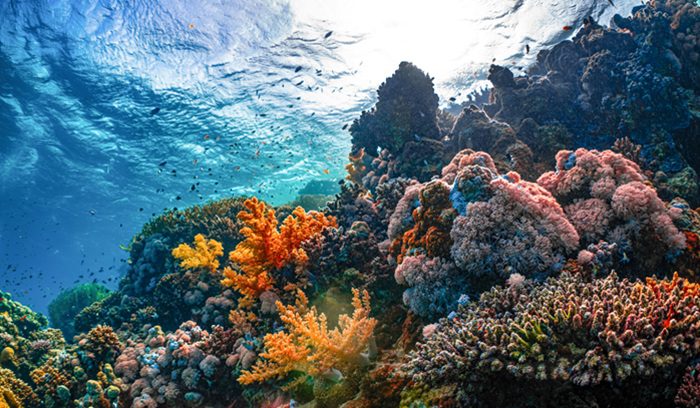
On January 17, 2026 C.E., international waters got something they had never had before: a law. The High Seas Treaty — formally the Agreement on Marine Biological Diversity of Areas Beyond National Jurisdiction — entered into force that day, making the roughly two-thirds of the ocean that lies beyond any nation’s coastline subject to binding international conservation rules for the first time in history. Morocco’s ratification in September 2025 C.E. had pushed the count past the required 60 nations, and the clock started ticking toward this moment.
At a glance
- High Seas Treaty: Formally adopted by all 193 UN member states in June 2023 C.E. and ratified by the required 60 nations by September 2025 C.E., the treaty became legally binding in January 2026 C.E. — ending nearly 20 years of negotiations.
- Marine protected areas: For the first time, the agreement grants authority to establish MPAs in international waters, giving conservation law reach over ecosystems that shelter whales, deep-sea corals, and migratory sharks previously beyond any legal protection.
- Benefit sharing: A new framework requires the equitable distribution of scientific and commercial value derived from marine genetic resources — deep-ocean compounds that could yield new medicines or industrial breakthroughs — among all nations, not only those with the technology to access them.
Why the high seas needed a law
International waters — everything beyond 200 nautical miles from any coastline — make up the largest habitat on Earth. Until now, they had no unified legal guardian.
Fishing fleets, shipping lanes, deep-sea mining operations, and scientific expeditions all move through these waters. Some carry serious ecological consequences. But without binding rules, enforcement was impossible and accountability was minimal. Regional fisheries bodies could only act within narrow mandates. Large swaths of ocean remained effectively ungoverned.
The treaty fills that gap. It requires environmental impact assessments for activities planned in the high seas — meaning proposals for deep-sea mining or large-scale operations must now undergo rigorous scientific review before they proceed. That requirement alone marks a significant shift in how the international community approaches ocean risk. For context on how fragile these systems already are, NOAA has documented the cascading effects of pollution and overextraction on open-ocean ecosystems.
What the treaty actually does
The agreement’s centerpiece is the power to create marine protected areas beyond national borders. MPAs are among conservation science’s most reliable tools — they allow depleted fish populations to recover, give coral and deep-sea habitats room to stabilize, and build ecosystem resilience against the pressures climate change is accelerating.
The treaty also mandates technology transfers and capacity building for developing nations. Countries across the Global South hold enormous stakes in ocean health — many depend on marine fisheries for food security and economic survival — but have historically lacked access to the science and infrastructure required to participate meaningfully in international governance. These provisions shift that equation.
Scientific coordination will run largely through the Intergovernmental Oceanographic Commission, which has emphasized that making global ocean science genuinely collaborative is central to the treaty’s long-term success. The High Seas Alliance, a coalition of NGOs that campaigned for the agreement for years, continues tracking ratifications and pushing for ambitious implementation.
Two decades of negotiation, then two years of ratification
The United Nations began preparatory meetings on this issue in 2004 C.E. For the better part of two decades, competing economic interests, disagreements over sovereignty, and the familiar gap between wealthy and poorer nations kept a final agreement out of reach.
The text was finally agreed in June 2023 C.E. What followed was surprisingly swift. Reaching 60 ratifications in just over two years signals that governments recognized genuine urgency. The global 30×30 pledge — protecting 30% of land and sea by 2030 C.E. — gave the ratification process a concrete target to move toward.
That speed matters. International environmental agreements often stall between adoption and enforcement. This one did not.
The equity dimension most coverage misses
Marine genetic resources — organisms and compounds found in the deep ocean that could lead to new medicines, industrial enzymes, or scientific discoveries — have historically been collected and commercialized almost exclusively by wealthy nations with deep-sea research capacity. Critics, including members of the IUCN World Commission on Protected Areas, have long argued this dynamic reproduces colonial patterns of extraction, where the benefits of shared global resources flow primarily to those who already hold technological advantages.
The benefit-sharing framework in this treaty addresses that directly — and it is one of the features most likely to shape what ocean governance looks like for the rest of this century.
What remains unresolved
The treaty is a framework, not a finished system. Implementation will depend on political will, enforcement mechanisms still being developed, and the challenge of monitoring vast and remote ocean areas with limited resources. Some critics note that the MPA provisions leave significant discretion to individual nations, which could temper ambition in practice. The questions of who enforces what, which ecosystems get protected first, and how disputes get resolved are real — and still open.
But a binding legal framework is a different thing entirely from a voluntary pledge. The high seas now have law on their side. Work that once had no institutional home now does.
Read more
For more on this story, see: Wikipedia — High Seas Treaty
For more from Good News for Humankind, see:
- UN member states agree to landmark deal to protect life in international waters
- World’s first nation legally requires a four-day workweek
- The Good News for Humankind archive on marine conservation
- Ocean & marine protection: the wins safeguarding life beneath the waves
About this article
- 🤖 This article is AI-generated, based on a framework created by Peter Schulte.
- 🌍 It aims to be inspirational but clear-eyed, accurate, and evidence-based, and grounded in care for the Earth, peace and belonging for all, and human evolution.
- 💬 Leave your notes and suggestions in the comments below — I will do my best to review and implement where appropriate.
- ✉️ One verified piece of good news, one insight from Antihero Project, every weekday morning. Subscribe free.


