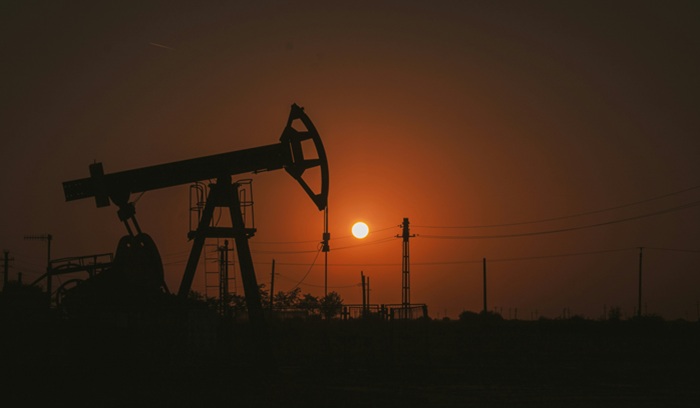
Guatemala has made one of the boldest conservation decisions in the Western Hemisphere. When the operating concession for the Xan oil field expired, the government chose not to renew it — permanently closing a facility that once produced nearly 90% of the country’s oil, located deep inside Laguna del Tigre National Park. The land has been returned to the Maya Biosphere Reserve, and the infrastructure that once extracted oil is being repurposed to protect it.
At a glance
- Maya Biosphere Reserve: Located in the Petén region of northern Guatemala, the reserve covers roughly 2 million hectares and forms the core of the Maya Forest corridor — one of the most biodiverse tropical forest systems in the Americas, stretching into Mexico and Belize.
- Xan oil field: The field operated inside the protected area for decades, generating persistent concerns about water contamination and damage to wildlife habitat. Its closure ends an arrangement that conservationists long considered incompatible with the park’s protected status.
- Conservation fund: Guatemala’s government is directing $6.5 million into a dedicated fund for the reserve, supporting local restoration projects, community livelihoods, and long-term ecological monitoring.
A security hub where the oil rigs stood
The former oil facility is being converted into a joint command post for Guatemala’s Ministry of National Defense and the National Civil Police. Their primary mission is stopping the illegal activities that drive the fastest forest loss inside the reserve.
Illegal cattle ranching, unauthorized logging, and drug trafficking corridors have all taken a toll on the Maya Biosphere Reserve over the past two decades. A permanent, staffed security presence directly addresses these threats rather than managing them from a distance.
The hub also improves coordination with Mexico and Belize, whose territories share the wider Maya Forest corridor that UNESCO recognizes as a global preservation priority. Protecting it requires cross-border cooperation, and this new base formalizes that relationship on the ground.
Putting money behind the commitment
Closing the oil field removes a revenue stream. Guatemala is replacing it — not with another extractive concession, but with a conservation investment model that keeps local communities at the center.
The $6.5 million fund will channel resources toward community organizations already working on restoration and sustainable land use inside and around the reserve. Conservation programs that exclude local communities tend to fail over time. Giving communities an economic stake in the forest’s health creates the conditions for lasting protection.
Guatemala is also shifting its national energy strategy toward solar and hydropower. The IEA’s Latin America energy outlook tracks how rapidly the region is moving toward renewables — Guatemala’s transition fits a broader continental pattern, building long-term energy security without depending on environmentally sensitive extraction.
International partners are involved too. The Global Environment Facility, which has supported conservation finance across the developing world, is among the regional stakeholders backing the reserve’s transition. That kind of multilateral support strengthens the financial model for years ahead.
Why this moment matters beyond Guatemala
Governments around the world wrestle with a version of this choice: protect a sensitive ecosystem or extract its resources for short-term revenue. Guatemala just demonstrated that a country highly dependent on a single oil field can absorb that loss, reframe the infrastructure, and build a more durable economic model around conservation.
The Maya Biosphere Reserve holds rare species, vast carbon stocks, and one of the most intact tropical forest systems north of the Amazon. The IUCN has consistently identified intact tropical forests as irreplaceable for global biodiversity — once they fragment beyond a threshold, recovery takes centuries. The closure of the Xan field protects against that fragmentation in one of the most pressured zones of the reserve.
Similar decisions are gaining momentum elsewhere. Ghana recently established a major marine protected area at Cape Three Points, showing that nations across the Global South are increasingly choosing ecological protection over extraction when political will aligns with community interest.
There are real challenges ahead. Illegal land use inside the Maya Biosphere Reserve is deeply entrenched, and a new security hub is not a guaranteed solution. The $6.5 million fund, while meaningful, will need sustained political commitment to operate effectively year after year.
Still, the structural shift is real. Guatemala made a permanent decision, not a temporary pause — and converted oil infrastructure into conservation infrastructure in one of the most important forests on Earth.
Read more
For more on this story, see: Wikipedia — List of oil fields
For more from Good News for Humankind, see:
- Ghana establishes marine protected area at Cape Three Points
- Indigenous land rights recognized across 160 million hectares ahead of COP30
- The Good News for Humankind archive on conservation
About this article
- 🤖 This article is AI-generated, based on a framework created by Peter Schulte.
- 🌍 It aims to be inspirational but clear-eyed, accurate, and evidence-based, and grounded in care for the Earth, peace and belonging for all, and human evolution.
- 💬 Leave your notes and suggestions in the comments below — I will do my best to review and implement where appropriate.
- ✉️ One verified piece of good news, one insight from Antihero Project, every weekday morning. Subscribe free.
More Good News
-

Poland to recognize same-sex marriages from E.U. states
Same-sex marriages performed elsewhere in the EU must now be formally recognized in Poland, the country’s Supreme Administrative Court ruled — a turning point for a nation that still offers no domestic legal recognition for same-sex unions. Rights groups estimate that 30,000 to 40,000 Polish citizens have married abroad, and many can now see those unions entered into Poland’s civil registry for the first time. The case began with a couple who wed in Germany in 2018 and were turned away by Warsaw officials; when the ruling was read, activists in the courtroom broke into applause. In a country where…
-
More than 50 nations attend world-first conference on phasing out fossil fuels
Fossil fuel phaseout talks just crossed a real threshold: for the first time, more than 50 nations sat down together specifically to plan a way off coal, oil, and gas. The two-day gathering in Santa Marta, Colombia, brought together an unusually wide mix — major producers like Australia, Norway, and Canada alongside Pacific island nations like Tuvalu and Vanuatu, with Europe and emerging economies in between. No binding deals were expected, but the recommendations will feed into a voluntary roadmap being shaped under Brazil’s COP30 leadership. It’s a small, hopeful shift: producers and consumers finally talking openly about a transition…
-

Singapore stops sourcing and breeding dolphins
Resorts World Sentosa, home to more than 20 Indo-Pacific bottlenose dolphins, is halting both wild sourcing and captive breeding at its Singapore oceanarium. The resort is now assembling an independent expert panel to figure out what’s next for the animals in its care, including a 7-year-old named Kenzo. It’s a meaningful shift from one of Asia’s most prominent entertainment venues, and one animal welfare groups have pushed toward for over a decade. With Mexico, Canada, and France already banning cetacean captivity for entertainment, this quiet decision in Singapore signals that the tide is turning across Asia too, reshaping what travelers…