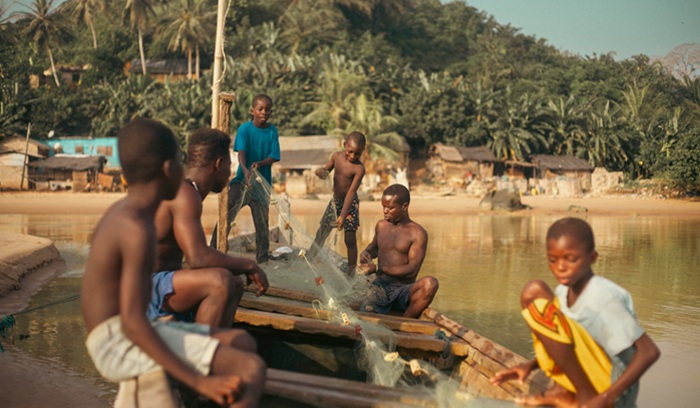
Ghana’s president signed a sweeping new fisheries law on August 19, 2025 C.E., doubling the size of the coastal zone reserved exclusively for artisanal fishing communities — and handing one of West Africa’s most vulnerable fishing populations a fighting chance. The Fisheries and Aquaculture Act 2025 (Act 1146) passed parliament in July 2025 C.E. and was signed by President John Dramani Mahama weeks later. It is the most significant overhaul of Ghana’s fisheries governance in decades.
At a glance
- Artisanal fishing zone: The law expands Ghana’s Inshore Exclusive Zone from 6 to 12 nautical miles, reserving that entire coastal band for small-scale fishers and barring industrial trawlers from entering.
- Scale of impact: Around 120,000 small-scale fishers stand to benefit directly, with fish stocks of sardinella, anchovies, and mackerel — all near collapse — expected to recover inside the protected zone.
- Enforcement teeth: The Act mandates electronic monitoring systems on all industrial fishing vessels and imposes tougher penalties for illegal, unreported, and unregulated (IUU) fishing violations.
Why fish stocks collapsed
Ghana’s coastal fisheries have been unraveling for years. Industrial trawlers — many operating illegally or under falsified licenses — pushed deep into inshore waters, competing directly with canoe fishers and devastating breeding grounds.
Pelagic species like sardinella and anchovies, which form the backbone of West African diets, declined sharply. Fish accounts for more than 60 percent of the animal protein consumed in Ghana. That single statistic explains why this is not just an environmental story. It is a food security story, a public health story, and an economic story all at once.
Small-scale fishing communities bore the heaviest burden of that collapse. Many had fished the same coastal waters for generations using traditional canoe methods with minimal ecological impact. Industrial encroachment pushed them further out and left them competing for scraps.
What the new law actually does
The doubling of the Inshore Exclusive Zone is the headline change, but Act 1146 does more than draw a new line on a map. It creates a legally enforceable buffer where artisanal fishers operate without industrial competition — protecting breeding grounds at exactly the depth range where many key species reproduce.
The mandatory electronic monitoring requirement for industrial vessels is a significant enforcement step. Previously, trawlers could misreport catches or operate in restricted zones with little consequence. Real-time tracking changes that equation.
The Act also establishes an independent Fisheries Commission to manage marine resources in line with international standards. That matters beyond Ghana’s borders: the European Union issued Ghana a “yellow card” warning over IUU fishing concerns in recent years, threatening access to a key export market. With seafood exports worth more than $425 million annually, sustainable governance is an economic imperative, not just an ethical one.
Communities and advocates respond
The Canoe and Fishing Gear Association of Ghana welcomed the law with enthusiasm, saying fishing communities finally felt heard. Their statement emphasized that strict enforcement and meaningful community participation in monitoring would determine whether the law delivers on its promise.
The Environmental Justice Foundation called it a “historic advance” — protecting livelihoods, improving food security, and laying the groundwork for marine ecosystems to recover. Fisheries Minister Emelia Arthur received particular credit for steering the bill through parliament and maintaining support from both industry and small-scale fishing associations.
This story connects to broader conservation work happening along Ghana’s coast. Earlier efforts — including the establishment of a marine protected area at Cape Three Points — showed that Ghana’s coastal ecosystems can recover with the right protections in place, and that community buy-in is essential to making those protections stick.
The road ahead
The law is a beginning, not an ending. Enforcement along a 12-nautical-mile zone requires patrol vessels, trained officers, functioning monitoring systems, and political will that outlasts any single administration. Ghana’s enforcement capacity has historically been stretched thin, and illegal fishing by vessels operating under flags of convenience remains a problem no single national law can fully resolve.
Still, the direction is clear. Ghana has placed artisanal communities at the center of its fisheries policy — not as an afterthought, but as the explicit rationale for a major legislative overhaul. The people who have fished these waters sustainably for centuries now have a legal right to keep doing so.
Read more
For more on this story, see: Mongabay
For more from Good News for Humankind, see:
- Ghana’s marine protected area at Cape Three Points
- Alzheimer’s risk cut in half in landmark prevention trial
- The Good News for Humankind archive on Ghana
About this article
- 🤖 This article is AI-generated, based on a framework created by Peter Schulte.
- 🌍 It aims to be inspirational but clear-eyed, accurate, and evidence-based, and grounded in care for the Earth, peace and belonging for all, and human evolution.
- 💬 Leave your notes and suggestions in the comments below — I will do my best to review and implement where appropriate.
- ✉️ One verified piece of good news, one insight from Antihero Project, every weekday morning. Subscribe free.
More Good News
-
Botswana officially strikes anti-sodomy law from its national penal code
Botswana has officially erased its colonial-era anti-sodomy law from the national penal code in 2026, transforming a 2019 court victory into permanent written statute. The original provision, imported under British rule in the 19th century, had once threatened same-sex couples with up to seven years in prison. Striking the language itself matters because unconstitutional laws left on paper can still be used to harass and stigmatize, even when unenforceable. Botswana now joins a small group of African nations that have gone beyond court rulings to fully cleanse discriminatory language from their books. With more than 60 countries still criminalizing same-sex…
-
More than 10% of the world’s oceans now officially protected
Ocean protection just crossed a historic line: as of April 2026, 10.01% of the world’s seas are officially designated as protected, up from 8.6% just two years ago. That leap represents roughly 5 million square kilometers of newly safeguarded waters — an expanse larger than the entire European Union. The milestone fulfills a promise the world first made back in 2010, and it arrived thanks to thousands of small wins: national designations, community-led projects, and Indigenous stewardship of some of the most intact marine ecosystems on Earth. With the UN High Seas Treaty now in force, nations finally have a…
-

Nearly 20 million measles deaths averted in Africa since 2000
Measles vaccines in Africa have prevented an estimated 19.5 million deaths since 2000 — roughly 800,000 lives saved every year for nearly a quarter century. A new WHO and Gavi analysis credits steady investment in cold-chain systems, community health workers, and political will, with coverage for the critical second measles dose climbing more than tenfold over that stretch. This year, Cabo Verde, Mauritius, and Seychelles became the first sub-Saharan nations to officially eliminate measles and rubella, a milestone once considered out of reach. The story is a powerful reminder that global health progress, though uneven, compounds quietly over decades —…