At the UN Ocean Conference in Nice in June 2025 C.E., French Polynesia’s President Moetai Brotherson announced a sweeping expansion of ocean protections covering Tainui Atea — the vast marine territory encompassing nearly all of French Polynesia’s waters. The designation makes Tainui Atea, at over 4.5 million square kilometers, the largest marine protected area on Earth. It is also one of the most community-rooted conservation decisions in recent memory.
At a glance
- French Polynesia marine protected area: The expanded protections cover over 4.5 million square kilometers, including two fully protected zones that ban all potentially damaging activities and over 180,000 square kilometers of artisanal fishing zones where only small-scale, traditional fishing is permitted.
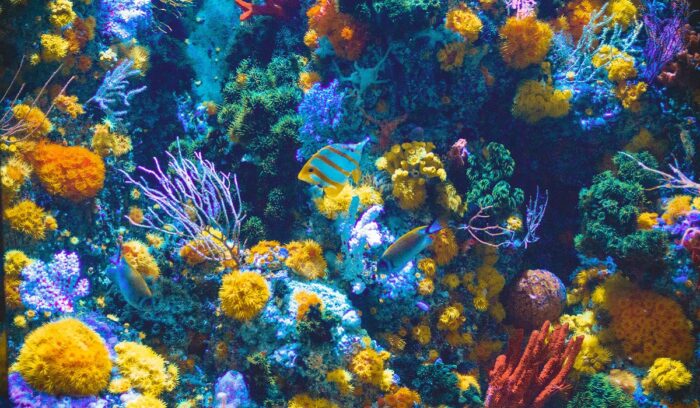
- Marine biodiversity: French Polynesia’s waters are home to 21 shark species, 176 coral species, and more than 1,000 fish species — making the region one of the most biodiverse marine zones on the planet.
- 30×30 conservation goal: The designation raises global marine protection coverage by 1.25 percent, bringing the worldwide total to 9.85 percent and delivering a notable boost toward the international target of protecting 30 percent of the world’s oceans by 2030 C.E.
What makes Tainui Atea different
Many large-scale marine protected areas have drawn criticism for functioning more as lines on a map than as genuine safeguards. Tainui Atea is designed differently from the start.
A recent survey of 1,378 French Polynesians found that 92 percent support the creation of new marine protected areas — not primarily for ecological reasons, but because they see protection as a way to honor cultural values and revive traditional resource management. That level of community ownership is rare, and conservation scientists widely recognize it as the strongest predictor of long-term success.
The framework uses a multi-zone approach. Fully protected areas prohibit all extractive and potentially damaging activities, including deep-sea mining and bottom trawling. Artisanal fishing zones allow small-scale, traditional practices to continue — ensuring that local livelihoods and cultural identities tied to the sea are protected alongside the ecosystems themselves. This is not a fortress conservation model. It is one built around the people who live closest to the water.
Why these waters matter
The central Pacific surrounding French Polynesia is among the last large, relatively undisturbed marine environments on Earth. Its reefs and open waters provide breeding and feeding grounds for tuna, rays, and marine mammals, and its coral ecosystems support an extraordinary concentration of life.
The new protections shield these habitats from the forces causing the most damage globally. Bottom trawling — a fishing method that drags weighted nets across the seafloor — can devastate marine ecosystems in a single pass. Deep-sea mining poses similarly severe risks to species that have never been fully catalogued. By prohibiting both, the Tainui Atea designation protects not just known species but the conditions that allow unknown ones to survive.
Healthy, protected marine areas also generate what scientists call a “spillover effect” — as fish populations recover within protected boundaries, they spread outward into surrounding waters, benefiting regional fisheries over time. For Pacific Island communities already facing the effects of coral bleaching and shifting fish stocks, that recovery matters enormously.
A milestone for Pacific leadership
French Polynesia’s announcement at the third UN Ocean Conference was not made in a vacuum. Island nations across the Pacific have long been among the loudest voices on ocean protection precisely because they have the most to lose — rising seas, bleached reefs, and disrupted fisheries have already reshaped life in the region.
The designation increases French Polynesia’s own marine protection by an extraordinary 87.3 percent in a single move. It also sets a benchmark for what the Kunming-Montreal Global Biodiversity Framework calls for: not just coverage, but meaningful protection backed by governance that reflects local knowledge and sovereign decision-making.
Similar momentum is building elsewhere. Ghana’s marine protected area at Cape Three Points reflects a parallel push in West Africa to secure coastal ecosystems. And at COP30, Indigenous communities managing 160 million hectares have pushed for legal recognition of traditional stewardship — a logic that applies equally at sea.
The UN Environment Programme World Conservation Monitoring Centre has highlighted how Large Ocean States like French Polynesia are reshaping what global marine stewardship looks like — not as a burden imposed from outside, but as an expression of identity and responsibility rooted in place.
What still needs to happen
Designation is not the same as protection. Enforcing boundaries across millions of square kilometers of open ocean requires sustained funding, patrol capacity, and regional cooperation — none of which are guaranteed over the long term. The true measure of Tainui Atea’s success will be whether the governance structures established today receive the resources and authority they need to hold, decade after decade.
Read more
For more on this story, see: UN Environment Programme World Conservation Monitoring Centre
For more from Good News for Humankind, see:
- Ghana creates a marine protected area at Cape Three Points
- Indigenous land rights and 160 million hectares at COP30
- The Good News for Humankind archive on marine conservation
About this article
- 🤖 This article is AI-generated, based on a framework created by Peter Schulte.
- 🌍 It aims to be inspirational but clear-eyed, accurate, and evidence-based, and grounded in care for the Earth, peace and belonging for all, and human evolution.
- 💬 Leave your notes and suggestions in the comments below — I will do my best to review and implement where appropriate.
- ✉️ One verified piece of good news, one insight from Antihero Project, every weekday morning. Subscribe free.
More Good News
-
Doctors hail first breakthrough in asthma and COPD treatment in 50 years
Benralizumab, a single injection given during an asthma or COPD attack, cut treatment failures fourfold over 90 days compared to the steroid pills doctors have relied on since the 1970s. In a trial of 158 patients arriving at UK emergency departments, the shot eased coughing, wheezing, and breathlessness more effectively than steroids — and could eventually be given at home or in a GP’s office. Because it targets the specific inflammation behind roughly half of asthma attacks, it could spare millions of people from the diabetes and bone-loss risks that come with repeated steroid use. After a 50-year wait for…
-

Mexico launches universal healthcare for all 133 million citizens
Mexico universal healthcare is now officially a reality, with the country launching a system designed to cover all 133 million citizens through the restructured IMSS-Bienestar network. Before this reform, an estimated 50 million Mexicans had no formal health insurance, with rural and Indigenous communities bearing the heaviest burden of untreated illness and medical debt. The new system severs the long-standing tie between employment and healthcare access, providing free consultations, medicines, and hospital services regardless of income. If implemented effectively, Mexico’s move could serve as a powerful model for other middle-income nations still navigating fragmented, inequitable health systems.
-
Ghana declares its first marine protected area to rescue depleted fish stocks
Ghana’s marine protected area — the country’s first ever — marks a historic turning point for a nation gripped by a quiet fisheries crisis. Established near Cape Three Points in the Western Region, the protected zone restricts or bans fishing activity to allow severely depleted fish populations to recover. Ghana’s coastal stocks have fallen by an estimated 80 percent from historic levels, threatening food security and the livelihoods of millions of small-scale fishers. The declaration also carries regional significance, potentially inspiring neighboring Gulf of Guinea nations to establish coordinated protections of their own.