
At a glance
- Extreme child poverty: Approximately 412 million children lived on under $3 per day in 2024, compared to roughly 507 million in 2014 — a reduction of nearly 95 million children.
- South Asia progress: Extreme child poverty in South Asia more than halved over the past decade, with India contributing a large share of that reduction through improvements in education, nutrition, and health care access.
- Sub-Saharan Africa gap: Despite global gains, Sub-Saharan Africa is home to over three-quarters of all children in extreme poverty while representing only about 23% of the global child population — and its poverty rate of around 52% has barely moved since 2014.
Where progress has been fastest
Some of the most striking gains have come from South Asia and East Asia and the Pacific. In South Asia, extreme child poverty more than halved over the past decade. That is not an accident — it reflects sustained investment in schools, nutrition programs, and basic health infrastructure. UNICEF analysis has linked these gains directly to improvements in education and health care access, particularly in India. When families have access to functioning public services, children’s outcomes shift. The data makes that connection clear. East Asia and the Pacific saw similar momentum. Rapid economic growth, combined with targeted social protection programs, lifted millions of children above the extreme poverty threshold. These two regions together demonstrate that large-scale poverty reduction is achievable within a generation.The persistent challenge in Sub-Saharan Africa
The global picture is not uniformly bright. Sub-Saharan Africa holds more than three-quarters of the world’s children in extreme poverty despite being home to roughly 23% of the global child population. Its poverty rate has remained close to 52% — nearly unchanged from 2014 levels. The Guardian’s global development coverage has consistently noted how stark this gap remains. Fragile and conflict-affected states account for much of the stagnation. Where governments are unstable and basic services are disrupted by violence, poverty reduction programs simply cannot gain traction. This is where the global picture still demands serious attention. Progress elsewhere does not erase the depth of the challenge in this region.Better data, clearer picture
One underreported part of this story is how the measurement of poverty itself has improved. In 2025, the World Bank updated its international poverty lines to include thresholds at $3, $4.20, and $8.30 per day — a shift that better reflects the actual cost of living across different countries. The newest estimates also incorporate post-pandemic survey data, which gives policymakers a more accurate and current baseline. As Devex has reported, these updates matter because they change where resources get directed. Smarter data leads to smarter spending. That said, data improvements can make trends harder to compare across time. Some of the apparent progress may reflect better counting as much as genuine change — an important caveat worth keeping in mind.What policies are actually working
The World Bank research points to a consistent pattern among countries making the most progress: they invest in human capital. Health. Education. Nutrition. And they build institutions that can sustain those investments through economic shocks and climate disruptions. Social protection programs — safety nets, cash transfers, school feeding programs — have proven especially effective at shielding children when crises hit. The countries reducing child poverty fastest are not waiting for growth to trickle down. They are actively building the conditions for children to survive and develop. This parallels patterns seen in other areas of human wellbeing. Reductions in global suicide rates since 1995 and advances in Indigenous land rights share a common thread: sustained, coordinated effort by governments and communities produces measurable results over time. The data from the past decade makes one thing clear. Extreme child poverty is not an immovable constant. It responds to policy. It responds to investment. And it can keep falling.Read more
For more from Good News for Humankind, see:
- Global suicide rates have fallen 40% since 1995
- Indigenous land rights: 160 million hectares recognized ahead of COP30
- The Good News for Humankind archive on poverty
- Source: Children living in extreme poverty has declined 18% globally since 2014
About this article
- 🤖 This article is AI-generated, based on a framework created by Peter Schulte.
- 🌍 It aims to be inspirational but clear-eyed, accurate, and evidence-based, and grounded in care for the Earth, peace and belonging for all, and human evolution.
- 💬 Leave your notes and suggestions in the comments — I will do my best to review and implement where appropriate and possible.
- 📬 One verified piece of good news, one insight from Antihero Project, every weekday morning. Subscribe free.
More Good News
-
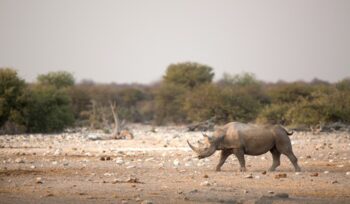
Rhinos return to Uganda’s wild after 43 years in landmark conservation milestone
For the first time in 43 years, wild rhinos are roaming Uganda again. After poaching wiped out the population in the early 1980s, conservation authorities have successfully reintroduced rhinos into Kidepo Valley National Park — the result of decades of breeding, community engagement, and anti-poaching work. The milestone is one of Africa’s most significant wildlife recovery achievements in recent memory and offers a model for rewilding efforts across the continent.
-

UK cancer death rates fall to lowest level ever recorded in historic milestone
Cancer death rates in the United Kingdom have fallen to their lowest level ever recorded, Cancer Research UK announced in March 2026. Decades of investment in screening programs, early detection, and new treatments are behind the milestone. Despite the progress, researchers warn that geographic and socioeconomic inequalities in cancer outcomes remain significant, and that sustained funding and equitable access to care will be essential to drive further gains.
-

California condors nest on Yurok land in Pacific Northwest for first time in over a century
California condors are nesting in the Pacific Northwest for the first time in more than a century, confirmed on Yurok Tribe territory in Northern California. The Yurok, who regard condors as sacred relatives, launched their restoration program in 2003 and released the first birds in 2022. The nesting confirmation marks a milestone for both species recovery and Indigenous-led conservation, showing that when Native peoples lead ecological restoration on their own lands, the results can be extraordinary.
