
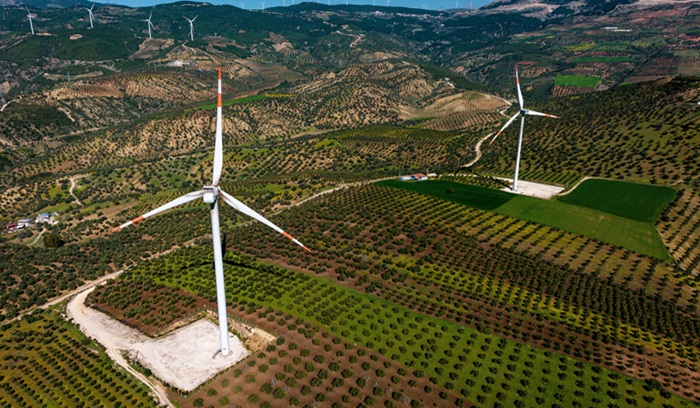
For one month in 2025 C.E., Brazil’s electricity grid did something it had never done before. Wind and solar combined to supply more than one-third of all power consumed across the country — roughly 34% of total electricity, or nearly 19 terawatt-hours, in August alone. The milestone arrived not as a gradual drift but as a measurable threshold crossed, confirmed by government data analyzed by the energy think tank Ember.
At a glance
- Brazil renewable energy: Wind and solar reached 34% of electricity supply in August 2025 C.E., up from 24% in all of 2024 C.E.
- Hydro resilience: Hydropower output dropped to its lowest level in four years that same month — yet Brazil avoided blackouts as wind and solar filled the gap.
- Emissions impact: Carbon emissions from Brazil’s power sector have fallen roughly 31% since 2014 C.E., even as electricity demand rose 22%.
How Brazil got here
The speed of this shift is striking. In 2019 C.E., solar accounted for just over 1% of Brazil’s electricity generation. By 2024 C.E., that figure had climbed to nearly 10%. Wind grew from about 9% to 15% over the same five-year span.
Brazil’s grid has long leaned heavily on hydropower, which still supplies more than half the country’s electricity. But hydro carries a growing vulnerability: drought. Climate change is making dry seasons more frequent and more severe, and August’s unusually low hydro output put the grid under real pressure. Fossil fuels covered just 14% of electricity that month. Wind and solar absorbed the difference.
That’s the practical meaning of the milestone — not just a percentage, but a demonstration that a diversified grid can hold under stress. The International Energy Agency has long argued that diverse energy mixes produce more resilient grids. Brazil, in a single month, ran that experiment at national scale and passed.
Jobs, investment, and a G20 signal
The economic story runs alongside the energy one. Solar and wind projects are generating thousands of jobs, particularly in rural regions where formal employment has historically been scarce. The International Renewable Energy Agency now ranks Brazil among the world’s top employers in renewable energy.
The World Bank has highlighted Brazil as a leading example of how clean energy expansion can support economic development while cutting emissions — framing the two not as a trade-off but as the same story told twice.
Politically, the milestone carries weight beyond Brazil’s borders. According to reporting from the Associated Press, Brazil is currently the only G20 nation on track to meet the renewable energy targets agreed at COP28. That’s a distinction that places a large, fast-growing economy in unusual company — and one that other governments are watching closely.
What the transition still requires
The shift isn’t frictionless. Managing grid stability as variable sources like wind and solar grow larger is a genuine engineering challenge that Brazil has not fully solved. Questions about fair pricing — whether lower-income communities benefit from cheaper clean power or bear disproportionate costs during the transition — remain active and unresolved debates.
What is resolved, or at least demonstrated, is that the pace of change is real. A country once almost entirely dependent on a single weather-sensitive power source now has a genuinely diversified grid, rebuilt over years rather than decades. For a world still searching for large-scale proof that clean energy transitions can actually happen in major economies, Brazil in August 2025 C.E. is now a reference point.
For more on how Brazil’s milestone fits into a larger global picture, see this look at how renewables now make up nearly half of global power capacity. Brazil’s grid also illustrates the value of biodiversity-linked resilience strategies — a theme that connects to clean energy policy debates worldwide. And the economic justice dimensions of Brazil’s transition echo challenges seen in places like Ghana’s marine protected area work, where communities most affected by environmental change are also negotiating the terms of its solutions.
Read more
For more on this story, see: AP News
For more from Good News for Humankind, see:
- Renewables now make up nearly half of global power capacity
- Ghana creates a new marine protected area at Cape Three Points
- The Good News for Humankind archive on clean energy
About this article
- 🤖 This article is AI-generated, based on a framework created by Peter Schulte.
- 🌍 It aims to be inspirational but clear-eyed, accurate, and evidence-based, and grounded in care for the Earth, peace and belonging for all, and human evolution.
- 💬 Leave your notes and suggestions in the comments below — I will do my best to review and implement where appropriate.
- ✉️ One verified piece of good news, one insight from Antihero Project, every weekday morning. Subscribe free.
More Good News
-
Doctors hail first breakthrough in asthma and COPD treatment in 50 years
Benralizumab, a single injection given during an asthma or COPD attack, cut treatment failures fourfold over 90 days compared to the steroid pills doctors have relied on since the 1970s. In a trial of 158 patients arriving at UK emergency departments, the shot eased coughing, wheezing, and breathlessness more effectively than steroids — and could eventually be given at home or in a GP’s office. Because it targets the specific inflammation behind roughly half of asthma attacks, it could spare millions of people from the diabetes and bone-loss risks that come with repeated steroid use. After a 50-year wait for…
-

Mexico launches universal healthcare for all 133 million citizens
Mexico universal healthcare is now officially a reality, with the country launching a system designed to cover all 133 million citizens through the restructured IMSS-Bienestar network. Before this reform, an estimated 50 million Mexicans had no formal health insurance, with rural and Indigenous communities bearing the heaviest burden of untreated illness and medical debt. The new system severs the long-standing tie between employment and healthcare access, providing free consultations, medicines, and hospital services regardless of income. If implemented effectively, Mexico’s move could serve as a powerful model for other middle-income nations still navigating fragmented, inequitable health systems.
-

Ghana declares its first marine protected area to rescue depleted fish stocks
Ghana’s marine protected area — the country’s first ever — marks a historic turning point for a nation gripped by a quiet fisheries crisis. Established near Cape Three Points in the Western Region, the protected zone restricts or bans fishing activity to allow severely depleted fish populations to recover. Ghana’s coastal stocks have fallen by an estimated 80 percent from historic levels, threatening food security and the livelihoods of millions of small-scale fishers. The declaration also carries regional significance, potentially inspiring neighboring Gulf of Guinea nations to establish coordinated protections of their own.
