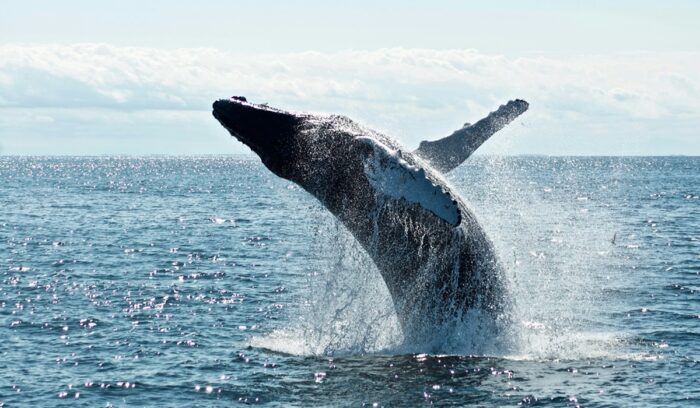
At the annual Our Ocean Conference, the European Union announced the largest financial pledge it has ever made for ocean conservation: €3.5 billion directed at fighting marine pollution, reforming fisheries, advancing sustainable ocean technology, and strengthening the international rules that govern the high seas. The package spans dozens of initiatives across dozens of countries, and its scale signals a meaningful shift in how the E.U. is prioritizing ocean health as central to its broader climate and biodiversity agenda.
At a glance
- E.U. ocean pledge: The full €3.5 billion commitment covers marine pollution reduction, sustainable fisheries, blue economy innovation, and international governance support — making it the bloc’s single largest ocean investment.
- Pollution and fisheries funding: Nearly €1 billion targets marine pollution prevention under the Recovery and Resilience Facility, while €1.9 billion supports sustainable fisheries and aquaculture reform in member states including Greece, Italy, and Spain.
- High Seas Treaty support: The E.U. committed over €1.3 million specifically to implement the BBNJ Agreement and pledged €40 million to help African, Caribbean, and Pacific partners ratify it and build the legal and technical capacity to act on it.
Why the high seas matter now
International waters — often called the high seas — cover nearly two-thirds of the world’s ocean surface. For most of human history, they have been largely ungoverned. No single nation owns them, and no single legal framework has been strong enough to protect them from overfishing, deep-sea mining, plastic accumulation, and the accelerating effects of climate change.
The BBNJ Agreement, sometimes called the High Seas Treaty, was adopted by the United Nations in 2023 C.E. after nearly two decades of negotiations. It creates the first binding international framework for conserving marine biodiversity beyond national jurisdiction. The E.U. has been one of its most active champions, and the new funding is meant to move the treaty from signature to implementation — a step that often stalls without dedicated resources.
The €40 million earmarked for African, Caribbean, and Pacific nations is especially significant. These are often the countries most exposed to ocean-related climate risks and least equipped to navigate complex international legal processes. Funding their participation isn’t charity — it’s a recognition that a treaty only works if the nations most affected by it can actually enforce it.
Coastal communities and the blue economy
A large share of the pledge is tied directly to the livelihoods of people who depend on the ocean. The €1.9 billion for sustainable fisheries is not simply an environmental investment — it funds the modernization of an industry that employs millions of people across Europe’s coastal regions.
For communities in Portugal, Croatia, or along the Atlantic coast of France, the health of fish stocks is an economic lifeline. Overfishing has depleted those stocks over decades, and reform is politically painful. Funding helps smooth that transition, making it more possible for fishing communities to adapt rather than resist.
The pledge also invests in what the E.U. calls the “blue economy” — marine renewable energy, blue biotechnology, underwater robotics, clean shipping, and ocean observation through programs like Copernicus. These aren’t abstract research priorities. They represent the next generation of jobs in coastal economies, and the E.U. is betting that getting ahead of them now will matter for decades. This connects directly to the bloc’s broader push toward carbon neutrality, covered extensively through the European Green Deal.
Efforts like this one rhyme with what’s happening on the ground in places like Ghana, where a new marine protected area at Cape Three Points is showing what locally anchored ocean conservation can look like. International funding and local governance don’t have to be in tension — in fact, they work best together.
Setting a bar for wealthy nations
The Our Ocean Conference has become one of the most important annual forums for ocean commitments, bringing together governments, researchers, civil society groups, and industry. The E.U.’s announcement is the largest single pledge the conference has seen from any actor.
That scale matters partly because of what it signals to other wealthy nations. Ocean conservation has long suffered from a gap between declared ambition and actual money. A €3.5 billion commitment — with specific allocations, named programs, and institutional accountability through bodies like the European Investment Bank and the European Environment Agency — is harder to dismiss as aspirational rhetoric.
The E.U.’s investment in ocean health also complements the global shift toward renewable energy. As renewables now account for at least 49% of global power capacity, marine renewable energy becomes an increasingly realistic pillar of the transition — one that this pledge directly supports.
Still, money pledged is not money spent, and large institutional commitments carry real risks: bureaucratic delays, implementation gaps, and accountability failures that can blunt their impact. The E.U. will need sustained political will and transparent reporting to ensure the funds reach their intended goals.
Read more
For more on this story, see: Good News for Humankind
For more from Good News for Humankind, see:
- Ghana’s new marine protected area at Cape Three Points
- Renewables now make up at least 49% of global power capacity
- The Good News for Humankind archive on climate
About this article
- 🤖 This article is AI-generated, based on a framework created by Peter Schulte.
- 🌍 It aims to be inspirational but clear-eyed, accurate, and evidence-based, and grounded in care for the Earth, peace and belonging for all, and human evolution.
- 💬 Leave your notes and suggestions in the comments below — I will do my best to review and implement where appropriate.
- ✉️ One verified piece of good news, one insight from Antihero Project, every weekday morning. Subscribe free.
More Good News
-

COP30 pledges recognition of 160 million hectares of Indigenous land rights
At the COP30 World Leaders Summit in Belém, Brazil in November 2025, 15 governments pledged to formally recognize Indigenous land rights over 160 million hectares by 2030 — an area the size of Iran — through the Intergovernmental Land Tenure Commitment. Brazil committed at least 59 million hectares. More than 35 donors renewed a $1.8 billion Forest and Land Tenure Pledge. The Tropical Forest Forever Facility secured nearly $7 billion, with 20% directed to Indigenous peoples. It was the largest Indigenous participation in COP history.
-

Ghana declares its first marine protected area to rescue depleted fish stocks
Ghana has declared its first marine protected area near Cape Three Points, targeting fish stocks decimated by decades of overfishing. The Ghana marine protected area marks a historic shift for a nation where millions depend on the sea for food and income — and could signal broader change across the Gulf of Guinea.
-

U.S. researchers cut Alzheimer’s risk by half in first-ever prevention trial
An Alzheimer’s prevention trial at Washington University School of Medicine has produced the first clinical evidence that clearing amyloid plaques from the brain before symptoms appear can cut the risk of developing the disease by roughly half. The results, published in The Lancet Neurology, tested the antibody drug gantenerumab in people with rare genetic mutations that make Alzheimer’s nearly inevitable — and found that early intervention can change the disease’s course.