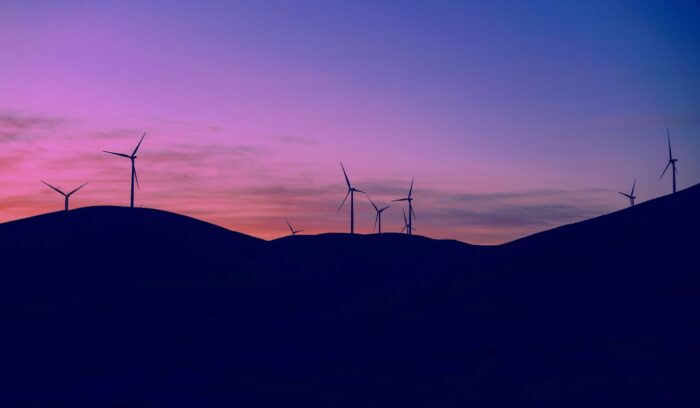
For the first time in its history, the United Kingdom generated more electricity from wind than from all fossil fuels combined. The milestone, reached in 2024 C.E., marks a quiet but significant turning point for a country that once ran almost entirely on coal — and now runs increasingly on the weather itself.
At a glance
- Wind power: Wind turbines — onshore and offshore — supplied more of the U.K.’s electricity than natural gas, coal, and oil combined across the first quarter of 2024 C.E., the first time this has happened over a sustained period.
- Offshore wind: The U.K. operates the largest offshore wind capacity in Europe, with turbines in the North Sea now producing enough electricity to power millions of homes year-round.
- Fossil fuel decline: Coal, which once supplied almost all of Britain’s electricity, now contributes less than 1% — and the U.K. is on track to close its last coal plant entirely by the end of 2024 C.E.
How the U.K. got here
The shift didn’t happen overnight. It took decades of policy commitments, falling technology costs, and a steady build-out of turbines in some of the windiest waters in the world.
Britain’s offshore wind industry traces its roots to the early 2000s C.E., when the first small farms went up in the shallow coastal waters around England and Wales. Since then, the capacity has grown dramatically. Projects like Hornsea One and Hornsea Two — developed off the Yorkshire coast — are among the largest offshore wind farms ever built anywhere on Earth, each capable of powering well over a million homes.
The economics changed, too. The cost of generating electricity from offshore wind has dropped by roughly 70% over the past decade, making it not just cleaner but often cheaper than building new gas capacity. That shift in the numbers made it easier for successive governments to justify continued investment, and for energy companies to keep building.
What wind overtaking fossil fuels actually means
Reaching this threshold is more than symbolic. It signals that a wealthy, industrialized country with high energy demand has genuinely restructured its power system — not just added renewables at the margins.
The U.K.’s experience matters globally because it demonstrates that wind energy can serve as a primary, not supplementary, source of electricity even in a large, modern economy. Grid operators have had to develop new tools for managing the variability of wind — smarter forecasting, faster demand response, and expanded interconnection with neighboring countries via undersea cables. Those tools and lessons are now being studied and adapted in energy systems around the world.
This milestone also connects to a broader global story. Renewables now make up at least 49% of global power capacity, a threshold that would have seemed implausible just 15 years ago. The U.K.’s wind achievement is one piece of that larger shift.
Who benefits — and what’s still unresolved
Cleaner electricity has real health benefits. Burning less gas and coal means less nitrogen dioxide and particulate matter in the air — pollutants that fall hardest on lower-income communities near power plants and busy roads. As the grid gets greener, those communities stand to gain the most from reduced local air pollution.
But the transition is uneven. Many of the coastal and rural communities closest to wind farms — including in Scotland and northern England — have complex relationships with the infrastructure. Some welcome the economic activity and lease income; others have raised concerns about visual impact, noise, and the pace of development without sufficient local input. The communities that host the turbines don’t always share equitably in the financial benefits, and that tension remains an active conversation in U.K. energy policy.
Electricity generation is also only part of the emissions picture. Heating homes, fueling vehicles, and powering industry still depend heavily on fossil fuels in the U.K. The electricity grid going green is meaningful progress — but the harder work of decarbonizing heat and transport is still ahead.
A country that ran on coal, now running on wind
There is something worth sitting with in this milestone. The United Kingdom was the birthplace of the Industrial Revolution — the place where coal-powered factories first transformed the world economy, and where fossil fuel combustion as a way of life began. That this same country is now generating more electricity from wind than from fossil fuels feels genuinely historic.
It doesn’t erase what came before. But it does show that energy systems — built over centuries and woven into economies, politics, and daily life — can change. They are changing. The National Grid ESO’s live generation data now regularly shows hours, even days, where fossil fuels contribute almost nothing to Britain’s electricity. That was unimaginable not long ago.
For anyone tracking where the world’s energy systems are headed, the U.K.’s wind milestone is one of the clearer signs that the direction of travel is real — even if the destination is still a long way off. And the pipeline of new offshore wind projects in development suggests the share of wind in the U.K. grid will only grow from here.
Read more
For more on this story, see: Reuters
For more from Good News for Humankind, see:
- Renewables now make up at least 49% of global power capacity
- Global suicide rate has fallen by 40% since 1995
- The Good News for Humankind archive on climate
About this article
- 🤖 This article is AI-generated, based on a framework created by Peter Schulte.
- 🌍 It aims to be inspirational but clear-eyed, accurate, and evidence-based, and grounded in care for the Earth, peace and belonging for all, and human evolution.
- 💬 Leave your notes and suggestions in the comments below — I will do my best to review and implement where appropriate.
- ✉️ One verified piece of good news, one insight from Antihero Project, every weekday morning. Subscribe free.
More Good News
-

COP30 pledges recognition of 160 million hectares of Indigenous land rights
At the COP30 World Leaders Summit in Belém, Brazil in November 2025, 15 governments pledged to formally recognize Indigenous land rights over 160 million hectares by 2030 — an area the size of Iran — through the Intergovernmental Land Tenure Commitment. Brazil committed at least 59 million hectares. More than 35 donors renewed a $1.8 billion Forest and Land Tenure Pledge. The Tropical Forest Forever Facility secured nearly $7 billion, with 20% directed to Indigenous peoples. It was the largest Indigenous participation in COP history.
-

Ghana declares its first marine protected area to rescue depleted fish stocks
Ghana has declared its first marine protected area near Cape Three Points, targeting fish stocks decimated by decades of overfishing. The Ghana marine protected area marks a historic shift for a nation where millions depend on the sea for food and income — and could signal broader change across the Gulf of Guinea.
-

U.S. researchers cut Alzheimer’s risk by half in first-ever prevention trial
An Alzheimer’s prevention trial at Washington University School of Medicine has produced the first clinical evidence that clearing amyloid plaques from the brain before symptoms appear can cut the risk of developing the disease by roughly half. The results, published in The Lancet Neurology, tested the antibody drug gantenerumab in people with rare genetic mutations that make Alzheimer’s nearly inevitable — and found that early intervention can change the disease’s course.